
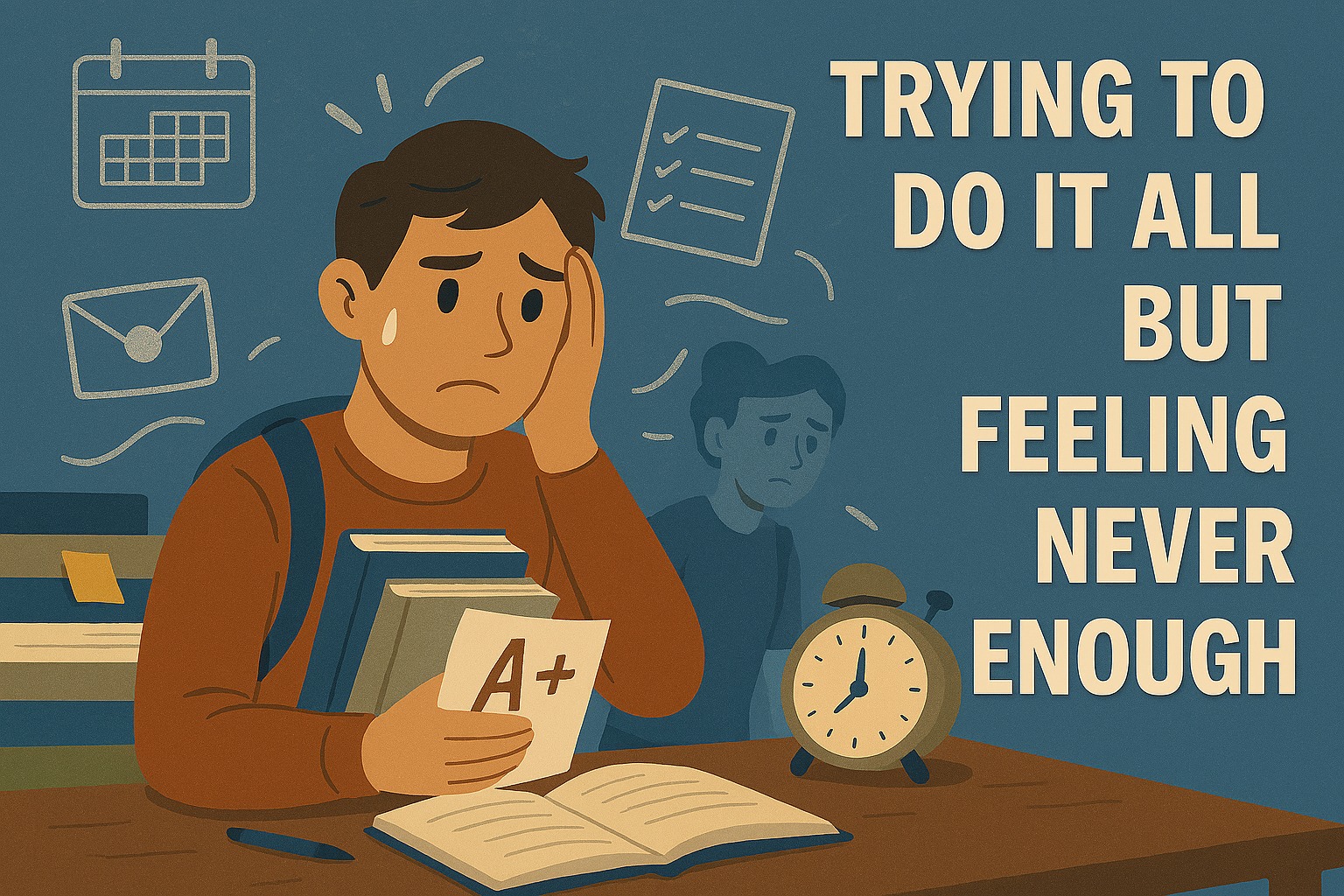
In a culture that glorifies productivity and constant achievement, many students and young professionals find themselves trapped in a relentless cycle: trying to do it all yet still feeling inadequate. No matter how much they accomplish, the sense of “never enough” continues to follow. This emotional tension can quietly damage confidence, motivation, and overall well-being.Understanding why this pattern happens is essential for building a healthier and more sustainable definition of success.
THE PRESSURE TO EXCEL IN EVERY AREA
Academic life today demands more than good grades. Students are encouraged to join organizations, pursue internships, build personal brands, develop side projects, and maintain active social lives. While these experiences can be valuable, the pressure to excel in every area creates unrealistic standards.
Instead of choosing activities based on passion or purpose, many individuals feel compelled to compete. The fear of falling behind or appearing unproductive drives them to overload their schedules.
Over time, ambition shifts into obligation. What once felt exciting becomes exhausting.
THE HIDDEN IMPACT OF PERFECTIONISM
Perfectionism often fuels the feeling of never being enough. When you set impossibly high standards for yourself, even significant achievements may seem ordinary.
This mindset creates a dangerous pattern:
- Success feels temporary.
- Mistakes feel catastrophic.
- Rest feels undeserved.
Perfectionism rarely allows room for self-compassion. Instead of celebrating progress, individuals focus on flaws or missed opportunities. As a result, self-worth becomes tied solely to performance.
True growth, however, requires space for imperfection and learning.
COMPARISON IN THE DIGITAL ERA
Social media amplifies feelings of inadequacy. Online platforms highlight awards, leadership roles, and curated moments of success. Rarely do they show burnout, doubt, or setbacks.
Constant exposure to others’ achievements can distort reality. You may begin to believe that everyone else is managing everything perfectly while you struggle silently.
Comparison steals focus from personal growth. It shifts attention away from individual goals and toward external validation. Over time, this habit reinforces the belief that you are always behind.
WHY DOING MORE DOESN’T ALWAYS MEAN GROWING MORE
There is a difference between meaningful engagement and constant activity. Filling your calendar with tasks does not automatically lead to fulfillment.
When you attempt to do everything, you risk losing depth. Energy becomes scattered across multiple commitments, reducing both impact and satisfaction. Quality often suffers when quantity becomes the priority.
Sustainable success is built on focus, not overload. Choosing fewer but more aligned commitments can create stronger results and greater clarity.
REDEFINING WHAT “ENOUGH” MEANS
The feeling of never being enough often stems from unclear standards. If your expectations are shaped by external pressure, satisfaction becomes nearly impossible.
Redefining “enough” begins with self-awareness. Ask yourself:
- What truly matters to me?
- What kind of life am I building?
- Which goals align with my values?
Setting boundaries is a powerful step toward emotional balance. Rest, reflection, and realistic goal-setting are not signs of weakness. They are strategies for long-term resilience.
You do not have to prove your worth through endless productivity. Growth is not a race, and success is not measured by exhaustion.
In the end, trying to do it all may leave you drained, but choosing intentionally can help you feel whole. Enough is not about perfection—it is about alignment, progress, and self-acceptance.
Tentang Penulis
Gusti Ayu Tita
Penulis — Universitas STEKOM
Penulis aktif yang berfokus pada isu-isu akademik, teknologi pendidikan, dan pengembangan sumber daya manusia di lingkungan kampus.



