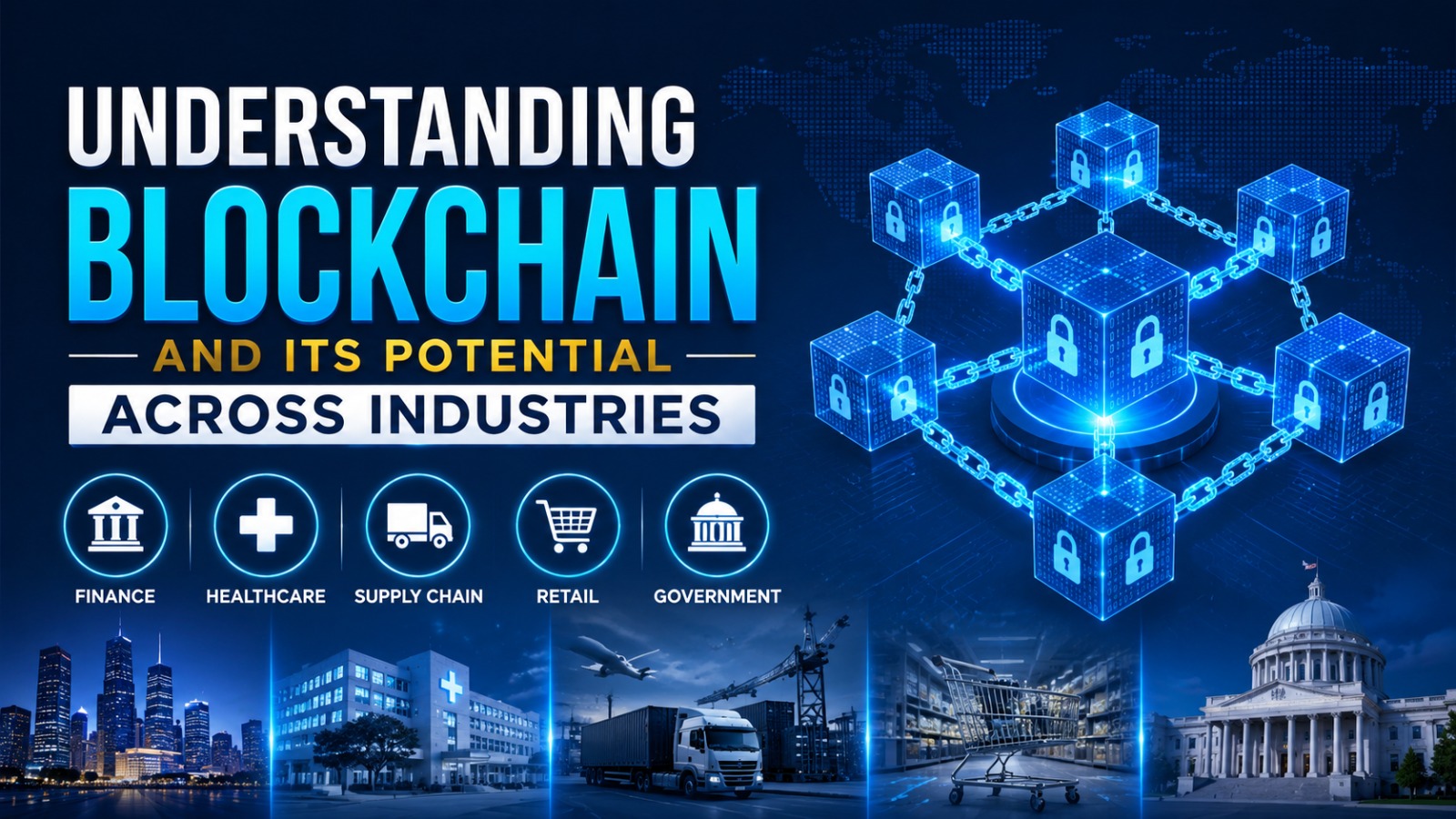
In recent years, blockchain technology has emerged as one of the most transformative innovations in the digital world. Initially associated with cryptocurrencies, blockchain has evolved into a powerful tool with applications far beyond finance. Its ability to provide transparency, security, and decentralization is reshaping how industries operate and interact.
WHAT IS BLOCKCHAIN?
Blockchain is a distributed digital ledger that records transactions across multiple computers in a secure and tamper-resistant way. Each record, known as a “block,” is linked to the previous one, forming a continuous chain. This structure ensures that once data is recorded, it cannot be altered without the consensus of the network.
Unlike traditional centralized systems, blockchain operates on a decentralized model. This eliminates the need for intermediaries, making processes faster, more efficient, and less prone to manipulation.
KEY FEATURES OF BLOCKCHAIN
Blockchain technology is defined by several core characteristics that make it unique. Transparency allows all participants in the network to view transaction histories. Security is ensured through cryptographic techniques that protect data from unauthorized access. Immutability guarantees that once data is recorded, it cannot be changed.
Another important feature is decentralization, which distributes control across the network rather than relying on a single authority. This reduces the risk of system failure and increases trust among users.
APPLICATIONS IN FINANCE
The financial sector was the first to adopt blockchain technology, and it remains one of the most prominent areas of use. Blockchain enables faster and more secure transactions, reduces processing costs, and improves transparency.
Cross-border payments, for instance, can be completed in minutes rather than days. Smart contracts—self-executing agreements with predefined conditions—also streamline processes such as loan approvals and insurance claims.
SUPPLY CHAIN MANAGEMENT
Blockchain is transforming supply chain management by providing real-time visibility into the movement of goods. Companies can track products from their origin to the final destination, ensuring authenticity and reducing fraud.
This level of transparency helps businesses identify inefficiencies, improve logistics, and build trust with consumers. It is particularly valuable in industries such as food, pharmaceuticals, and luxury goods.
HEALTHCARE INNOVATION
In healthcare, blockchain has the potential to improve data management and patient care. Medical records can be securely stored and shared among authorized providers, ensuring accuracy and reducing duplication.
Patients gain more control over their data, while healthcare providers benefit from better coordination and reduced administrative costs. Additionally, blockchain can help track the distribution of medicines, preventing counterfeit products from entering the market.
DIGITAL IDENTITY AND SECURITY
Blockchain technology offers a new approach to digital identity management. Individuals can create secure, verifiable identities that are not controlled by a single entity. This reduces the risk of identity theft and enhances privacy.
Businesses can also use blockchain to strengthen cybersecurity measures, protecting sensitive data from breaches and unauthorized access.
CHALLENGES AND LIMITATIONS
Despite its potential, blockchain technology faces several challenges. Scalability remains a major concern, as networks can struggle to handle large volumes of transactions. Energy consumption is another issue, particularly for certain consensus mechanisms.
Regulatory uncertainty and lack of standardization also hinder widespread adoption. Organizations must navigate these challenges to fully leverage the benefits of blockchain.
FUTURE OUTLOOK
The future of blockchain looks promising as more industries explore its capabilities. Continuous innovation is expected to address current limitations and unlock new use cases.
As businesses increasingly adopt blockchain solutions, the technology will play a vital role in building more transparent, secure, and efficient systems across industries.
Tentang Penulis
Gusti Ayu Tita
Penulis — Universitas STEKOM
Penulis aktif yang berfokus pada isu-isu akademik, teknologi pendidikan, dan pengembangan sumber daya manusia di lingkungan kampus.