
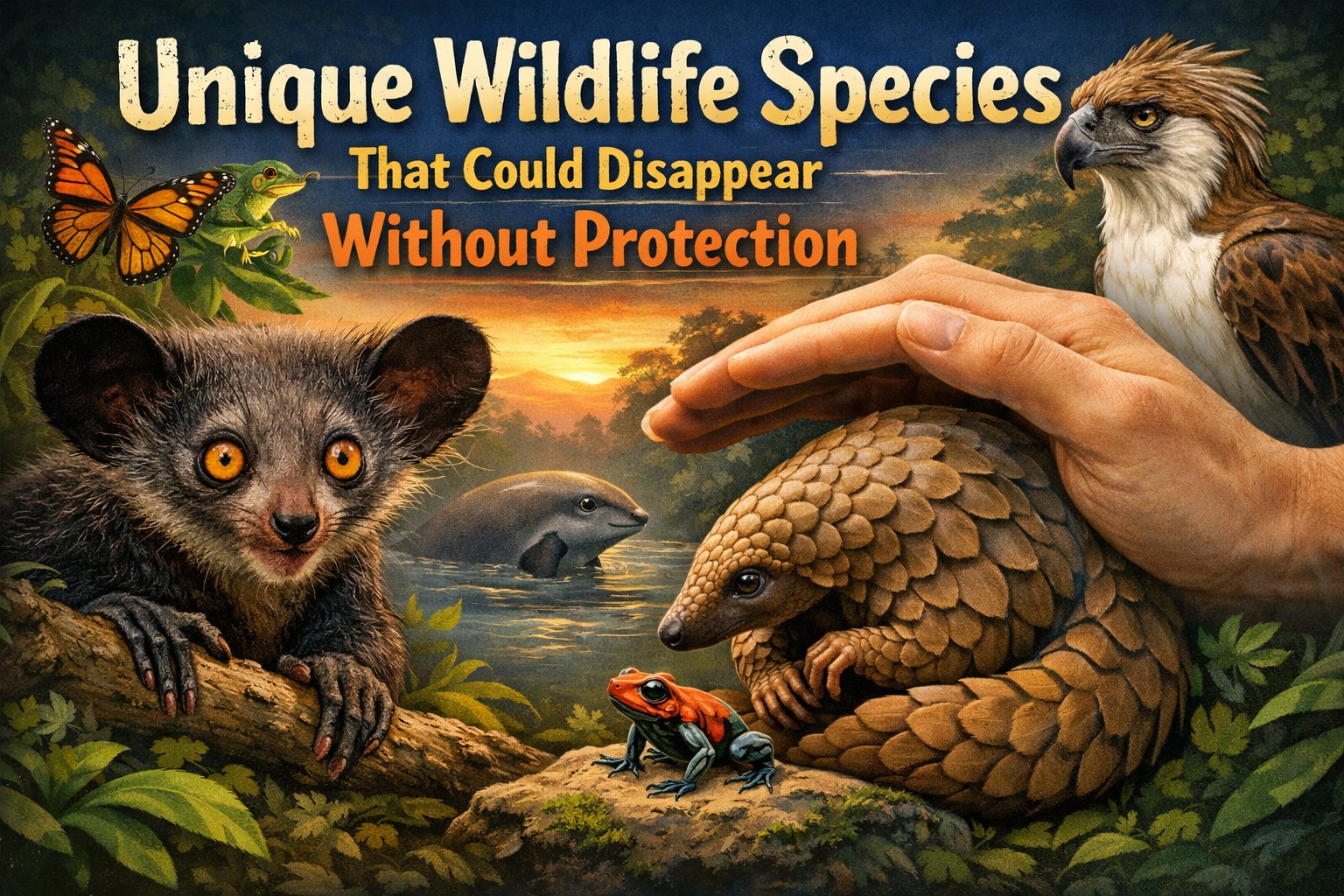
Wildlife plays an essential role in maintaining the balance of nature. Across the world, many rare animal species are facing the threat of extinction due to habitat destruction, climate change, illegal hunting, and pollution. If humans fail to take immediate action, some of the planet’s most unique creatures may disappear forever. Protecting endangered wildlife is not only about saving animals but also about preserving ecosystems for future generations.
WHY WILDLIFE CONSERVATION MATTERS
Every species has a specific role in the environment. Some animals help spread seeds, others control pests, and many contribute to the food chain. When one species disappears, the balance of the ecosystem can collapse. Conservation efforts help maintain biodiversity and ensure that natural habitats remain healthy and sustainable.
In addition, wildlife also provides economic and educational benefits. Many countries rely on eco-tourism, where visitors travel to see rare animals in their natural habitats. Losing these species could reduce tourism income and weaken environmental awareness worldwide.
UNIQUE ANIMALS AT RISK OF
EXTINCTION
AMUR LEOPARD
The Amur leopard is one of the rarest big cats in the world. Native to the forests of eastern Russia and northeastern China, this leopard faces serious threats from habitat loss and illegal poaching. Its beautiful spotted fur has made it a target for hunters for many years.
VAQUITA
The vaquita is a small marine mammal found only in the Gulf of California, Mexico. It is considered the world’s rarest marine animal. Accidental capture in illegal fishing nets has drastically reduced its population, pushing the species close to extinction.
SUMATRAN ORANGUTAN
The Sumatran orangutan lives in the rainforests of Indonesia. Deforestation caused by palm oil plantations and illegal logging has destroyed much of its habitat. Without stronger forest protection, this intelligent primate may disappear from the wild.
AXOLOTL
The axolotl is a unique amphibian known for its ability to regenerate body parts. Native to lakes near Mexico City, pollution and urban development have severely reduced its natural habitat. Scientists value this species for medical research, making its survival even more important.
BLACK RHINOCEROS
The black rhinoceros once roamed widely across Africa. Today, poaching for rhino horns remains the biggest threat to its survival. Conservation programs have helped increase populations in protected areas, but the species still faces serious danger.
MAIN THREATS TO ENDANGERED SPECIES
HABITAT DESTRUCTION
Forests, wetlands, and oceans are being damaged by human activities such as agriculture, mining, and urban expansion. When animals lose their homes, they struggle to find food and shelter.
ILLEGAL HUNTING
Poaching continues to threaten many species around the world. Animals are hunted for their fur, horns, meat, or use in traditional medicine. Weak law enforcement often makes the problem worse.
CLIMATE CHANGE
Rising temperatures, changing weather patterns, and melting ice affect animal migration, breeding, and food supplies. Many species cannot adapt quickly enough to survive environmental changes.
POLLUTION
Plastic waste, chemicals, and water contamination harm wildlife in both land and marine ecosystems. Many animals accidentally consume plastic or become trapped in waste materials.
HOW PEOPLE CAN HELP PROTECT WILDLIFE
Everyone can contribute to wildlife conservation in simple but meaningful ways. Supporting environmental organizations, reducing plastic use, and avoiding products made from endangered animals can make a positive impact. Planting trees and promoting sustainable living also help protect natural habitats.
Education is another important factor. By teaching younger generations about conservation, societies can build stronger awareness and encourage responsible environmental behavior in the future.
THE FUTURE OF ENDANGERED WILDLIFE
The survival of endangered species depends on global cooperation. Governments, conservation groups, scientists, and local communities must work together to protect habitats and stop illegal wildlife trade. While some species are already critically endangered, there is still hope if immediate action is taken.
Protecting wildlife means protecting the planet itself. Future generations deserve to live in a world filled with diverse and extraordinary animals, not one where they only exist in history books.
Tentang Penulis
Gusti Ayu Tita
Penulis — Universitas STEKOM
Penulis aktif yang berfokus pada isu-isu akademik, teknologi pendidikan, dan pengembangan sumber daya manusia di lingkungan kampus.



