
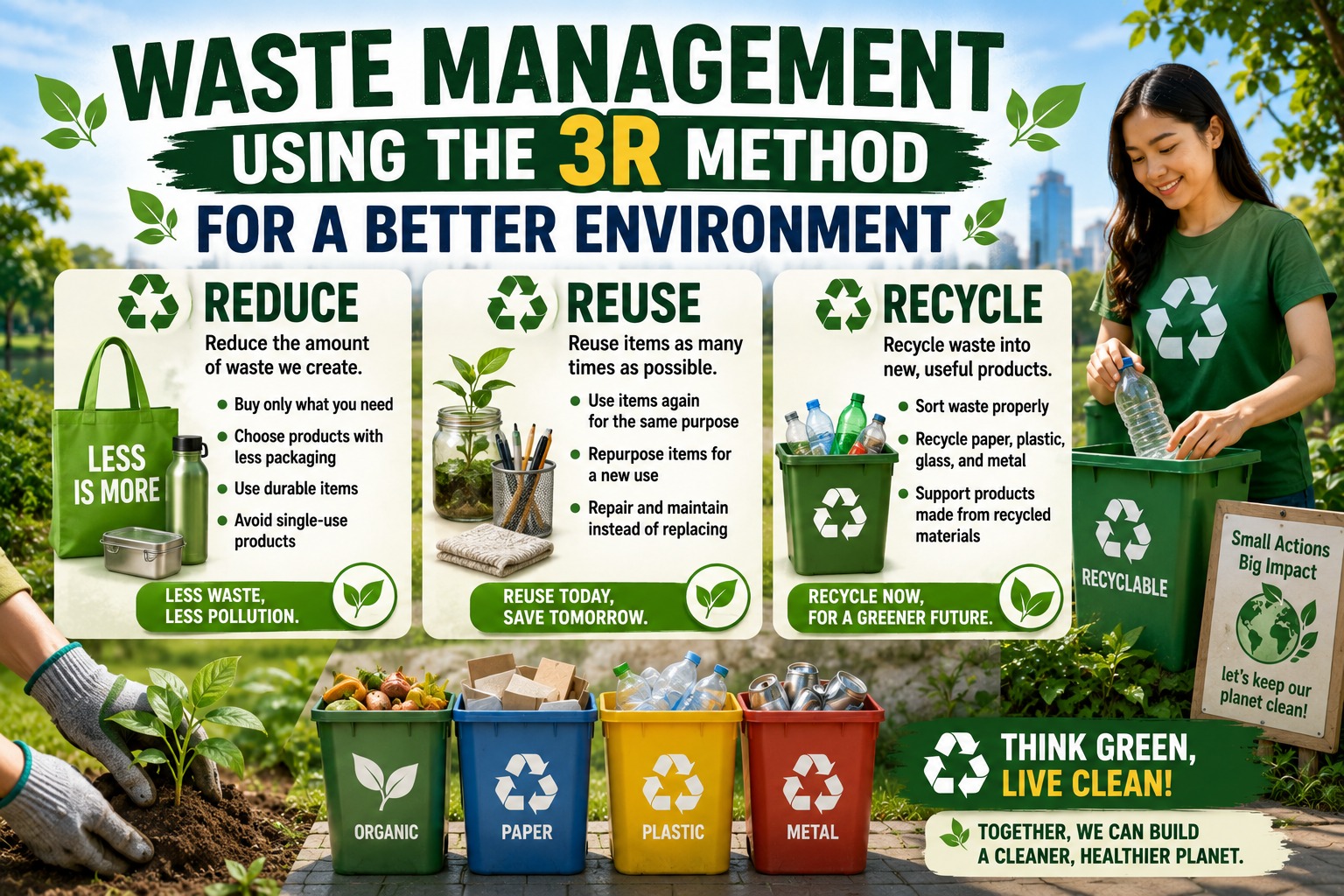
Waste management has become one of the most important environmental issues in modern society. Every day, households, industries, and businesses produce large amounts of waste that can pollute the environment if not handled properly. Overflowing landfills, polluted rivers, and plastic waste in oceans are clear signs that better waste management solutions are urgently needed. One of the most effective and simple approaches is the 3R method: Reduce, Reuse, and Recycle.
The 3R method encourages people to minimize waste production, use items repeatedly, and process waste into new products. By applying these principles consistently, communities can create a cleaner, healthier, and more sustainable environment for future generations.
UNDERSTANDING THE 3R METHOD
The 3R concept is an environmentally friendly strategy designed to reduce the negative impact of waste on nature. Each part of the method has a specific role in controlling waste production and promoting sustainability.
Reduce
Reduce means limiting the use of products that generate waste. This step focuses on preventing waste before it is created. People can reduce waste by avoiding single-use plastics, buying only necessary items, and choosing products with minimal packaging.
Simple habits such as bringing reusable shopping bags, carrying refillable water bottles, and printing documents only when necessary can significantly decrease waste production. Reducing waste not only protects the environment but also saves money and natural resources.
Reuse
Reuse involves using items multiple times instead of throwing them away after a single use. Many household items can still serve useful purposes even after their original function is finished.
For example, glass jars can be reused as storage containers, old clothes can become cleaning cloths, and used paper can be utilized for notes or crafts. Reusing products helps reduce the amount of garbage sent to landfills while extending the life cycle of materials.
Recycle
Recycle is the process of converting waste materials into new products. Items such as paper, plastic, metal, and glass can often be recycled into usable goods. Recycling reduces the need for raw materials and lowers energy consumption in manufacturing.
Communities that support recycling programs can significantly reduce environmental pollution. Proper waste separation at home is an important first step in making recycling more effective.
THE IMPORTANCE OF WASTE MANAGEMENT
Proper waste management plays a major role in protecting environmental health. Without effective waste handling systems, garbage can contaminate soil, water, and air. Harmful chemicals from unmanaged waste may damage ecosystems and threaten human health.
Applying the 3R method can reduce the volume of waste that ends up in landfills. It also decreases greenhouse gas emissions caused by waste decomposition and burning. Cleaner surroundings improve public health and create more comfortable living environments.
In addition, waste management supports economic growth by creating job opportunities in recycling industries, waste collection services, and environmental programs.
BENEFITS OF THE 3R METHOD
The 3R method provides many advantages for both individuals and communities. One major benefit is reducing environmental pollution. Less waste means cleaner rivers, healthier oceans, and fresher air.
Another important benefit is conserving natural resources. Recycling paper helps save trees, while recycling metal reduces mining activities. Reusing products also decreases the demand for new materials.
The 3R method also encourages people to develop environmentally responsible habits. When communities work together to manage waste properly, they create a culture of sustainability that benefits future generations.
SIMPLE WAYS TO APPLY THE 3R METHOD DAILY
Implementing the 3R method does not require complicated actions. Small daily habits can make a big difference over time.
Here are some practical examples:
- Use reusable shopping bags instead of plastic bags
- Bring your own water bottle and food container
- Separate organic and non-organic waste at home
- Donate unused clothes or furniture
- Recycle paper, cans, and plastic bottles
- Avoid buying products with excessive packaging
- Repair damaged items instead of replacing them immediately
Consistent actions from individuals can collectively create significant environmental improvements.
CHALLENGES IN WASTE MANAGEMENT
Although the 3R method is highly beneficial, several challenges still exist. One common problem is the lack of public awareness about proper waste management practices. Many people still throw garbage carelessly or mix recyclable waste with organic waste.
Limited recycling facilities and insufficient government support can also reduce the effectiveness of waste management systems. In some areas, waste collection and recycling infrastructure remain underdeveloped.
To overcome these challenges, education and community participation are essential. Governments, schools, and environmental organizations should continue promoting awareness campaigns and providing better waste management facilities.
CONCLUSION
Waste management using the 3R method is an effective solution for reducing environmental pollution and preserving natural resources. By reducing waste, reusing products, and recycling materials, people can help create a cleaner and healthier environment.
Small changes in daily habits can produce meaningful long-term impacts. When individuals, communities, and governments work together, sustainable waste management becomes easier to achieve. Protecting the environment starts with simple actions, and the 3R method is one of the best ways to build a better future for everyone.
Tentang Penulis
Gusti Ayu Tita
Penulis — Universitas STEKOM
Penulis aktif yang berfokus pada isu-isu akademik, teknologi pendidikan, dan pengembangan sumber daya manusia di lingkungan kampus.



