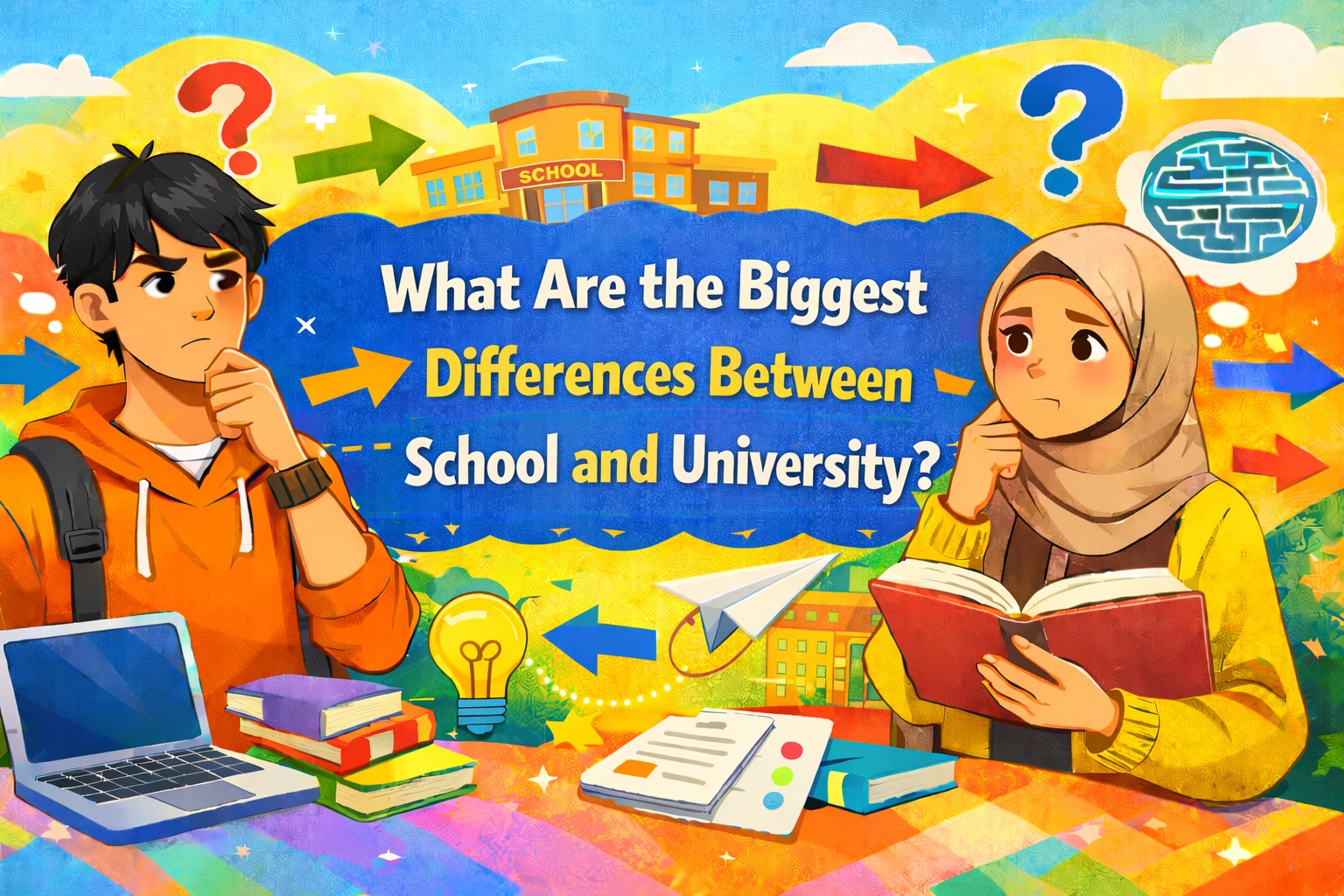
Transitioning from school to university is a major milestone for students. Many are surprised by the changes in academic expectations, learning environments, and personal responsibilities. Understanding these differences can help new students adjust faster and succeed in higher education.
Recognizing the key contrasts between school and university is essential for managing academic performance and personal growth.
ACADEMIC EXPECTATIONS
One of the most noticeable differences is the level of academic expectations. In school, students are guided closely by teachers and follow structured lessons. At university, students are expected to study independently, analyze critically, and apply knowledge.
This shift requires self-discipline, initiative, and strong study habits to keep up with coursework and exams.
LEARNING ENVIRONMENT
The learning environment in university is also different. Classes may be larger, lectures less interactive, and students must actively engage in discussions, research, and presentations.
Unlike school, where instructions are often step-by-step, university learning emphasizes independent exploration and problem-solving.
TIME MANAGEMENT AND RESPONSIBILITY
University students must manage their own schedules, balancing classes, assignments, and extracurricular activities. Unlike the structured school timetable, university life demands effective time management and personal accountability.
Failure to plan and prioritize can lead to stress and missed deadlines.
SOCIAL AND CULTURAL DIFFERENCES
University introduces a diverse social and cultural environment. Students interact with peers from different backgrounds and participate in clubs, organizations, and campus events.
Adapting to this new social setting helps students build networks, develop communication skills, and feel part of the campus community.
STRATEGIES FOR SUCCESSFUL TRANSITION
To navigate the differences between school and university, students can:
* Develop independent study habits early.
* Organize a personal schedule to manage deadlines effectively.
* Engage actively in class discussions and group projects.
* Participate in campus activities to build social networks.
* Seek guidance from professors, advisors, or senior students when needed.
These strategies help students adapt smoothly, achieve academic success, and enjoy a fulfilling university experience.
CONCLUSION
The biggest differences between school and university include academic expectations, learning environments, time management, and social interactions. By understanding these contrasts and applying practical strategies, new students can adjust effectively, reduce stress, and thrive in their university journey.
Tentang Penulis
Gusti Ayu Tita P
Penulis — Universitas STEKOM
Penulis aktif yang berfokus pada isu-isu akademik, teknologi pendidikan, dan pengembangan sumber daya manusia di lingkungan kampus.