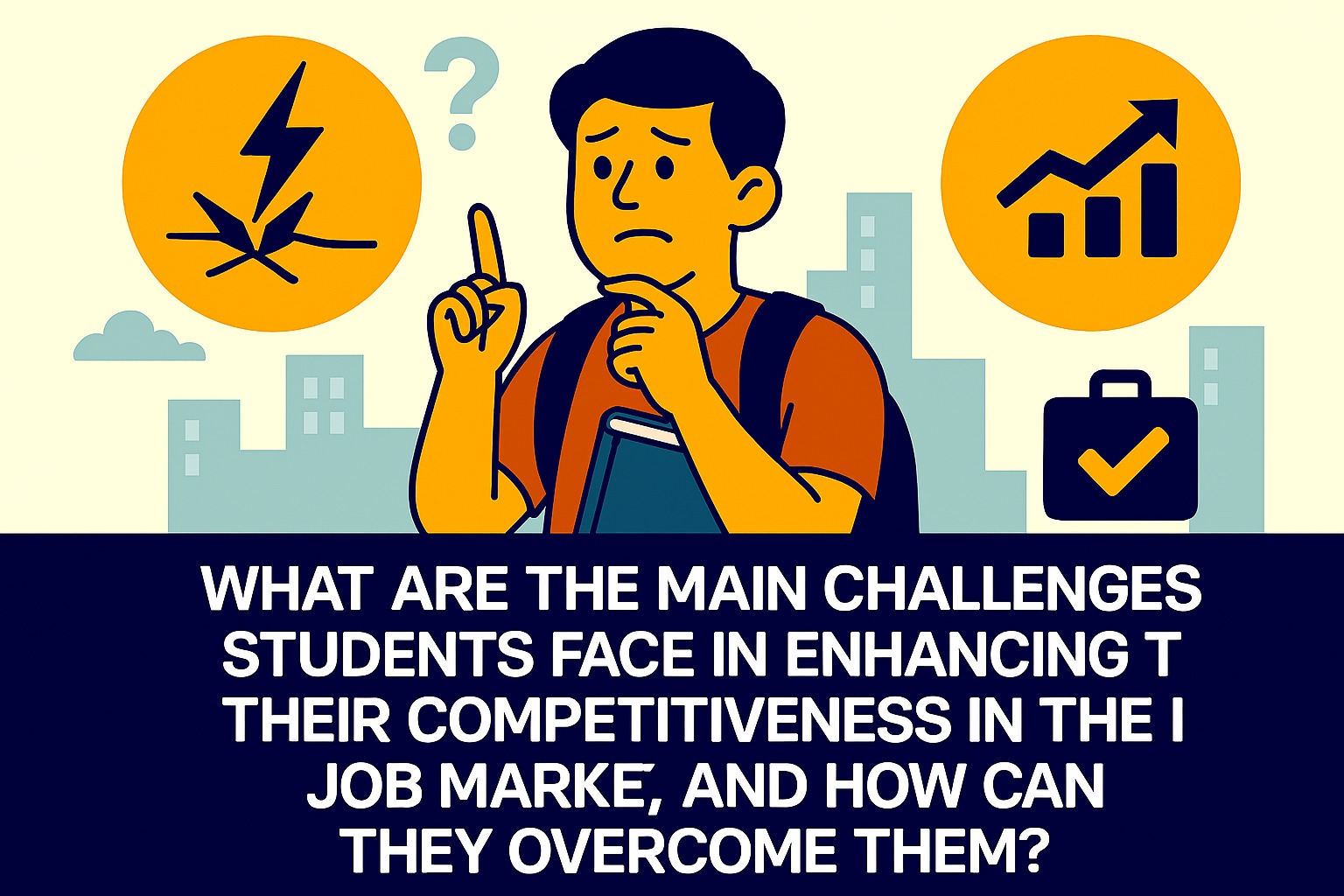
The job market today is increasingly competitive, with ever-evolving demands for skills and experience. As students still in college, the main challenges faced in enhancing competitiveness in the job market are varied. From skills and experience to competition with other graduates, students must be ready to face several obstacles in order to secure their desired positions. This article will discuss some of the main challenges students face in increasing their competitiveness in the job market and strategies for overcoming them.
THE CHALLENGE OF EVER-CHANGING TECHNICAL SKILLS
One of the biggest challenges students face when entering the job market is the rapid development of technology and the constant change in required technical skills. Many companies look for candidates who possess the latest skills relevant to industry advancements, such as computer programming, data analysis, and digital marketing skills.
However, not all students receive education that deeply covers these skills. Therefore, it is essential for students to continue learning and developing technical skills related to the field they wish to work in. This can be achieved by taking additional courses, certification programs, or even internships to gain practical experience.
Solution: Students should proactively seek out training and courses that align with their desired career path. Many online platforms offer technical courses that can help students enhance their skills and broaden their knowledge.
LACK OF WORK EXPERIENCE
Another challenge is the lack of work experience. Many students face difficulty in finding their first job because they are perceived as lacking the practical experience that companies require. Even with a good academic record, the absence of real-world experience limits their chances of landing their desired job.
Solution: To address this, students need to take advantage of internship or part-time job opportunities that provide firsthand experience in the workplace. Internships are one of the most effective ways to acquire experience while building a professional network.
COMPETITION WITH OTHER GRADUATES
Another significant challenge is the competition with other graduates. Each year, the number of college graduates increases, while the number of job vacancies doesn't always rise at the same pace. This creates tougher competition. Graduates who have qualifications beyond just an academic degree—such as organizational experience, certifications, or additional skills—are more likely to be selected by recruiters.
Solution: Students should strengthen themselves by developing soft skills such as communication, leadership, and teamwork. Additionally, they can seek experience through organizational activities, internships, or personal projects to boost their competitiveness.
LIMITED ACCESS TO PROFESSIONAL NETWORKS
A strong professional network is often the key to landing a good job. However, students often face difficulties in building these networks due to limited access to professionals in their desired industries. Without a broad network, opportunities to learn about job vacancies or career opportunities can be limited.
Solution: Students can overcome this challenge by joining communities or organizations related to their field of study. Attending seminars, workshops, or networking events can also be valuable opportunities to meet professionals in the industry and build beneficial relationships.
LACK OF SOFT SKILLS
In addition to technical skills, many companies also seek candidates who possess strong soft skills, such as communication, teamwork, and problem-solving abilities. Students who focus solely on academic achievement often neglect the development of these soft skills, which can be a barrier during recruitment processes.
Solution: Students should enhance their soft skills by engaging in social activities, joining organizations, or volunteering. These experiences can help students refine their interpersonal and communication skills, which are highly valued by recruiters.
POOR TIME MANAGEMENT
Many students struggle with managing their time between attending classes, participating in organizational activities, working part-time jobs, and preparing for their careers. Poor time management can hinder them from maximizing their potential and the opportunities available. If students cannot manage their time effectively, the quality of their work and career opportunities may be negatively affected.
Solution: Students must learn to prioritize the most important tasks and create realistic schedules. With proper time management, students can optimize their academic, organizational, and career development activities.
CONCLUSION
Enhancing competitiveness in the job market is a significant challenge that every student must face. The main challenges, such as a lack of technical skills, lack of work experience, competition with other graduates, and limited professional networks, can be overcome with the right strategies. Students who can develop both technical and soft skills, gain experience through internships, expand their professional networks, and manage their time effectively will be better prepared to enter the competitive job market.
By proactively and wisely addressing these challenges, students can increase their competitiveness and improve their career prospects.
Tentang Penulis
Gusti Ayu Tita
Penulis — Universitas STEKOM
Penulis aktif yang berfokus pada isu-isu akademik, teknologi pendidikan, dan pengembangan sumber daya manusia di lingkungan kampus.