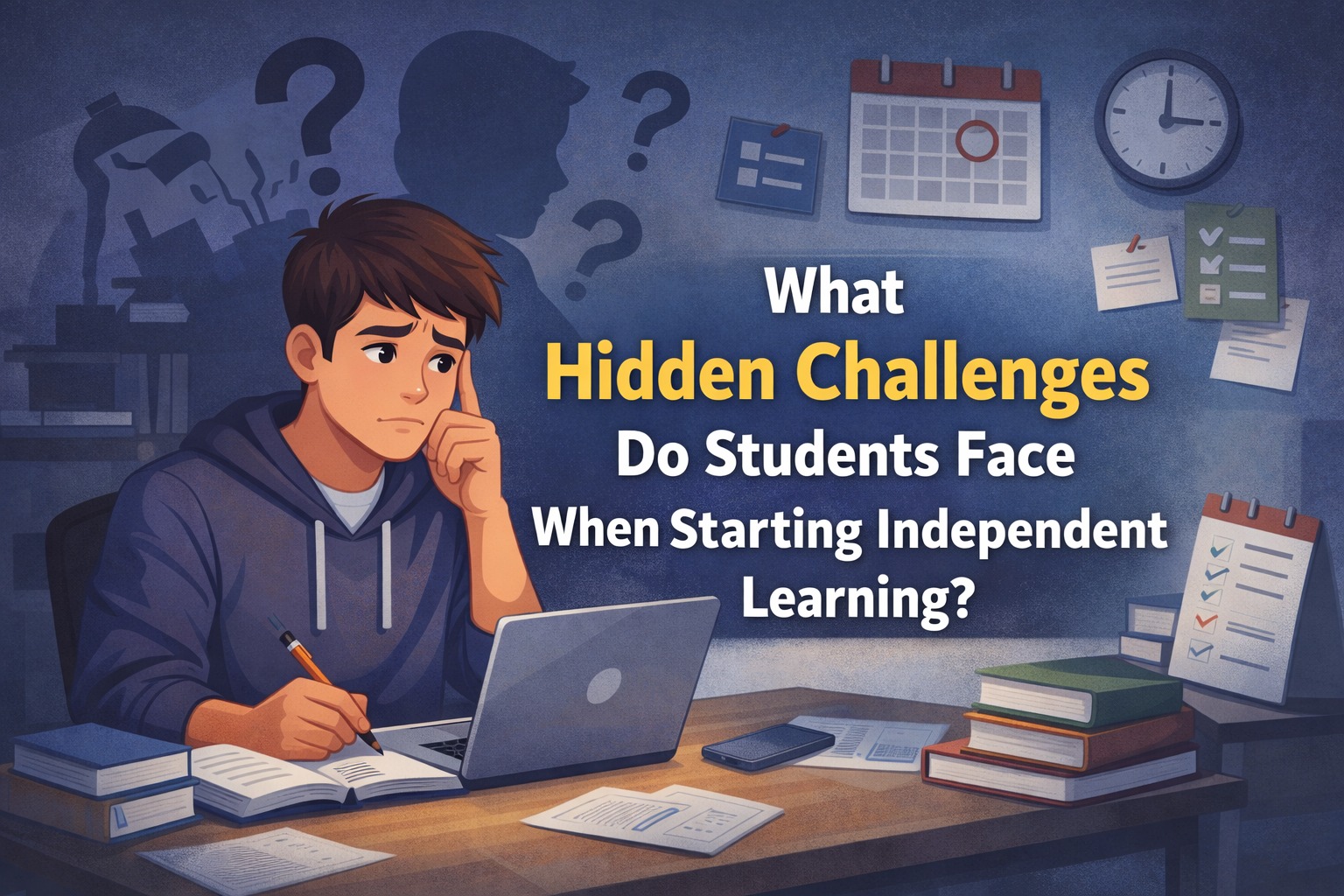
Entering university means entering a learning system that is very different from school. Students are no longer fully guided but are expected to be active, initiative-driven, and responsible for their own learning process. Independent learning sounds ideal, but in practice, it contains many hidden challenges that new students often do not realize.
This article discusses these challenges and helps students understand why the early phase of university feels more difficult than expected.
Transition from Guided Learning to Independent Learning
In school, learning is generally well-structured. Teachers explain material step by step, remind students of assignments, and ensure they follow the learning flow. In university, this pattern changes drastically.
Lecturers usually provide only a general framework, while deeper understanding must be sought independently through books, journals, or other academic sources. Students who are not used to learning without detailed guidance often feel lost and unsure where to begin.
Freedom That Leads to Procrastination
Flexible schedules are often mistaken for free time. In reality, time outside class should be used for reading materials, completing assignments, and preparing for discussions.
Without good self-control, students easily fall into procrastination habits. Tasks that should be done gradually are postponed until deadlines approach, making learning stressful and ineffective.
Difficulty Managing Time Independently
One of the biggest challenges for new students is time management. The absence of a fixed study schedule makes it difficult to set priorities.
Students must divide time between classes, assignments, organizations, social life, and rest. Without clear planning, academic activities often lose to short-term pleasures.
Heavier and More In-Depth Academic Material
University material is not only more abundant but also more complex. Students are expected to understand concepts, analyze cases, and think critically, rather than rely on memorization.
Without finding suitable learning methods, students can experience mental fatigue. They may read extensively without fully understanding the content, making independent learning feel unproductive.
Hesitation to Ask Questions
Independent learning does not mean understanding everything alone. However, many new students hesitate to ask questions because they fear appearing incompetent.
This hesitation allows confusion to accumulate. In reality, discussions with lecturers or peers can significantly accelerate understanding. The hidden challenge here is not lack of ability, but lack of confidence in seeking help.
A New Environment Full of Distractions
Campus life offers broader social experiences—organizations, communities, campus events, and social media.
Without clear boundaries, study time can be easily displaced. Students often realize the impact only when grades decline or assignments pile up. These distractions quietly hinder independent learning success.
Not Yet Understanding Personal Learning Styles
Not all students immediately know the most effective way for them to learn. Some learn best by reading, others through discussion, and some by visual note-taking.
In the first semester, discovering a personal learning style is still a process. Until it is found, students may try various ineffective methods, making learning feel heavier and more time-consuming.
Pressure to Adapt Quickly
New students often feel pressured to adapt quickly to avoid falling behind. This pressure may come from the environment, family expectations, or personal ambition.
When expectations are high but adaptation is unstable, anxiety and self-doubt can arise. Such mental conditions make independent learning even more challenging due to reduced focus.
Strategies for Facing Independent Learning Challenges
Despite the challenges, independent learning can be mastered with the right strategies. Students can start by creating a routine schedule, setting small daily goals, and reading materials before class.
Actively participating in discussions, asking questions, and minimizing distractions during study time are also essential. With consistent habits, independent learning will gradually feel more manageable and directed.
Conclusion
Hidden challenges in independent learning include changes in learning systems, time management difficulties, distractions, and pressure to adapt quickly. These challenges are normal in the early stages of university life.
Independent learning is a skill developed through practice. The more it is trained, the stronger students become in managing their learning and meeting academic demands.
Tentang Penulis
Gusti Ayu Tita
Penulis — Universitas STEKOM
Penulis aktif yang berfokus pada isu-isu akademik, teknologi pendidikan, dan pengembangan sumber daya manusia di lingkungan kampus.