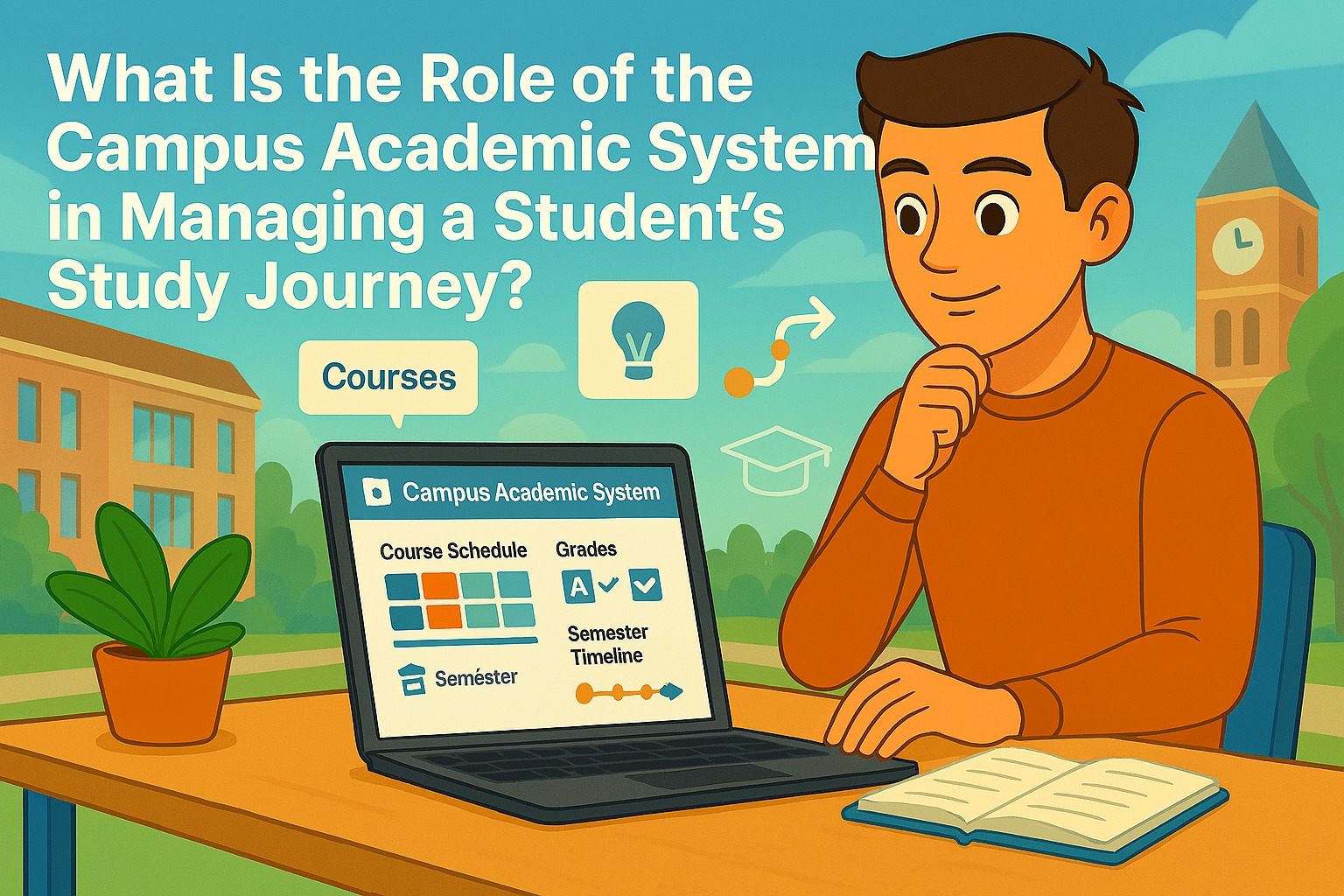
The campus academic system plays a crucial role in shaping how students experience and navigate their educational journey at university. Unlike earlier stages of education where teachers and school administrators manage most academic activities, higher education requires students to take greater responsibility for planning and organizing their studies. In this environment, the campus academic system functions as a structured framework that guides students from their first semester until graduation. For many students, the academic system may initially appear to be just a digital platform used for course registration or checking grades. However, its role goes far beyond these basic functions. The academic system serves as the backbone of academic management, ensuring that students follow a structured learning path, meet graduation requirements, and maintain academic progress in a systematic way. Understanding how this system works is therefore essential for students who want to manage their study journey effectively.
THE ACADEMIC SYSTEM AS THE FOUNDATION OF STUDY MANAGEMENT
One of the most important roles of the campus academic system is providing a clear structure for academic management. Universities offer a wide variety of courses, programs, and academic pathways. Without a centralized system to organize these elements, students could easily become confused about what courses they should take and how their academic progress should be measured.
The academic system establishes the rules and guidelines that regulate a student’s study journey. It defines how many credits are required for graduation, which courses are mandatory, and how subjects are distributed across semesters. By creating this structure, the system ensures that students follow a logical academic pathway that gradually develops their knowledge and skills.
This structured approach helps students understand how each course contributes to their overall academic development. Rather than viewing subjects as isolated learning experiences, students can see how each course fits into a broader educational plan.
ORGANIZING COURSE REGISTRATION AND ACADEMIC SCHEDULING
Another major role of the campus academic system is managing course registration and scheduling. Universities typically offer hundreds of classes each semester, and students must select courses that align with their academic program and credit requirements.
Through the academic system, students can review available courses, check class schedules, and register for subjects that fit their semester plans. The system also prevents potential errors by ensuring that students meet prerequisite requirements before enrolling in advanced courses.
This feature is particularly important because incorrect course selection can delay academic progress. If a student accidentally skips a required course or fails to complete a prerequisite subject, it may affect their ability to take certain classes in the future.
By organizing course registration in a structured and transparent way, the academic system helps students avoid mistakes and maintain a smooth academic journey.
MONITORING STUDENT PROGRESS AND PERFORMANCE
The campus academic system also serves as a powerful tool for monitoring academic progress. Throughout their university years, students accumulate credits, complete required courses, and receive grades that reflect their performance.
The academic system records all of this information in a centralized database. Students can review their grade reports, calculate their grade point averages, and track the number of credits they have completed. This transparency allows students to evaluate their academic progress and make adjustments when necessary.
For example, students who notice that their academic performance has declined may decide to reduce their credit load or seek additional academic support. On the other hand, students who are progressing well may consider taking additional electives or participating in advanced academic opportunities.
By providing continuous access to academic records, the system encourages students to stay aware of their academic development and remain responsible for their learning outcomes.
SUPPORTING LONG TERM STUDY PLANNING
Beyond managing semester activities, the campus academic system also plays an important role in long-term study planning. Universities often provide curriculum maps, course sequences, and graduation requirements within the academic platform.
These resources allow students to see the bigger picture of their academic journey. They can understand which courses should be taken early in their program and which ones are intended for later semesters. This information helps students plan their academic path more strategically.
Long-term planning is especially important because many courses depend on prerequisite subjects. If students fail to complete certain courses at the appropriate time, it can create delays that extend their study period.
With the help of the academic system, students can map out their academic journey in advance. This allows them to anticipate challenges, distribute their credit loads effectively, and ensure that they meet graduation requirements on time.
ENCOURAGING STUDENT RESPONSIBILITY AND INDEPENDENCE
Another important role of the campus academic system is encouraging students to take responsibility for their own education. In university environments, students are expected to manage their academic decisions independently.
The academic system supports this expectation by giving students direct access to academic information and tools. Instead of relying solely on administrative staff, students can monitor their own progress, register for courses, and make adjustments to their study plans when necessary.
This level of independence helps students develop valuable skills such as decision-making, time management, and academic planning. These skills are not only important for success in university but are also essential for professional life after graduation.
Students who actively engage with the academic system become more aware of their academic responsibilities and are better prepared to navigate the challenges of higher education.
BUILDING A CLEAR AND STRUCTURED ACADEMIC JOURNEY
Ultimately, the campus academic system plays a central role in organizing and managing a student’s entire educational experience. It provides the structure, information, and tools needed to ensure that students follow a clear and organized academic path.
By guiding course selection, monitoring academic performance, and supporting long-term planning, the academic system helps students make informed decisions about their studies. It transforms the complex process of higher education into a manageable and structured journey.
Students who understand the role of the academic system are better equipped to take control of their academic development. They can plan their studies strategically, avoid common academic mistakes, and maximize the opportunities available throughout their university experience.
In this way, the campus academic system becomes more than just an administrative platform. It becomes a vital guide that supports students in building a successful and well-organized study journey from the first semester to graduation.
Tentang Penulis
Gusti Ayu Tita
Penulis — Universitas STEKOM
Penulis aktif yang berfokus pada isu-isu akademik, teknologi pendidikan, dan pengembangan sumber daya manusia di lingkungan kampus.