Becoming a Competitive Graduate in Today’s Job Market
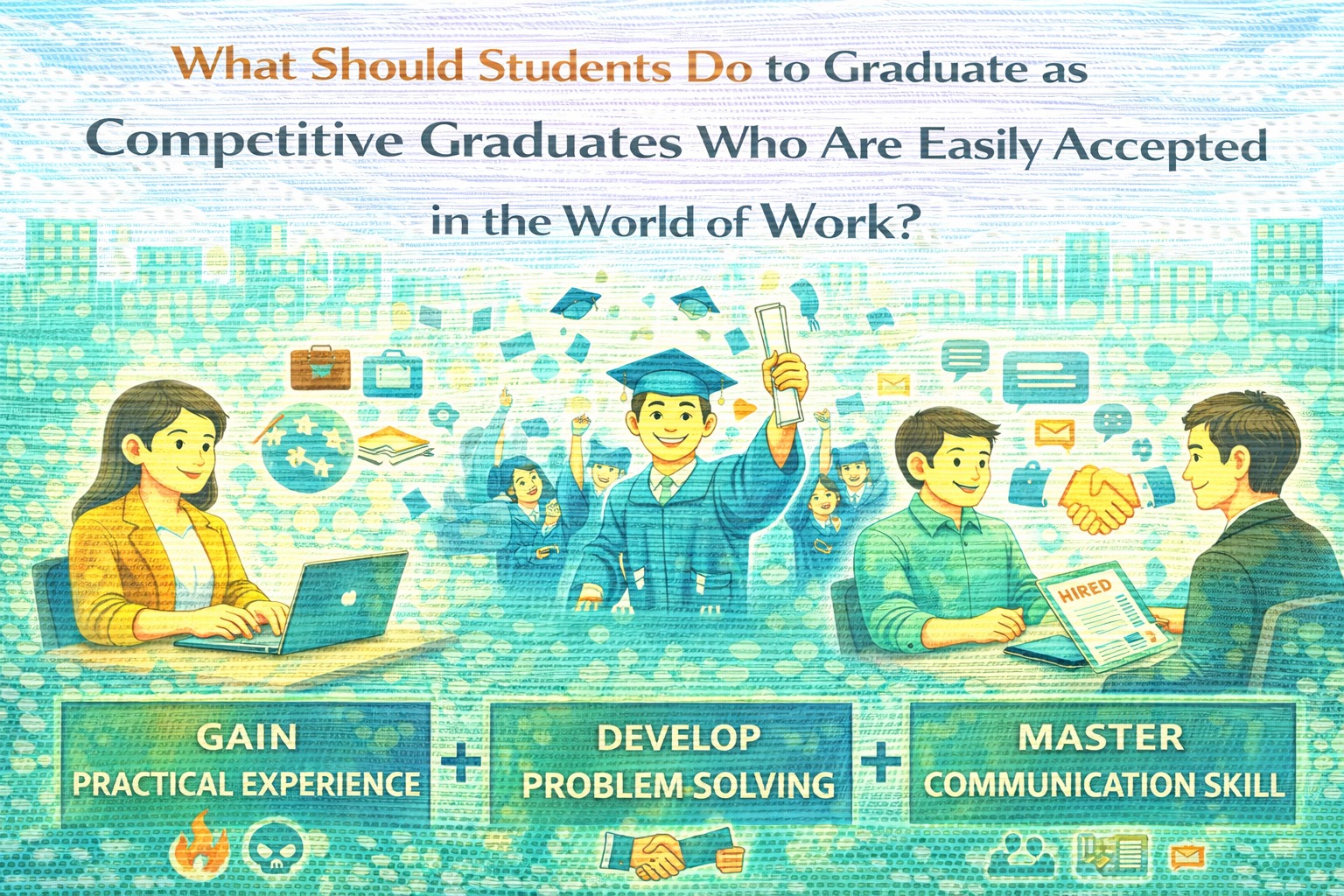
Today’s job market competition demands more than just a bachelor’s degree. Many graduates hold the same academic qualifications, yet only a few are truly competitive and quickly secure employment. The key difference lies in how individuals develop themselves during their university years. Students who aim to graduate as competitive professionals must prepare strategically, not merely focus on academic completion. A strong combination of competence, experience, and character is essential to attract employers’ attention.
The Meaning of a Competitive Graduate in the Modern Job Market
A competitive graduate is someone who possesses added value compared to other graduates. They demonstrate practical skills, professional attitudes, and the ability to adapt to the continuously evolving demands of industry.
Being competitive means offering more than academic credentials alone.
Steps Students Must Take to Become Competitive Graduates
Maintaining Academic Quality While Developing Personal Skills
Academic performance remains important as an initial assessment indicator. However, students must balance strong grades with skill development and real-world experience.
Academic excellence should go hand in hand with personal growth.
Mastering Skills Relevant to Industry Needs
Students should actively develop both soft skills and hard skills that align with current industry demands. These competencies reflect genuine work readiness.
Relevant skills increase employability and workplace adaptability.
Gaining Experience Through Campus Organizations and Activities
Organizational involvement helps develop leadership, communication, and teamwork skills—qualities highly valued by employers.
Organizational experience reflects character and work ethic.
Participating in Internships and Real-World Projects
Internships and practical projects provide direct exposure to professional environments. These experiences strengthen résumés and boost confidence during job applications.
Practical experience bridges academic knowledge and industry reality.
Building a Portfolio That Demonstrates Real Competence
A portfolio showcases tangible work outputs and achievements. It serves as concrete evidence of capability beyond diplomas and transcripts.
A strong portfolio proves practical competence.
Developing Professional Attitudes and Work Ethics Early
Discipline, responsibility, and integrity should be cultivated during university life. Consistent professionalism builds a positive reputation.
Professional attitude is as important as technical ability.
Expanding Professional Networks and Relationships
Connections with lecturers, alumni, and industry professionals significantly influence career opportunities. A strong network provides access to information and recommendations.
Networking opens doors to career opportunities.
Strengthening Work Mentality and Personal Resilience
The professional world involves pressure and challenges. Students with strong mental resilience are better equipped to face competition and workplace dynamics.
Mental toughness supports long-term career success.
Conclusion
Graduating as a competitive professional requires deliberate and consistent preparation throughout university life. By balancing academic achievement, skill development, practical experience, and character building, students can significantly enhance their competitiveness in the job market. The efforts invested during college will ultimately determine future career quality and success.
Tentang Penulis
Gusti Ayu Tita P
Penulis — Universitas STEKOM
Penulis aktif yang berfokus pada isu-isu akademik, teknologi pendidikan, dan pengembangan sumber daya manusia di lingkungan kampus.