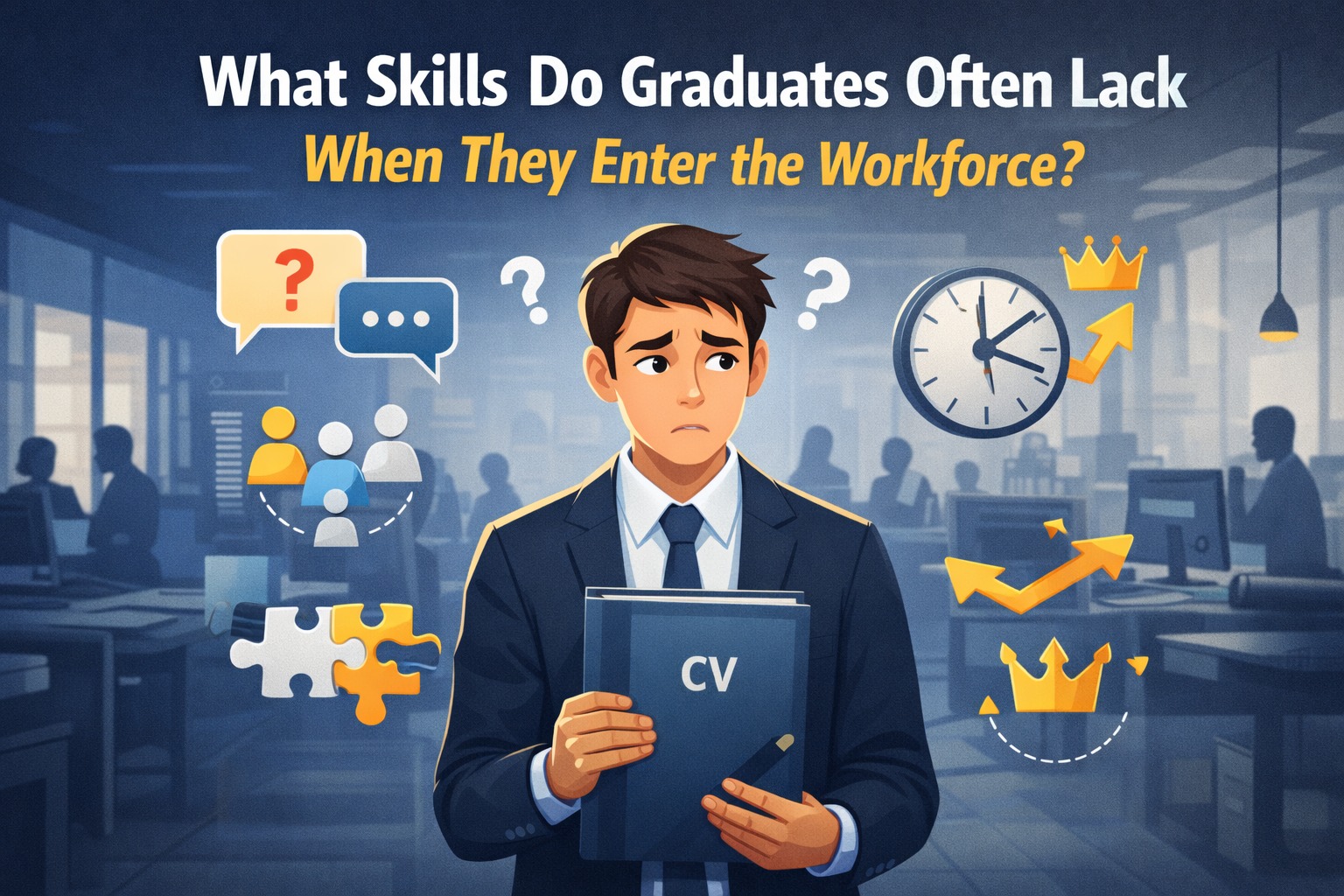
Entering the workforce for the first time is often a challenging moment for new graduates. Although they have completed higher education, many fresh graduates feel they are not fully prepared to face professional demands. This gap is not merely about academic knowledge, but rather about the skills required in the workplace.
So, what skills do graduates often lack when entering the workforce? Understanding this is important so students and fresh graduates can better prepare themselves before stepping into a professional environment.
Professional Communication Skills
One of the most common challenges is professional communication. In the workplace, individuals must be able to express ideas clearly, politely, and effectively, both verbally and in writing.
Many graduates are used to casual communication in college, so they need time to adjust to a more formal and structured communication style in professional settings.
Time Management and Prioritization
In the workplace, tasks often come simultaneously with strict deadlines. Without the ability to set priorities, work can pile up and cause stress.
Some graduates are not yet accustomed to managing multiple responsibilities at once. Strong time management skills are essential to complete tasks on time without compromising quality.
Teamwork Skills
Professional environments demand intensive collaboration. Projects are rarely done individually, making teamwork a crucial skill.
Graduates who are used to working independently may struggle to adapt to team dynamics, such as role distribution, compromise, and coordination among members.
Problem Solving and Decision-Making
In college, students often receive clear guidance from lecturers. In the workplace, problems can arise unexpectedly and require quick solutions.
The ability to think critically, analyze situations, and make sound decisions is an important skill that is often not fully developed in new graduates.
Ability to Handle Work Pressure
Targets, performance evaluations, and client demands are part of professional life. Not all graduates are ready to handle this pressure, especially if they have never worked before.
Managing stress and staying productive under pressure are essential skills that need to be developed early.
Work Ethics and Professional Attitude
Beyond technical skills, the workplace also evaluates attitude. Work ethic, responsibility, discipline, and integrity are highly valued.
Some graduates are still adjusting to these professional standards and need time to build appropriate work habits.
How to Develop These Skills Before Graduating
To reduce the skills gap when starting a career, students can:
1. Join organizations or committees to practice teamwork.
2. Participate in internships to understand real workplace situations.
3. Take communication and public speaking training.
4. Practice time management through academic projects and activities.
5. Seek challenging experiences that develop problem-solving skills.
Conclusion
The skills often lacking in graduates entering the workforce include professional communication, time management, teamwork, problem-solving, the ability to handle pressure, and work ethics. This gap is natural due to differences between campus life and professional environments.
However, with awareness and proactive self-development, this gap can be minimized. Graduates who actively improve their non-academic skills will adapt and grow more quickly in their careers.
Tentang Penulis
Gusti Ayu Tita
Penulis — Universitas STEKOM
Penulis aktif yang berfokus pada isu-isu akademik, teknologi pendidikan, dan pengembangan sumber daya manusia di lingkungan kampus.