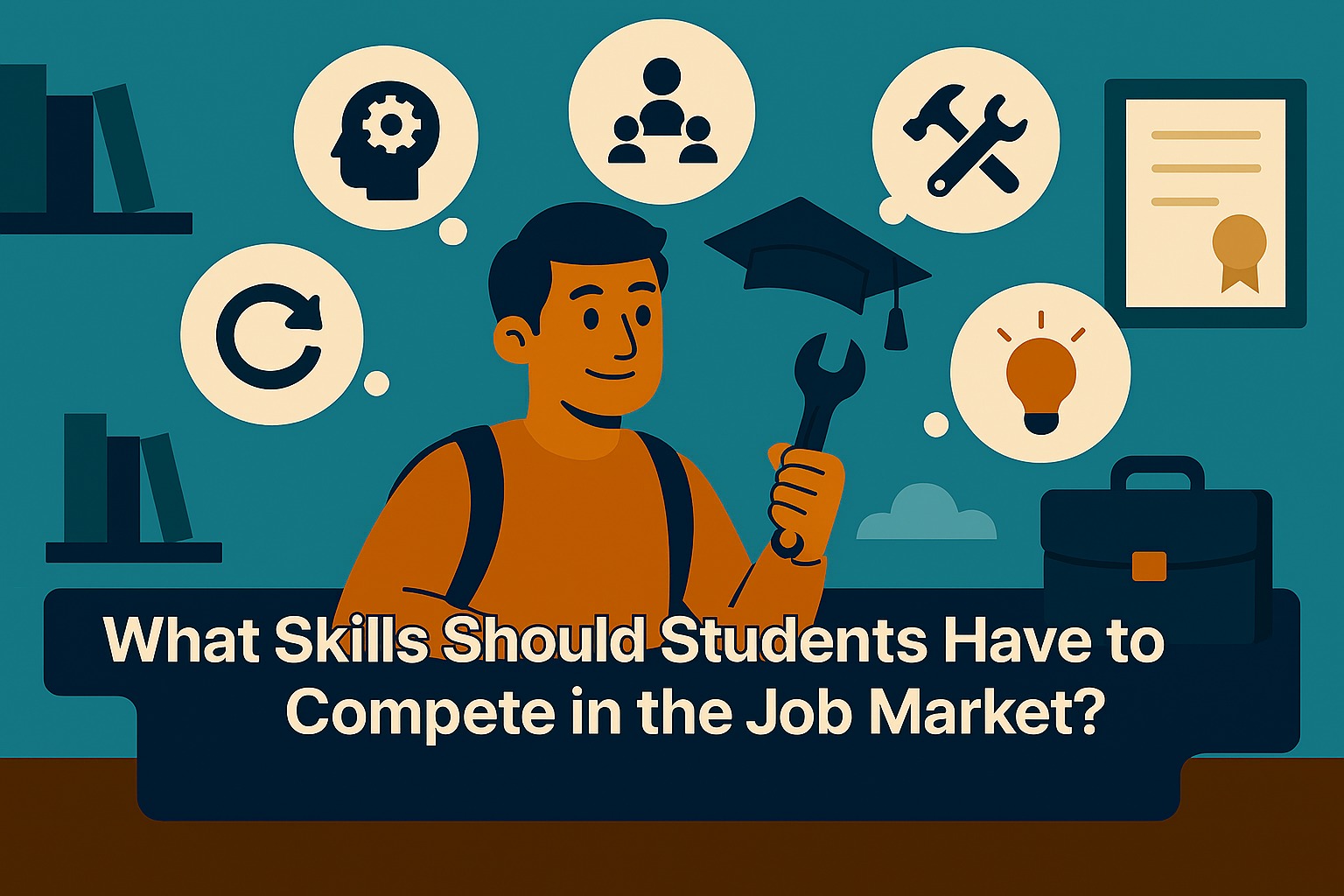
The increasingly competitive job market requires students to rely on more than just academic achievements. Companies today are looking for candidates who not only have strong educational backgrounds but also possess skills that can contribute directly to the professional environment. So, what skills should students have to compete in the workforce?
This article will review the essential skills that students need to possess in order to enhance their competitiveness in the job market.
GOOD COMMUNICATION SKILLS
Communication is a fundamental skill that every student needs to succeed in the job market. The ability to convey information clearly, both verbally and in writing, is crucial in almost every type of job. Good communication skills allow individuals to work with teams, interact with clients, and express ideas or thoughts effectively.
In addition, listening skills are also very important in communication. Students who can listen well are able to understand the needs of others and provide appropriate solutions. Therefore, students should practice their communication skills by actively participating in class discussions, presentations, or even campus organizations.
TEAMWORK SKILLS
Working in teams is one of the most essential skills in the workforce. Most jobs in companies involve collaboration with various parties, both within the team and with external clients. Therefore, students need to learn how to work with others, respect differences, and resolve conflicts that may arise within the team.
This skill can be developed by actively participating in campus organizations or group projects. Here, students can practice effective communication, share ideas, and work together to achieve common goals. The ability to work well in teams is highly valued by companies.
PROBLEM-SOLVING SKILLS
The ability to solve problems is an essential skill sought by almost all companies. In the workforce, problems often arise suddenly and require quick and effective solutions. Students who have problem-solving skills can think critically, analyze situations, and find the right solutions.
Students can develop this skill by engaging in challenging projects, both in academic activities and in organizations. By becoming accustomed to facing challenges and seeking solutions, students will be more prepared to tackle problems that may arise in the workforce.
TIME MANAGEMENT SKILLS
The ability to manage time well is a crucial skill in the workforce. Students who can manage their time efficiently can complete tasks on time, avoid delays, and prioritize important work. Good time management skills also demonstrate that the student is disciplined and able to work in a structured manner.
Students can practice their time management skills by organizing their class schedules, assignments, and other activities like organization work or internships. Using time management apps or making to-do lists can also help students improve this skill.
LEADERSHIP SKILLS
While not every student will immediately lead a team or project, having leadership skills is still a significant asset in the workforce. The ability to lead and motivate others is highly valued by companies, especially in managerial roles or positions that involve managing teams.
Students can develop leadership skills by taking on roles such as being the head of an organization, event coordinator, or playing an active role in campus activities. Additionally, leadership also involves the ability to make decisions, motivate teams, and solve problems that arise during the work process.
TECHNICAL SKILLS RELEVANT TO THE JOB FIELD
In addition to interpersonal skills, technical skills are also critical, depending on the chosen career field. For example, students who want to work in Information Technology (IT) must master skills such as programming, app development, or data analysis. Similarly, students who want to work in graphic design, digital marketing, or accounting must be proficient with industry-specific software or tools.
Therefore, students need to deepen their technical knowledge and skills relevant to their chosen field, either through training, internships, or additional courses. With strong technical skills, students will be better prepared to compete in the growing job market.
ADAPTABILITY AND FLEXIBILITY SKILLS
The job market often changes rapidly, and companies need employees who can adapt to those changes. Adaptability and flexibility are essential skills to help students adjust to dynamic work environments.
Students can develop these skills by facing various challenges during their studies, whether it involves changes in schedules, urgent tasks, or working with people from diverse backgrounds. The more experience students have, the better they can adapt to the changes in the work environment.
CONCLUSION
In an increasingly competitive job market, having skills beyond just academic knowledge is essential to stand out to employers. Skills such as communication, teamwork, problem-solving, time management, leadership, technical expertise, and adaptability are key to success in the professional world.
By developing these skills during their studies, students will be more prepared to face the challenges of the workforce and increase their chances of securing the job they desire.
Tentang Penulis
Gusti Ayu Tita
Penulis — Universitas STEKOM
Penulis aktif yang berfokus pada isu-isu akademik, teknologi pendidikan, dan pengembangan sumber daya manusia di lingkungan kampus.