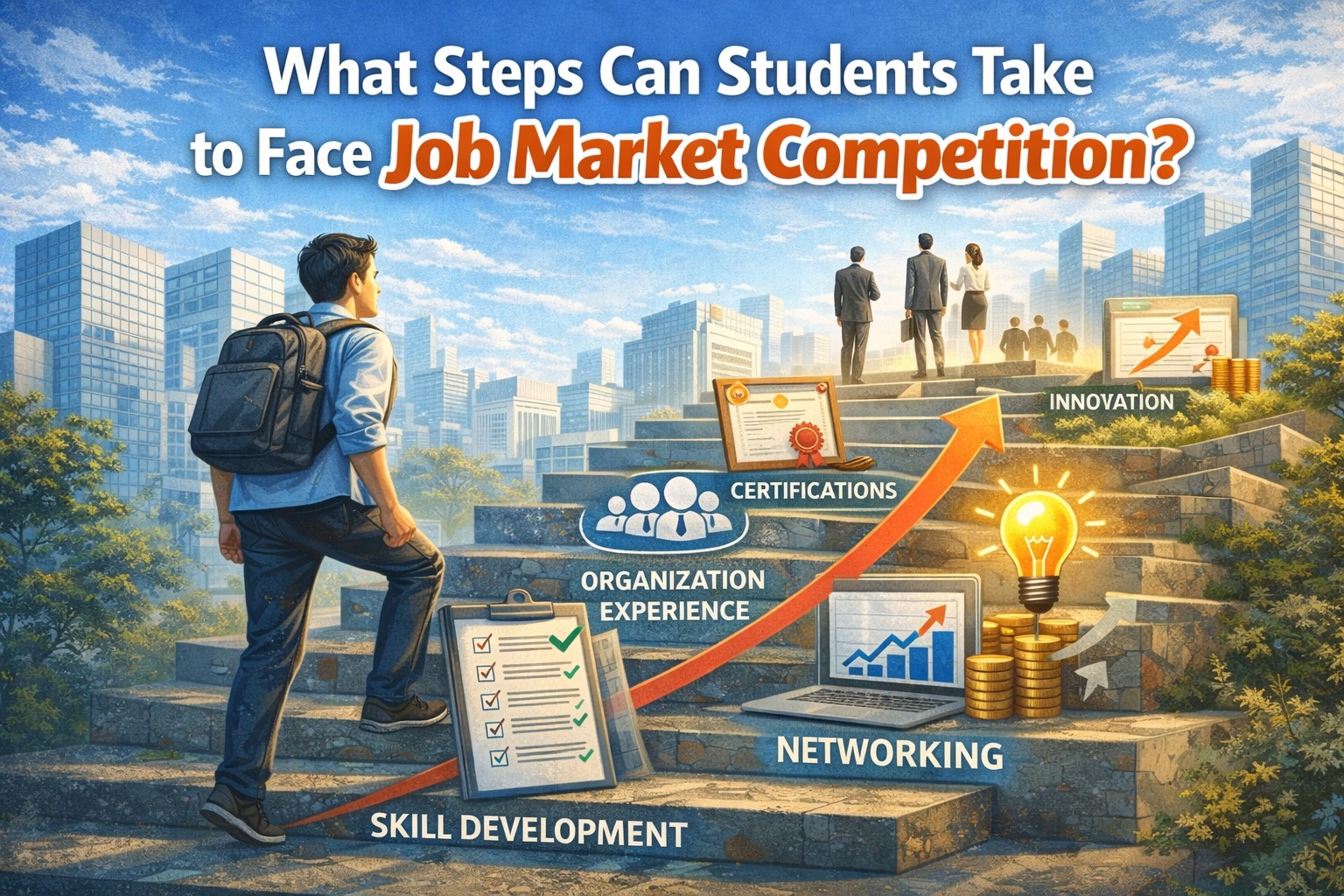
In today’s rapidly evolving world, the job market has become increasingly competitive. Every year, thousands of graduates enter the workforce, all aiming to secure promising career opportunities. As a result, students must take proactive steps to prepare themselves before entering the professional world. Simply relying on academic achievements is no longer enough. Students need to develop practical skills, gain experience, and build strong professional profiles to stand out among other candidates.
Understanding the right steps to face job market competition can help students increase their confidence and improve their chances of securing meaningful employment.
1. Develop Relevant Skills
One of the most important steps students can take is developing skills that are relevant to their desired career paths. These skills include both technical skills and soft skills.
Technical skills refer to specific abilities required for certain industries, such as programming, data analysis, digital marketing, graphic design, or financial management. Meanwhile, soft skills include communication, teamwork, leadership, problem-solving, and adaptability.
Students who possess a combination of these skills are more attractive to employers because they can perform tasks effectively while also collaborating well with others.
2. Gain Practical Experience
Practical experience plays a crucial role in preparing students for the job market. Employers often prefer candidates who have already experienced real work environments.
Students can gain experience through internships, part-time jobs, freelance projects, volunteer activities, or campus organizations. These experiences allow students to apply theoretical knowledge in practical situations while also developing professional habits such as responsibility, discipline, and teamwork.
Additionally, practical experience helps students build stronger resumes and portfolios.
3. Build a Strong Professional Network
Networking is another essential step in facing job market competition. Building relationships with professionals can open doors to valuable opportunities and career guidance.
Students can expand their networks by attending seminars, career fairs, and professional workshops. Connecting with alumni, lecturers, and industry professionals can also provide valuable insights into career paths and job opportunities.
Using professional platforms such as LinkedIn can help students showcase their skills and connect with potential employers.
4. Improve Digital and Technological Skills
Technology has become an essential part of nearly every industry. Students who are comfortable using digital tools and technologies will have a significant advantage in the workplace.
Digital skills may include using productivity software, managing online collaboration tools, understanding data analysis, or creating digital content. Improving digital literacy allows students to adapt more easily to modern work environments.
5. Create a Strong Personal Brand
Personal branding is another effective way for students to stand out in the job market. A strong personal brand helps employers understand a candidate’s strengths, values, and professional goals.
Students can build their personal brand by creating professional resumes, maintaining a positive online presence, sharing achievements, and showcasing their skills through portfolios or projects.
A clear and consistent professional image increases credibility and attracts potential employers.
6. Continuously Learn and Adapt
The job market continues to evolve due to technological advancements and global changes. Therefore, students must adopt a mindset of continuous learning.
Attending training programs, taking online courses, reading industry-related materials, and developing new skills can help students stay relevant and competitive. Adaptability and willingness to learn are qualities highly valued by employers.
Conclusion
Facing job market competition requires preparation, dedication, and continuous improvement. Students must actively develop relevant skills, gain practical experience, expand their professional networks, improve digital literacy, and build a strong personal brand.
By taking these steps early, students can increase their competitiveness and position themselves as valuable candidates in the modern job market.
Tentang Penulis
Gusti Ayu Tita
Penulis — Universitas STEKOM
Penulis aktif yang berfokus pada isu-isu akademik, teknologi pendidikan, dan pengembangan sumber daya manusia di lingkungan kampus.