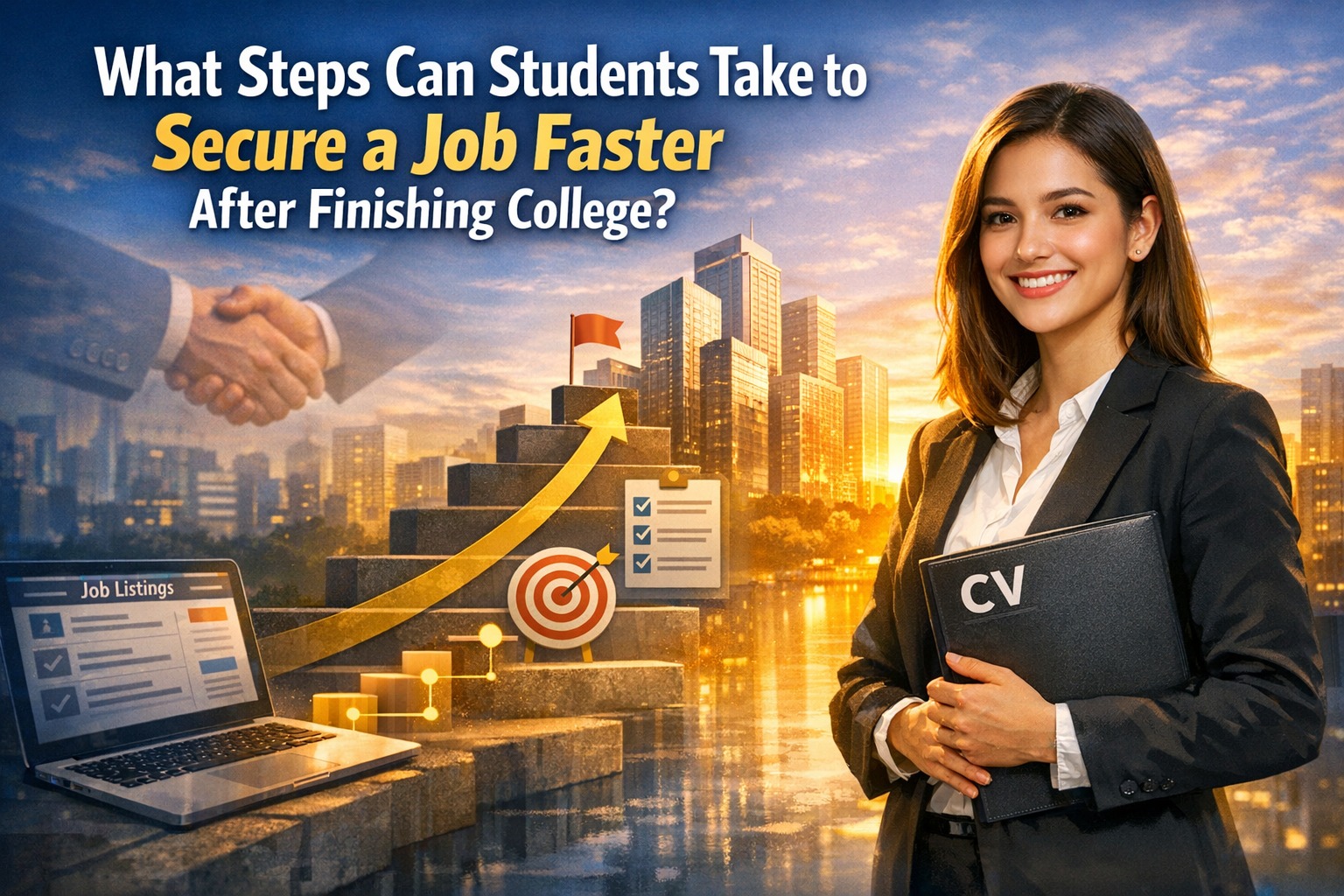
Many students hope to get a job immediately after graduating from college. But in reality, not a few graduates need months or even longer to secure their first job. Tight competition, lack of experience, and minimal preparation are some of the main causes.
The good news is, there are various effective steps students can take early on to accelerate their chances of getting hired after graduation. With the right strategy, the transition process from education to the professional world can run more smoothly.
DETERMINING CAREER DIRECTION EARLY ON
The first often-overlooked step is determining career goals during college. Students who have a clear picture of their desired career field are usually more focused on developing relevant skills.
Determining a career direction helps students choose the right supporting activities, such as organizations, additional courses, certifications, or internship experiences that align with their future professional goals.
GATHERING EXPERIENCE BEFORE GRADUATING
Experience is a highly important added value in the recruitment process. Students don't have to wait to graduate to start seeking work experience. Internship programs, part-time jobs, freelance projects, or volunteer activities can provide real experience valued by companies.
The more relevant experience you have, the higher the chance of catching a recruiter's eye, as you are considered more ready to face the working world.
HONING SOFT SKILLS AND HARD SKILLS BALANCEDLY
Many companies today are looking for candidates who are not only technically competent but also have good interpersonal skills. Therefore, students need to develop hard skills relevant to their field of study along with soft skills like communication, leadership, problem-solving, and teamwork.
The balance of these two types of skills is often the differentiator between hired and rejected candidates.
BUILDING A PORTFOLIO AND PERSONAL BRANDING
A portfolio can be concrete proof of a student's abilities. College projects, research, works, or organizational experiences can be compiled into an attractive professional portfolio.
Additionally, building a personal brand is also important in the digital era. Students can showcase their competencies, interests, and achievements through professional platforms, making them easier for recruiters or companies to find.
EXPANDING PROFESSIONAL NETWORKS AND RELATIONS
Connections are often the gateway to job opportunities. Students can expand their network through lecturers, alumni, professional communities, seminars, training, or other campus activities.
Having a broad connection not only opens up opportunities for job vacancy information but also provides the chance to get recommendations that can accelerate the hiring process.
PREPARING DOCUMENTS AND RECRUITMENT PRACTICE
Preparing documents like CVs, cover letters, and professional profiles needs to be done long before graduating. A clear, neat, and relevant CV will increase the chances of being called for an interview.
Besides that, practicing for job interviews is also very important. Students can practice answering common questions, understanding their own strengths, and studying the profile of the company they are applying to.
HAVING A MENTALITY READY TO LEARN AND GROW
Not all graduates get their dream job right away. Therefore, a flexible mentality and willingness to learn become crucial keys. Starting a career from an entry-level position is not a failure, but a process to build long-term experience and competence.
Companies tend to be more interested in candidates who have high motivation and a positive attitude towards learning compared to those only oriented towards a title.
CONCLUSION
Accelerating getting hired after graduation is not impossible if students prepare early. Determining a career direction, seeking experience, developing skills, building relations, and preparing for the recruitment process are effective steps that can increase the chances of success.
The main key is consistency, initiative, and readiness to keep learning to face the challenges of the working world.
Tentang Penulis
Gusti Ayu Tita
Penulis — Universitas STEKOM
Penulis aktif yang berfokus pada isu-isu akademik, teknologi pendidikan, dan pengembangan sumber daya manusia di lingkungan kampus.