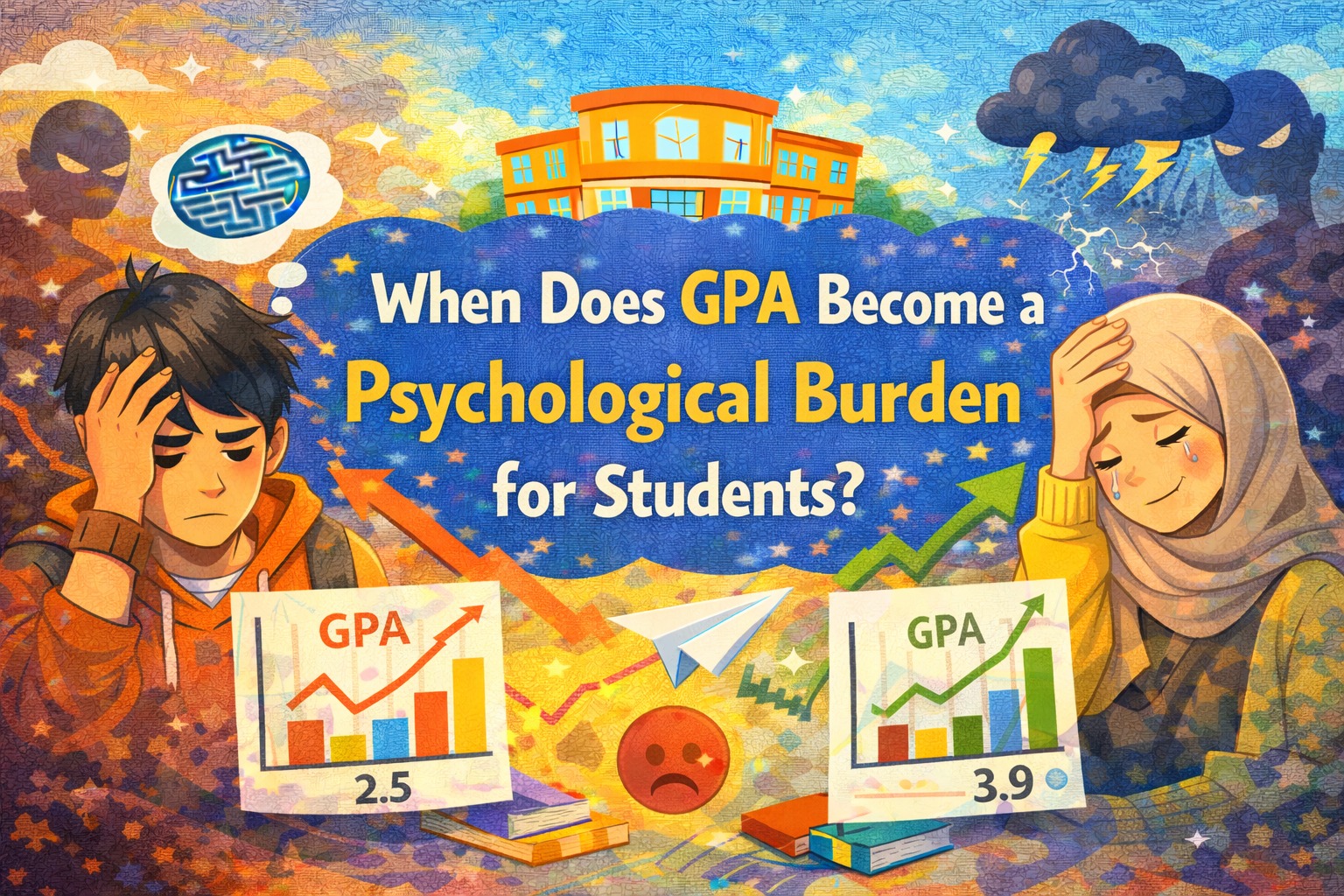
Grade Point Average (GPA) is often seen as a critical indicator of academic success. While it can motivate students to excel, it may also become a source of stress and anxiety when excessive pressure or unrealistic expectations are involved. Understanding when GPA turns into a psychological burden is essential for maintaining both academic performance and mental well-being.
GPA is important, but it should complement personal growth, not define it.
PRESSURE FROM EXTERNAL EXPECTATIONS
Students often face pressure from parents, peers, or institutions to maintain high GPAs. When expectations are unrealistic, the fear of failure can overwhelm students, leading to anxiety, low self-esteem, and burnout. This external pressure often makes GPA feel like a heavy weight rather than a measure of learning.
Balancing expectations with personal goals is key to reducing stress.
SELF-IMPOSED PRESSURE
Sometimes, students themselves create psychological burdens by equating their self-worth with their GPA. Perfectionism and constant comparison with others can intensify feelings of inadequacy when grades fall short of expectations. Over time, this self-imposed pressure can negatively affect mental health and academic motivation.
Developing self-compassion helps students view GPA as feedback rather than judgment.
SIGNS THAT GPA IS A BURDEN
Indicators that GPA has become psychologically taxing include:
* Chronic anxiety or stress related to grades
* Loss of motivation or interest in learning
* Sleep disturbances or physical symptoms of stress
* Reluctance to engage in extracurricular activities
Recognizing these signs early allows students to seek support before stress escalates.
STRATEGIES TO MITIGATE THE BURDEN
Students can manage GPA-related stress by:
* Setting realistic academic goals
* Prioritizing learning over grades
* Seeking support from counselors or mentors
* Practicing stress management techniques like mindfulness or time management
These approaches help maintain mental well-being while still striving for academic achievement.
CONCLUSION
GPA can become a psychological burden when external or self-imposed pressures overshadow the learning process. By understanding the warning signs and adopting coping strategies, students can maintain balance, protect their mental health, and pursue academic success without unnecessary stress.
Tentang Penulis
Gusti Ayu Tita
Penulis — Universitas STEKOM
Penulis aktif yang berfokus pada isu-isu akademik, teknologi pendidikan, dan pengembangan sumber daya manusia di lingkungan kampus.