THE IMPORTANCE OF SOFT SKILLS IN THE WORKPLACE
In an increasingly competitive job market, technical expertise or hard skills alone are often not enough to ensure career success. Even with strong knowledge in a specific field, the ability to communicate effectively, work in teams, and solve problems often becomes the main determining factor in professional success. These abilities are known as *soft skills*—non-technical skills related to how individuals interact and adapt in professional environments.
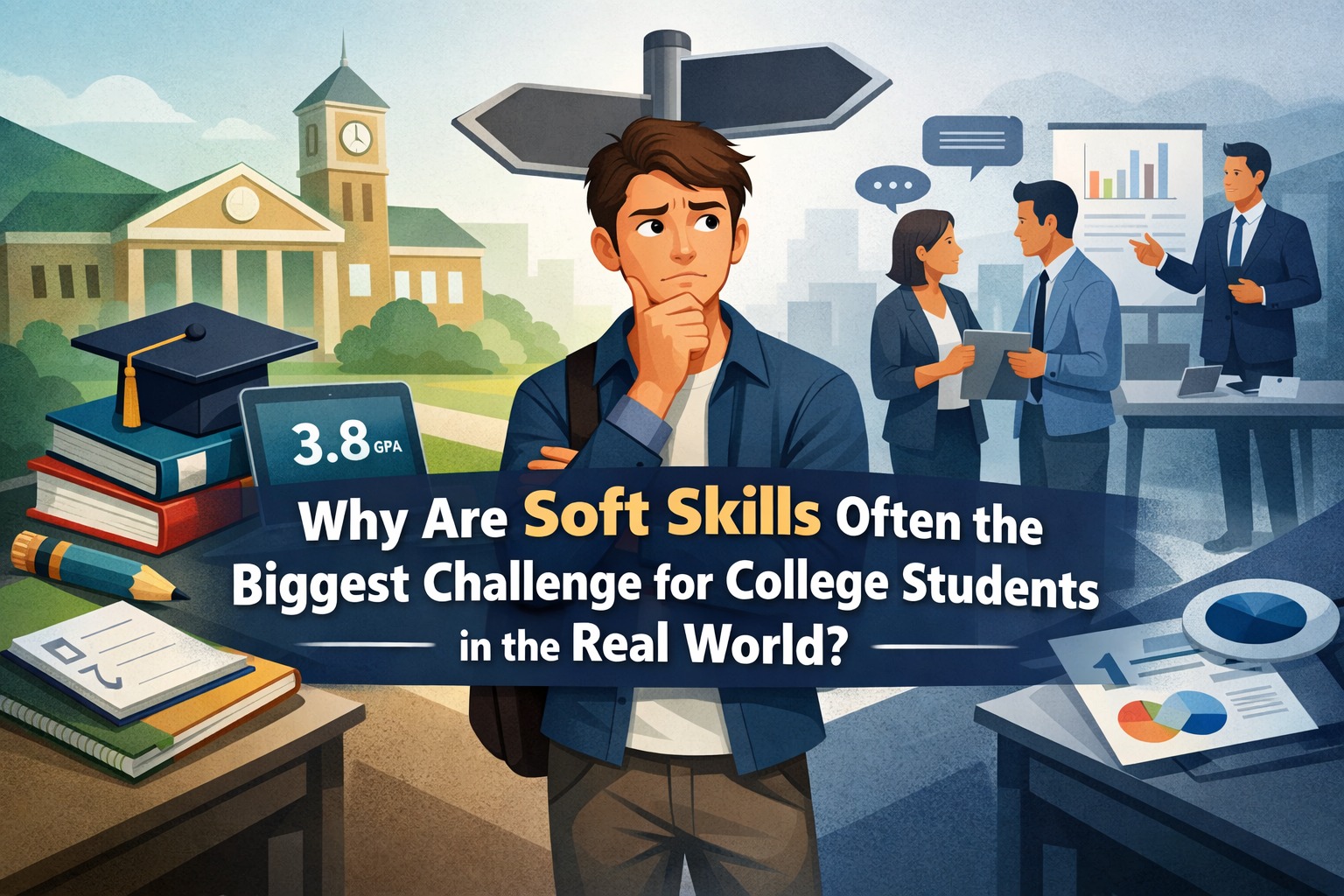
However, despite their importance, many students struggle to develop their soft skills. In fact, these skills often become the biggest challenge when they enter the workforce. What causes soft skills to become such a barrier for many students? Let’s explore this further.
THE DIFFERENCE BETWEEN HARD SKILLS AND SOFT SKILLS
Before going deeper, it is important to understand the fundamental difference between hard skills and soft skills. Hard skills refer to technical abilities or knowledge that can be objectively measured, such as operating specific software, foreign language proficiency, or engineering expertise. In contrast, soft skills are more personal and social in nature, including communication, leadership, empathy, and adaptability.
While hard skills can be learned through formal education or training, soft skills often develop through experience and social interaction in everyday life. This is why soft skills tend to be more challenging for students who are just beginning their careers.
LIMITED STUDENT EXPERIENCE IN PROFESSIONAL ENVIRONMENTS
One of the main reasons soft skills become a major challenge for students is their lack of experience in professional environments. During their academic years, most students focus heavily on theoretical learning and completing academic assignments. They often have limited opportunities to develop essential social and interpersonal skills needed in the workplace, such as communicating with colleagues or managing conflicts.
For example, in group projects, students may be able to divide tasks and achieve targets effectively, yet still struggle with effective communication, strong teamwork, or good time management. In the workplace, however, these skills are crucial for creating a productive and harmonious work environment.
COMMUNICATION AND LEADERSHIP CHALLENGES
Two soft skills that often pose significant challenges for students are communication and leadership. While students may be accustomed to speaking in class or writing academic papers, they are not always prepared to communicate in professional contexts involving colleagues, supervisors, or clients.
The ability to convey ideas clearly and persuasively, listen actively, and adapt to different communication styles is often overlooked in formal education. Additionally, students who enter managerial or leadership roles will face leadership challenges such as guiding teams, giving direction, and maintaining team morale—skills that cannot be learned through theory alone.
THE IMPACT OF TECHNOLOGICAL DEVELOPMENT ON SOFT SKILLS
Rapid technological advancement and digitalization have also influenced how students interact and work. With many tasks now handled online or automated, students tend to rely heavily on technology, sometimes at the expense of direct social interaction.
This can hinder the development of soft skills such as face-to-face communication, negotiation, and teamwork. Therefore, although technology increases efficiency, students must actively seek opportunities for direct interaction—through campus organizations, internships, or collaborative projects—to ensure their soft skills continue to develop.
SOLUTIONS FOR DEVELOPING SOFT SKILLS
Developing soft skills is not easy, but it is certainly possible. One of the best ways for students to improve their soft skills is by actively participating in extracurricular activities or campus organizations. These environments allow students to interact with diverse individuals, learn teamwork, and lead projects.
In addition, attending training sessions or workshops focused on leadership, communication, or time management can be very beneficial. Students can also pursue internships to gain firsthand experience in the workplace, broaden their perspectives, and strengthen their interpersonal skills.
CONCLUSION: SOFT SKILLS AS THE KEY TO CAREER SUCCESS
Soft skills are indeed one of the biggest challenges students face when entering the workforce. While technical skills are essential, the ability to adapt, communicate, and collaborate is equally important. Therefore, students should begin developing their soft skills early—through practical experience and relevant training. With strong soft skills, they will be better prepared to meet the demands of an increasingly dynamic professional world.
Tentang Penulis
Gusti Ayu Tita
Penulis — Universitas STEKOM
Penulis aktif yang berfokus pada isu-isu akademik, teknologi pendidikan, dan pengembangan sumber daya manusia di lingkungan kampus.