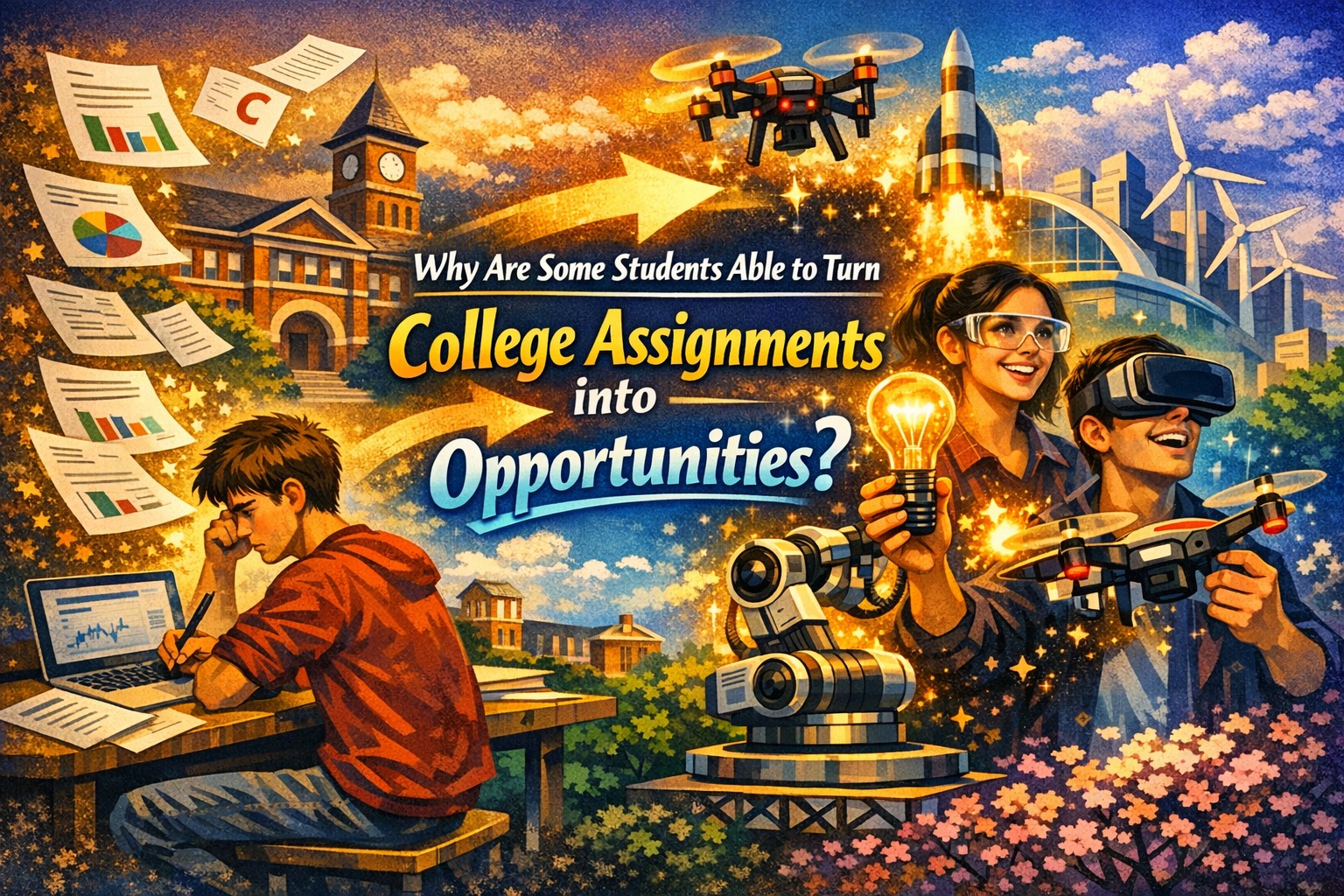
College assignments are a common part of academic life. Every student receives tasks such as essays, research papers, presentations, or group projects. For many students, these assignments are simply requirements that must be completed and submitted on time. However, some students manage to turn these same assignments into meaningful opportunities.
This difference raises an interesting question. Why are certain students able to transform ordinary academic tasks into valuable experiences, while others see them only as obligations? The answer often lies in mindset, creativity, and the willingness to go beyond basic expectations.
DIFFERENT MINDSETS TOWARD ACADEMIC TASKS
One of the main reasons some students create opportunities from assignments is their mindset. Instead of seeing assignments as routine tasks, they view them as platforms for exploration and creativity.
Students with this perspective often ask deeper questions about their work. They try to understand how the topic relates to real-world issues and how their ideas might create practical value. This mindset encourages curiosity and motivates students to invest more effort in developing their assignments.
As a result, their work often becomes more meaningful and impactful than a typical submission.
CURIOSITY DRIVES CREATIVE THINKING
Curiosity plays an essential role in transforming assignments into opportunities. When students are genuinely interested in a topic, they tend to explore it more deeply. This exploration can lead to new insights, ideas, and solutions.
For example, a student researching digital marketing might experiment with creating a real online campaign. Another student studying environmental science may design a small project that promotes sustainable habits. These actions demonstrate how curiosity can transform theoretical assignments into practical experiences.
Creative thinking often grows when students allow themselves to explore beyond the basic instructions of the assignment.
GOING BEYOND MINIMUM REQUIREMENTS
Another factor that distinguishes innovative students is their willingness to go beyond what is required. While many students focus on completing assignments as quickly as possible, others choose to refine their work and develop it further.
They may add additional research, test their ideas in real situations, or collaborate with others to improve the project. By doing so, their assignments can evolve into something more significant, such as a portfolio piece, a research initiative, or even a potential business concept.
This extra effort often opens doors to new opportunities that were not originally planned.
SUPPORTIVE LEARNING ENVIRONMENTS
The academic environment also plays an important role in encouraging students to develop opportunities from assignments. Lecturers who promote discussion, creativity, and real-world problem solving help students think more independently.
Universities that offer innovation programs, competitions, or entrepreneurship activities provide platforms where students can expand their academic work. These opportunities allow students to transform their assignments into projects with real impact.
When educational institutions support creative exploration, students feel more confident experimenting with their ideas.
BUILDING SKILLS THAT EXTEND BEYOND THE CLASSROOM
Students who treat assignments as opportunities also develop valuable skills. Critical thinking, research ability, communication, and problem solving are strengthened when students actively engage with their work.
These skills are highly important in professional life. Employers often value individuals who can transform ideas into practical solutions. Therefore, students who develop their assignments into meaningful projects gain an advantage when entering the job market.
Assignments become not only academic exercises but also preparation for real-world challenges.
CONCLUSION
The ability to turn college assignments into opportunities depends on several key factors, including mindset, curiosity, initiative, and a supportive learning environment. Students who approach assignments with creativity and determination often discover possibilities that others might overlook.
By going beyond minimum requirements and exploring new ideas, students can transform ordinary coursework into valuable experiences. In doing so, they not only improve their academic performance but also prepare themselves for future innovation and success.
Tentang Penulis
Gusti Ayu Tita
Penulis — Universitas STEKOM
Penulis aktif yang berfokus pada isu-isu akademik, teknologi pendidikan, dan pengembangan sumber daya manusia di lingkungan kampus.