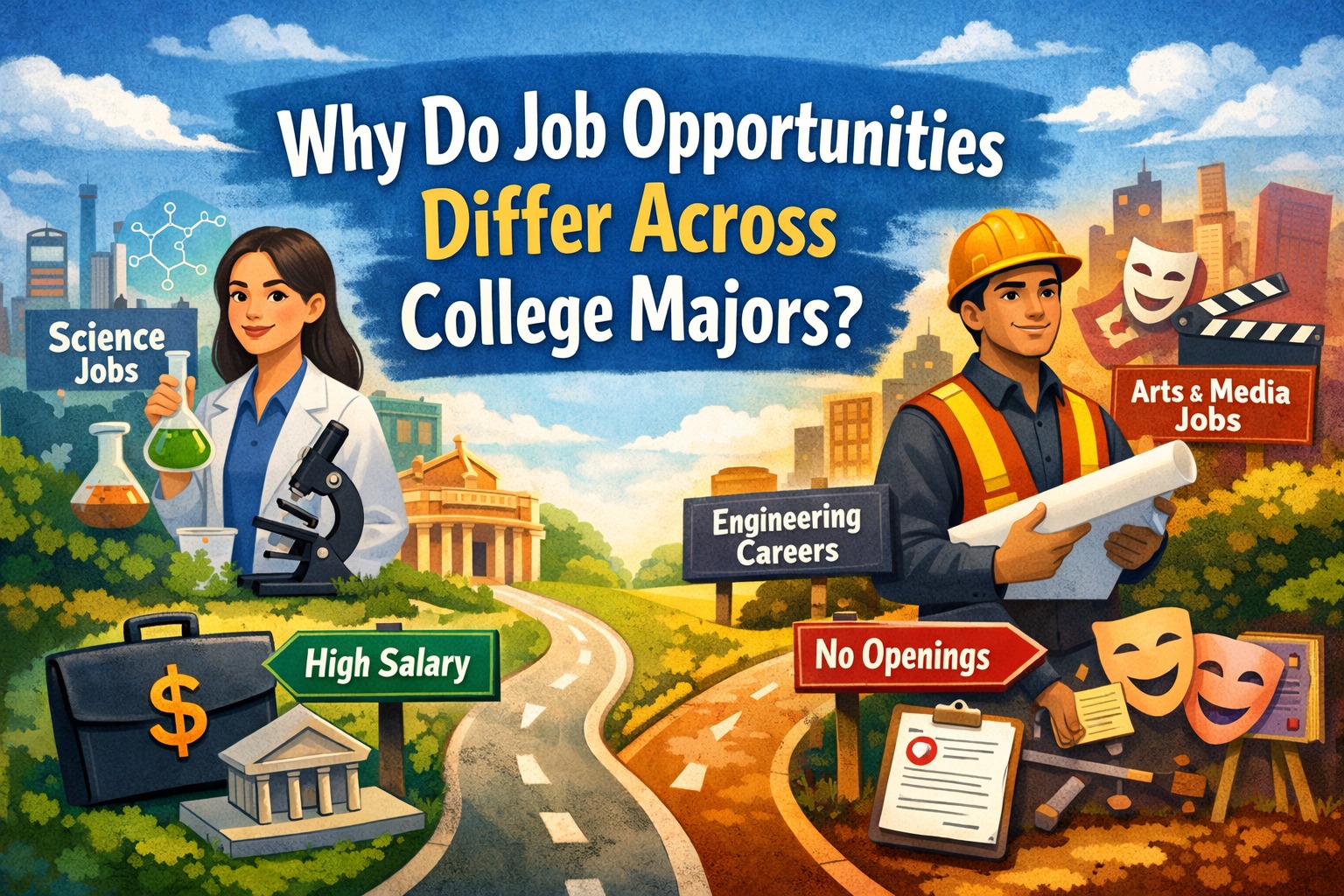
Choosing a college major is not only about personal interest but also about future career prospects. Many students ask: why do job opportunities differ across majors? This question is essential, as real-world conditions show that not all graduates have equal access to employment opportunities.
These differences are influenced by various factors, including industry needs, technological developments, and individual competencies. This article comprehensively explains the reasons behind varying job prospects among majors to help students make more strategic decisions.
DIFFERENCES IN INDUSTRY DEMAND
Each industry sector has specific workforce requirements. The technology sector, for example, continues to grow alongside digital acceleration. As a result, majors related to information technology, data science, and software engineering experience high demand.
Meanwhile, some other sectors may grow more slowly due to market saturation or automation. When industry demand increases in a specific sector, relevant majors naturally enjoy broader job prospects.
ECONOMIC DYNAMICS AND MARKET TRENDS
Global and national economic conditions also influence employment opportunities. During economic expansion, companies tend to recruit more employees. However, during economic slowdowns, hiring is often limited.
Market trends further shape workforce needs. For instance, increasing environmental awareness has boosted growth in renewable energy and sustainability-related careers. Majors aligned with these trends generally benefit from greater opportunities.
NUMBER OF GRADUATES AND COMPETITION LEVEL
Another significant factor is the number of graduates from each major. Highly popular programs often produce large numbers of graduates annually. If job growth does not match this output, competition becomes more intense.
Conversely, majors with fewer graduates may offer more stable opportunities due to lower competition. In this context, the balance between supply and demand plays a critical role.
COMPETENCIES AND SKILL DEVELOPMENT
Although majors matter, modern employers increasingly prioritize practical competencies. Technical expertise, communication skills, analytical ability, and work experience are key recruitment indicators.
Students who actively pursue internships, training, certifications, and practical projects tend to stand out. Therefore, job prospects are influenced not only by one’s major but also by how effectively individuals develop themselves during college.
ADAPTABILITY IN THE DIGITAL ERA
Digital transformation has reshaped the employment landscape. Many traditional jobs have been replaced, while new professions continue to emerge. Majors that adapt to technological developments often update their curricula more rapidly.
Students with adaptive mindsets and lifelong learning habits are more capable of entering diverse industries, even outside their academic background.
CONCLUSION
Why do job opportunities differ across majors? The answer lies in a combination of industry demand, economic dynamics, graduate supply, individual competencies, and adaptability to change. No major is absolutely superior or inferior.
Choosing a major should be based on personal interests, strengths, and awareness of industry trends. With the right skill development strategy, job opportunities can be maximized regardless of academic background.
Tentang Penulis
Gusti Ayu Tita
Penulis — Universitas STEKOM
Penulis aktif yang berfokus pada isu-isu akademik, teknologi pendidikan, dan pengembangan sumber daya manusia di lingkungan kampus.