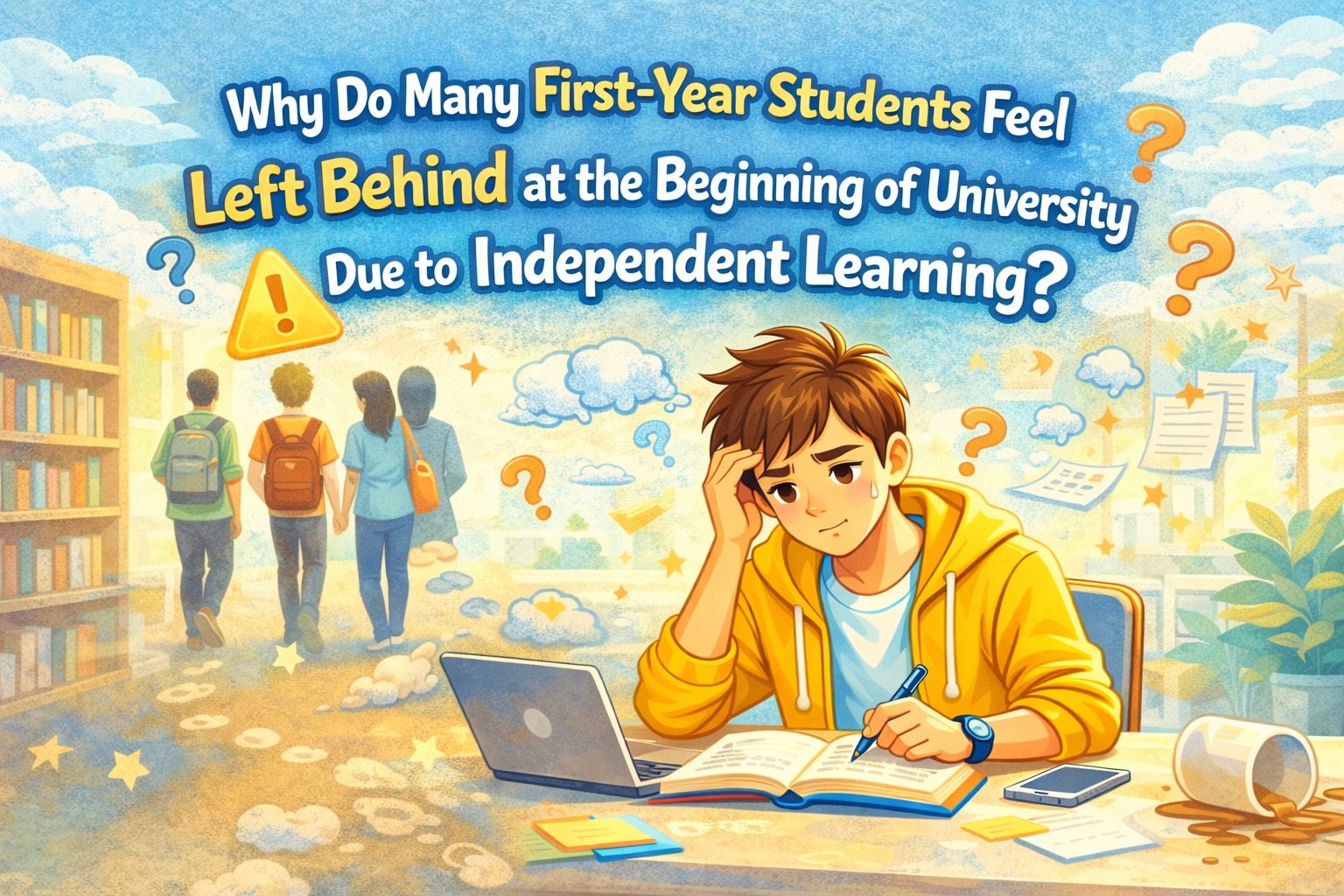
The early period of university life is often a confusing phase for first-year students. Many of them feel left behind from the very first semester, particularly when they are required to face an independent learning system that is significantly different from their learning experiences in school. This feeling develops gradually and is often unnoticed until it begins to affect academic performance. So, what makes independent learning a reason why many first-year students feel left behind?
OVERLY DRASTIC CHANGES IN LEARNING PATTERNS
In school, students are accustomed to receiving detailed and well-structured explanations of learning materials. Upon entering university, this pattern shifts toward a learning approach that demands personal initiative. Lecturers provide general overviews, while deeper understanding of the material becomes the student’s responsibility.
This rapid transition leaves many first-year students without sufficient time to adjust their learning strategies, making academic content feel difficult to keep up with from the very beginning.
MISUNDERSTANDING THE MEANING OF INDEPENDENT LEARNING
Many first-year students interpret independent learning as studying without direction. As a result, they read materials randomly, complete assignments without clear strategies, and lack defined learning goals.
This misunderstanding leads to ineffective learning processes and reinforces feelings of falling behind compared to peers who have already developed effective study patterns.
LACK OF TIME MANAGEMENT SKILLS
Independent learning heavily depends on the ability to manage time effectively. At the beginning of university, students are faced with flexible schedules, but this flexibility is often misused.
Without proper planning, study time is easily replaced by other activities. Consequently, first-year students struggle to keep up with continuously increasing materials and assignments.
LIMITED GUIDANCE AND FEEDBACK
Within the university learning system, feedback from lecturers is not always provided quickly or in detail. First-year students who still require guidance often feel uncertain about whether their learning approaches are correct.
This uncertainty undermines their confidence and creates the perception that they are always one step behind.
THE IMPACT OF SOCIAL AND PSYCHOLOGICAL PRESSURE
Observing peers who appear more active in class or who grasp materials more easily often triggers feelings of inferiority. First-year students tend to compare themselves to others without realizing that each individual goes through a different adaptation process.
This psychological pressure can intensify feelings of falling behind and reduce motivation for independent learning.
AN OFTEN-OVERLOOKED ADAPTATION PROCESS
Feeling left behind at the beginning of university is actually part of the adaptation process. However, many students interpret this condition as a personal failure rather than a stage of learning.
By recognizing that adaptation takes time, students can begin to improve their learning strategies and gradually build effective independent learning habits.
CONCLUSION
The feeling of falling behind experienced by first-year students at the beginning of university often stems from the demands of independent learning that have not yet been fully understood or mastered. Changes in learning systems, time management skills, and psychological pressure are key contributing factors. With better understanding and consistent adaptation, independent learning can shift from being a challenge to becoming a strength in students’ academic journeys.
Tentang Penulis
Gusti Ayu Tita
Penulis — Universitas STEKOM
Penulis aktif yang berfokus pada isu-isu akademik, teknologi pendidikan, dan pengembangan sumber daya manusia di lingkungan kampus.