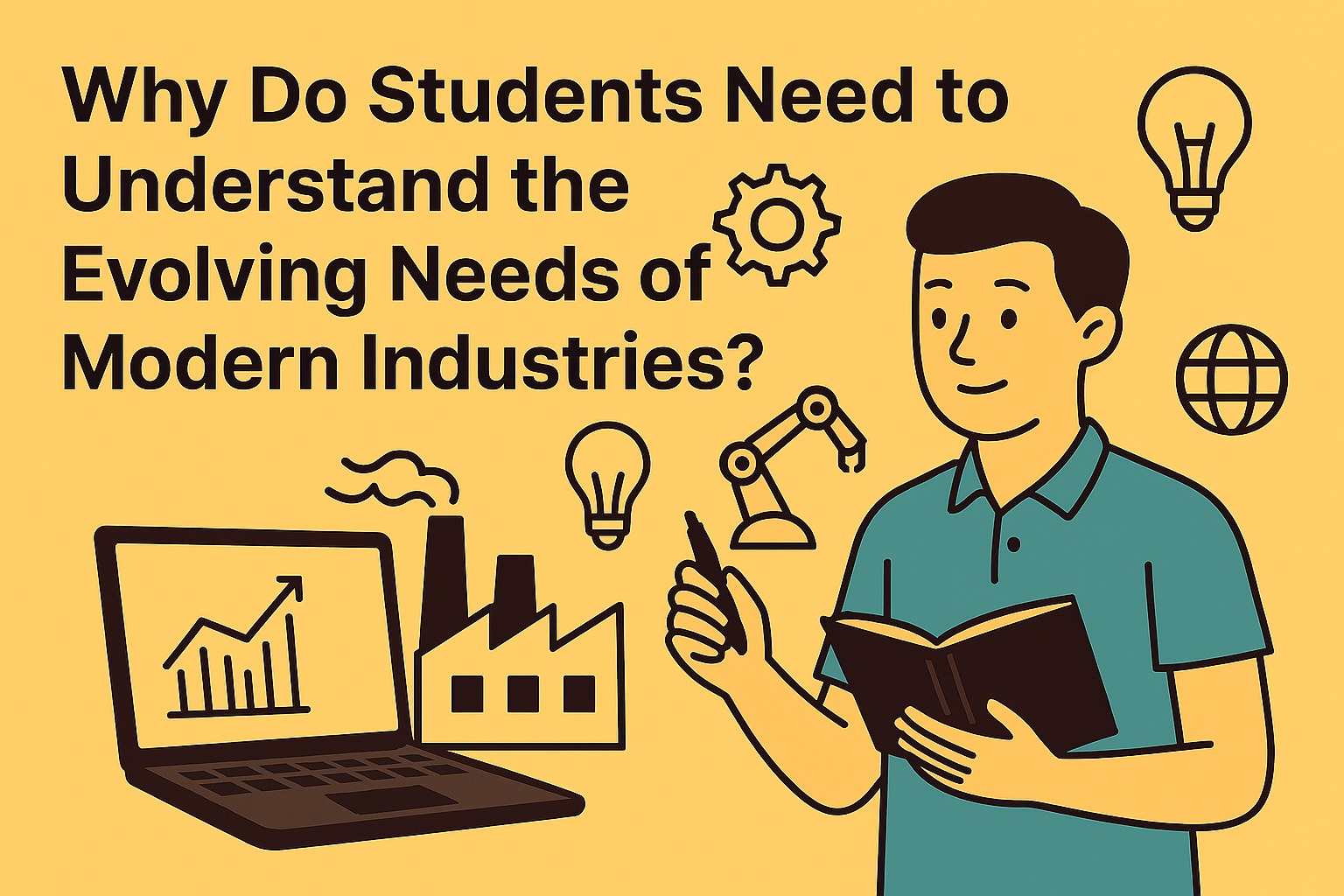
The industrial world and job market are evolving rapidly, especially with advancements in technology and shifting market demands. For students, understanding the constantly changing industry needs is an essential step in preparing for the increasingly dynamic job market. With the right knowledge about industry demands, students can align their skills and choose careers that match current trends. This article will discuss why understanding the ever-changing industry needs is crucial for students.
INDUSTRY TRENDS AFFECTING SKILL REQUIREMENTS
Industries continue to transform due to changes in technology, consumption patterns, and socio-economic developments. For example, with the growing adoption of artificial intelligence (AI) and automation, many tasks that were previously performed manually are now being replaced by technology. This shift is changing the skills required in sectors like manufacturing, banking, and services.
For instance, the banking sector, which once focused heavily on direct customer service, now increasingly requires workers with skills in data analysis and digital technology. Students who do not keep up with these trends risk lacking the skills needed for today’s industries. Therefore, it is essential for students to understand how skill requirements in the workforce are evolving, so they can adjust to these developments.
HELPING STUDENTS CHOOSE RELEVANT CAREERS
Understanding the ever-changing industry needs helps students select career paths that are more relevant and promising. Sectors like information technology, renewable energy, and digital health are increasingly in demand as global trends continue to evolve. Students who are aware of these changes can plan their careers more strategically by choosing majors or fields that will offer them greater opportunities in the future.
On the other hand, if students do not follow the changes in industry demands, they could end up choosing careers in sectors that are either declining or undergoing significant transformation. For example, industries that heavily rely on manual labor are increasingly being replaced by technology, and job opportunities in these sectors are likely to diminish.
FACILITATING THE DEVELOPMENT OF RELEVANT SKILLS
When students understand the changing needs of industries, they can focus on developing skills that are more aligned with market demands. Many industries today require more advanced digital and technical skills, such as big data analytics, software development, and expertise in fields like cybersecurity and cloud computing.
Students who are aware of these trends can opt for courses or additional training that match the needs of the job market. For example, students studying economics or management can deepen their knowledge in data analysis tools or digital platforms like Google Analytics or Microsoft Power BI. By developing these skills, students can prepare themselves to meet the evolving needs of industries.
HELPING STUDENTS INNOVATE AND CREATE
In a rapidly changing work environment, innovation and creativity have become highly valued skills. Many industries today are in need of individuals who can quickly adapt to changes and provide innovative solutions. Students who understand the changing needs of industries can develop new ideas that meet trends and challenges faced by companies.
For example, in the tech industry, companies developing applications or hardware need individuals who can innovate and create new products or features that address the ever-changing demands of the market. Students who follow these trends will be better prepared to think creatively and generate solutions that can be implemented within relevant industries.
ENHANCING STUDENT READINESS TO FACE WORKPLACE CHALLENGES
A solid understanding of industry needs also enhances students' readiness to face challenges in the job market. By understanding changes in trends and industry demands, students can be better prepared to adapt and contribute in an increasingly dynamic and complex work environment. They will have more confidence because they have prepared themselves with relevant skills that align with market needs.
Moreover, students who understand industry needs can more easily evaluate and adjust their expectations regarding the types of jobs and sectors they want to enter. This will make it easier for them to plan more strategic and focused career steps.
CONCLUSION
Understanding the evolving needs of industries is crucial for students who want to prepare themselves for a challenging job market. By understanding industry trends, students can choose more relevant careers, develop the necessary skills, and innovate to meet market challenges. Therefore, it is vital for students to stay updated with industry developments and adjust to market needs to be better prepared to compete and succeed in the workforce.
Tentang Penulis
Gusti Ayu Tita
Penulis — Universitas STEKOM
Penulis aktif yang berfokus pada isu-isu akademik, teknologi pendidikan, dan pengembangan sumber daya manusia di lingkungan kampus.