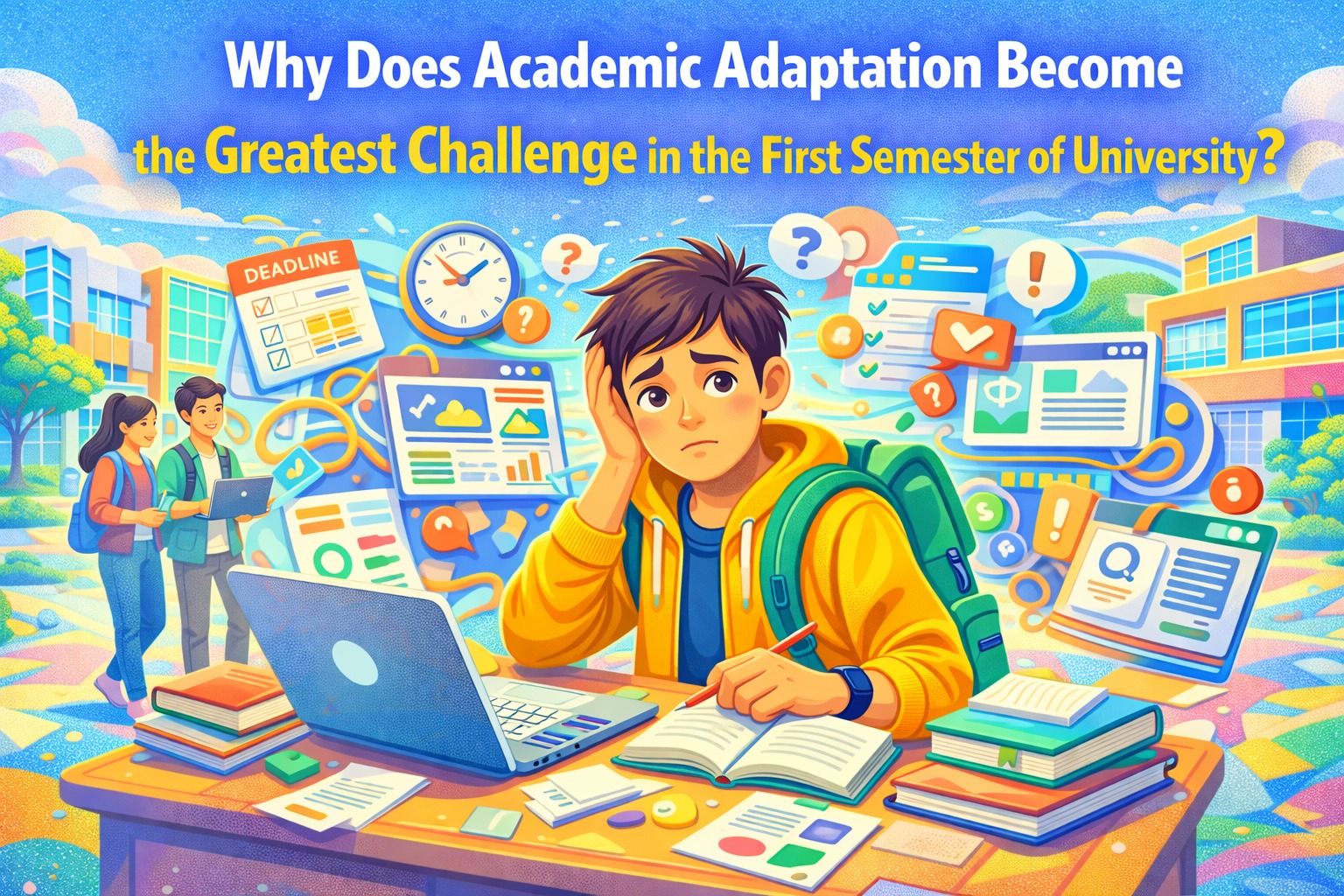
The first semester of university is often the most decisive phase in a student’s academic journey. During this period, new students must adjust to a different learning system, higher academic demands, and a new campus environment. It is therefore not surprising that academic adaptation is frequently regarded as the greatest challenge at the beginning of university life.
This raises an important question: what makes academic adaptation so difficult during the first semester of university?
SIGNIFICANT DIFFERENCES IN LEARNING PATTERNS
One of the main reasons is the significant difference between learning patterns in school and in higher education. In school, students are accustomed to clear guidance and close supervision. At university, however, students are expected to actively seek information and understand course materials independently.
This shift requires adjustments in mindset and study habits that cannot happen instantly.
DEMANDS FOR ACADEMIC INDEPENDENCE
Academic adaptation is also closely related to the demand for independence. Students must manage their study schedules, complete assignments without constant reminders, and take full responsibility for their academic performance.
For new students, these demands often feel overwhelming and create additional pressure.
COURSE LOAD AND ASSIGNMENTS IN THE FIRST SEMESTER
In the first semester, students are usually required to take several courses at once, each with different types of assignments. This workload demands effective time management skills from the very beginning.
Without appropriate learning strategies, students may struggle to keep up with the pace of university studies.
ADJUSTMENT TO UNIVERSITY ACADEMIC CULTURE
Academic culture in higher education emphasizes critical discussion, analytical thinking, and active participation. For new students, this culture may feel unfamiliar and challenging.
Adjusting to this academic culture is an essential part of the academic adaptation process.
PSYCHOLOGICAL FACTORS AMONG NEW STUDENTS
In addition to academic aspects, psychological factors play a significant role. Feelings of anxiety, fear of failure, and lack of self-confidence often emerge during the first semester. These mental pressures can affect students’ focus and motivation to learn.
If not managed properly, psychological challenges can further complicate academic adaptation.
THE ROLE OF THE ENVIRONMENT IN SUPPORTING ADAPTATION
A supportive campus environment—such as approachable lecturers, peer learning groups, and academic support services—greatly assists students during the adaptation process. Such support helps students feel that they are not facing academic challenges alone.
CONCLUSION
Academic adaptation becomes the greatest challenge in the first semester of university due to changes in learning patterns, demands for independence, academic workload, and psychological pressure. With proper understanding and environmental support, students can navigate this adaptation period successfully and build a strong academic foundation for their future studies.
Tentang Penulis
Gusti Ayu Tita
Penulis — Universitas STEKOM
Penulis aktif yang berfokus pada isu-isu akademik, teknologi pendidikan, dan pengembangan sumber daya manusia di lingkungan kampus.