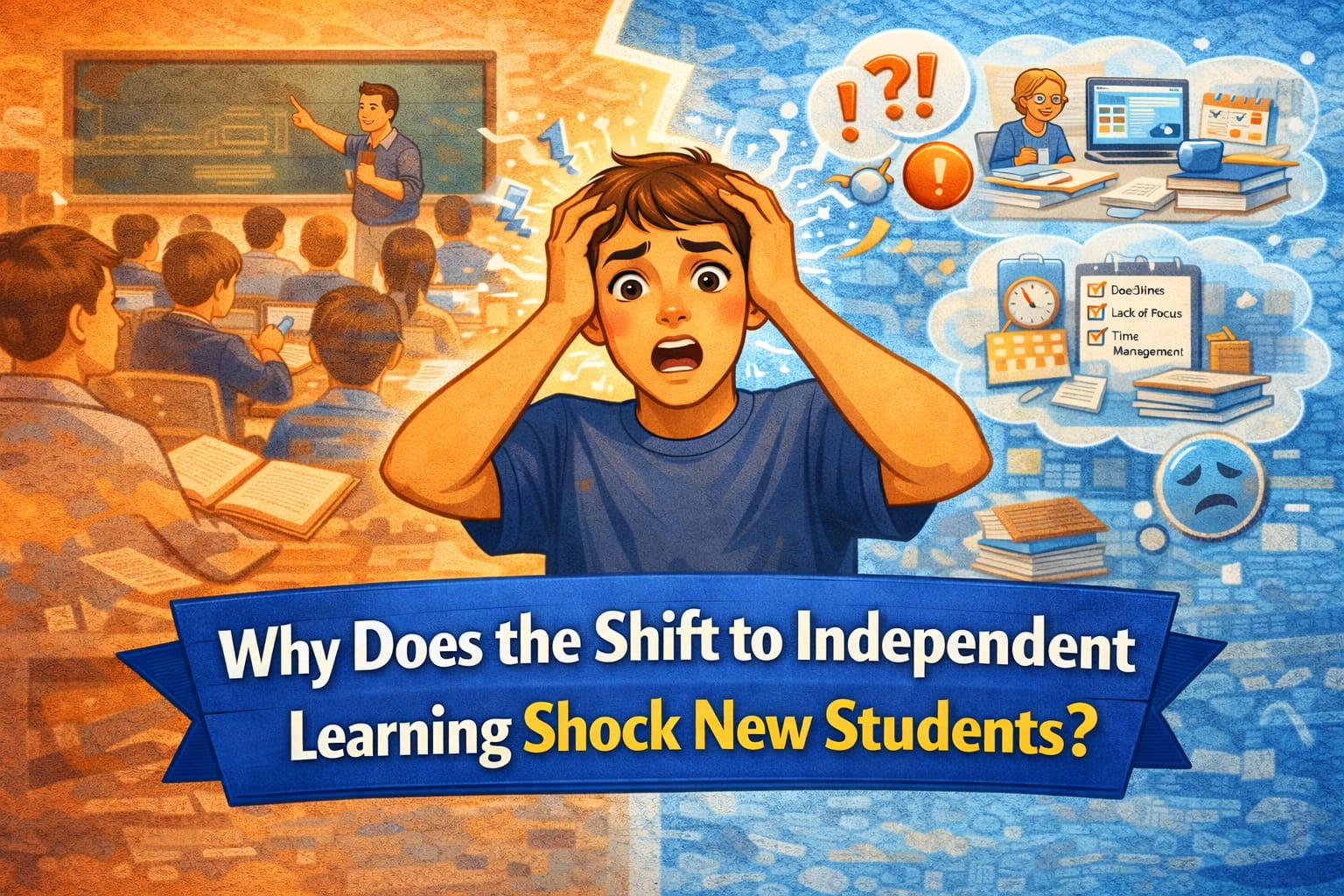
Why the Transition to Independent Learning Often Shocks Freshmen
Entering university life represents a major phase of change for freshmen. One of the most noticeable changes is the demand for independent learning. Many students feel surprised, overwhelmed, and even lost when facing this learning system. This article discusses why the transition to independent learning often becomes a shocking experience for first-year university students.
CHANGES IN THE ROLES OF LECTURERS AND STUDENTS
In school, teachers play an active role in directing the learning process. In higher education, however, lecturers function more as facilitators. Students are expected to seek, understand, and develop academic material independently. This shift in roles is often not fully realized at the beginning, causing freshmen to feel a lack of guidance.
University learning emphasizes student independence rather than direct instruction.
INCREASED DEMANDS FOR RESPONSIBILITY
Independent learning requires a high level of responsibility for managing time and academic tasks. Students must organize study schedules, complete assignments on time, and prepare before classes. For freshmen, this freedom can feel like pressure, especially if they are not used to managing responsibilities on their own.
Greater academic freedom comes with greater personal responsibility.
THE GAP BETWEEN EXPECTATIONS AND REALITY OF UNIVERSITY LIFE
Many freshmen expect university life to be more relaxed than school. In reality, academic workloads, reading materials, assignments, and discussions are often more complex. This gap between expectations and reality makes students feel unprepared and shocked when they must quickly adapt to independent learning.
Unrealistic expectations contribute to adjustment difficulties.
LACK OF INDEPENDENT LEARNING SKILLS
Not all students are equipped with independent learning skills before entering university. Abilities such as critical reading, effective note-taking, and searching for academic references are often underdeveloped. As a result, freshmen need time to adjust and build new learning habits.
Independent learning skills must be developed gradually.
THE ROLE OF ENVIRONMENT AND ACADEMIC SUPPORT
The campus environment plays an important role in helping students navigate this transition. Support from lecturers, peers, and academic services can reduce feelings of shock and stress. Group discussions and academic guidance become essential tools for helping students adapt to independent learning.
Supportive academic environments ease the transition process.
CONCLUSION
The transition to independent learning often shocks freshmen due to changes in roles, increased responsibility, and the gap between expectations and the reality of university life. With environmental support and mental readiness, students can adapt and develop effective independent learning skills for their long-term academic journey.
Tentang Penulis
Gusti Ayu Tita P
Penulis — Universitas STEKOM
Penulis aktif yang berfokus pada isu-isu akademik, teknologi pendidikan, dan pengembangan sumber daya manusia di lingkungan kampus.