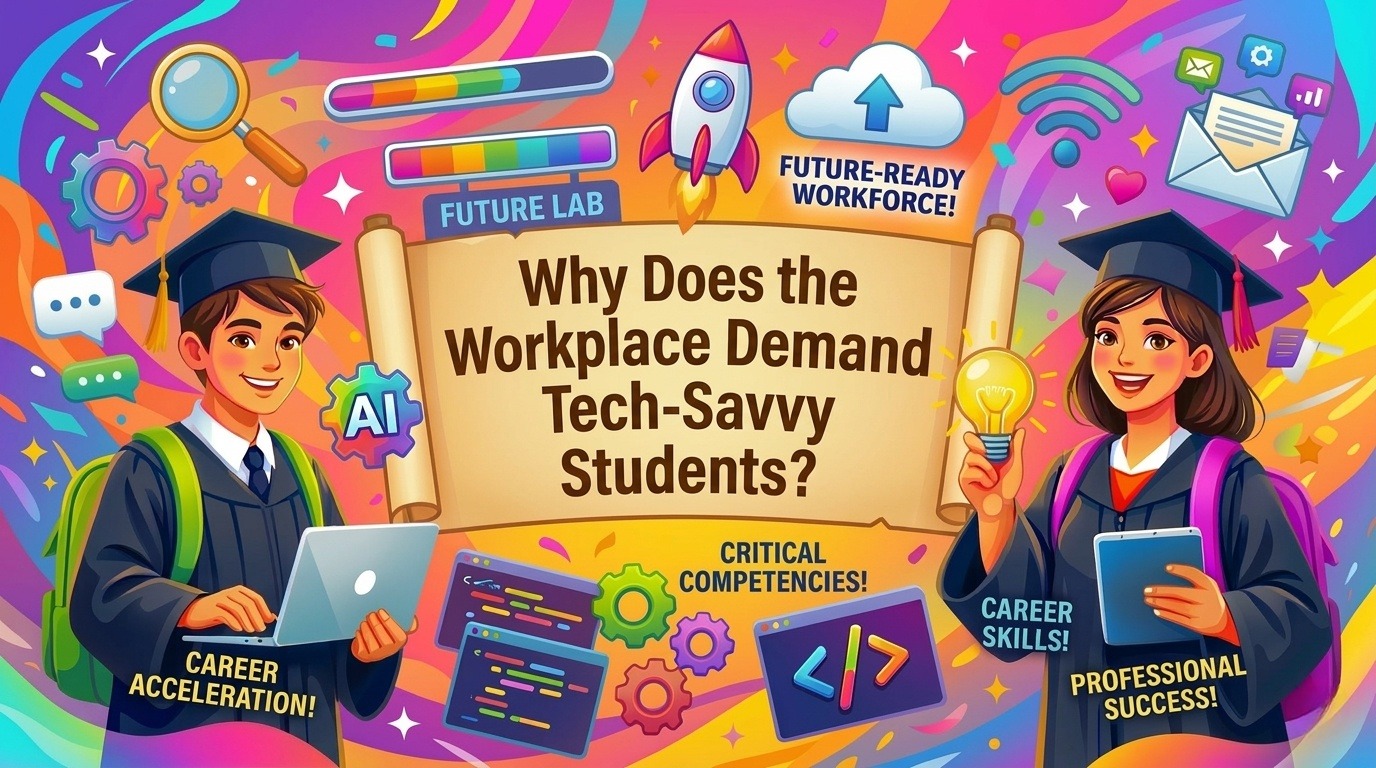
In today’s rapidly evolving professional environment, being tech-savvy has become a critical requirement for students entering the workforce. Employers increasingly rely on technology to improve productivity, communication, and innovation, making digital proficiency a highly valued skill. Students who are comfortable using technology are better equipped to meet the demands of modern workplaces and stand out in competitive job markets.
Tech-savvy students not only adapt more quickly to workplace systems but also contribute to creative problem-solving and efficient workflows.
THE IMPORTANCE OF TECHNOLOGY SKILLS IN THE WORKPLACE
Technology skills encompass the ability to use digital tools, software, and platforms effectively, as well as to analyze and communicate information digitally. Students who possess these skills can navigate complex work systems, collaborate with colleagues remotely, and apply innovative solutions to challenges.
Employers expect candidates to be proficient in digital communication, data management, and online collaboration. Students who lack these competencies may face challenges adapting to the technological demands of modern organizations.
BENEFITS OF BEING TECH-SAVVY
Students with strong technology skills gain several advantages in professional settings:
* Higher Employability: Employers prefer candidates who can handle digital tools efficiently.
* Enhanced Productivity: Technology allows tasks and projects to be completed more quickly and accurately.
* Improved Adaptability: Tech-savvy students can easily learn new software and systems.
* Innovation and Creativity: Technology enables students to develop creative solutions and improve processes.
STRATEGIES TO BECOME TECH-SAVVY
Students can develop technology skills through practical approaches:
1. Enroll in Digital Skills Courses
Online courses or workshops teach essential software, applications, and digital collaboration tools.
2. Practice Using Technology Regularly
Hands-on experience with productivity apps, communication platforms, and research tools enhances proficiency.
3. Participate in Technology-Based Projects or Clubs
Involvement in digital initiatives or student organizations provides practical experience.
4. Understand Cybersecurity and Digital Ethics
Awareness of data privacy, online security, and responsible technology use is essential for professional development.
LONG-TERM ADVANTAGES
Being tech-savvy not only helps students during their studies but also prepares them for long-term career growth. Students with strong technology skills are more adaptable, innovative, and competitive, increasing their chances of success in any professional environment.
CONCLUSION
The modern workplace demands tech-savvy students because technology drives efficiency, communication, and innovation. By developing digital skills, students enhance employability, adaptability, and problem-solving abilities, ensuring they are well-prepared to thrive in technology-driven industries.
Tentang Penulis
Gusti Ayu Tita
Penulis — Universitas STEKOM
Penulis aktif yang berfokus pada isu-isu akademik, teknologi pendidikan, dan pengembangan sumber daya manusia di lingkungan kampus.