
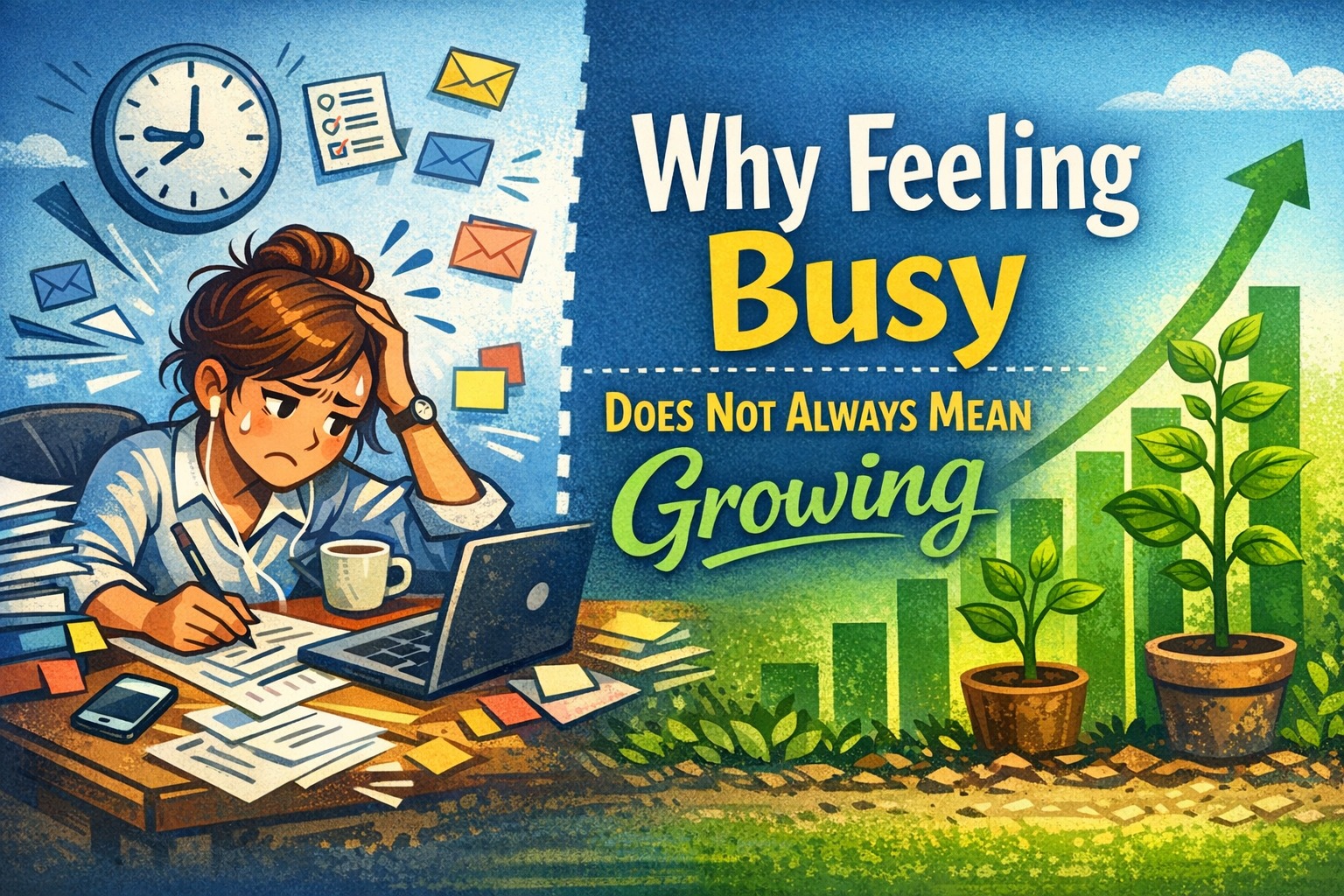
In today’s fast-paced world, being busy is often seen as a badge of honor. Full calendars, endless to-do lists, and constant notifications make many people feel productive and important. However, feeling busy does not always mean you are growing. In fact, busyness can sometimes hide stagnation rather than progress. Understanding the difference between activity and growth is essential for personal and professional development.
THE ILLUSION OF BUSYNESS
Busyness creates the illusion of progress. When you are occupied all day, it feels like you are moving forward. Yet, many tasks only keep you running in place. Answering emails, attending meetings, or repeating routine work may consume time without adding new skills, insights, or value.
True growth requires intention. Without clear goals, busyness becomes a distraction that prevents you from focusing on what truly matters.
ACTIVITY VS MEANINGFUL PROGRESS
Not all activities lead to improvement. Growth happens when actions challenge your current abilities, expand your thinking, or move you closer to long-term goals. Busy schedules often prioritize urgency over importance, leading to reactive behavior instead of strategic progress.
Meaningful progress usually involves:
- Learning something new
- Improving a skill
- Solving complex problems
- Reflecting and adjusting direction
If your daily activities do not include these elements, you may be busy but not growing.
WHY PEOPLE CONFUSE BUSY WITH PRODUCTIVE
Many people equate busyness with productivity because it feels safe. Staying busy avoids discomfort, such as learning new skills or taking risks. It also provides social validation, as society often praises those who appear constantly occupied.
However, productivity is about results, not motion. Growth-focused productivity asks one critical question: Is this activity making me better or closer to my goals?
THE ROLE OF REFLECTION IN GROWTH
Growth requires pauses. Reflection allows you to evaluate what is working, what is not, and why. Constant busyness leaves no space for thinking, which can trap you in ineffective routines.
Setting aside time to review progress, learn from mistakes, and plan intentionally turns effort into improvement. Without reflection, even hard work can lose its direction.
HOW TO SHIFT FROM BUSY TO GROWING
To move beyond empty busyness, consider these steps:
- Clarify your goals – Know what growth looks like for you.
- Prioritize impact – Focus on tasks that create long-term value.
- Schedule learning time – Treat skill development as a priority.
- Measure progress, not hours – Evaluate outcomes instead of time spent.
- Allow thinking space – Make room for rest and reflection.
By aligning daily actions with meaningful goals, busyness can transform into real development.
CONCLUSION
Being busy is not the same as growing. While activity fills time, growth builds capability, insight, and direction. True progress comes from intentional actions, continuous learning, and regular reflection. Instead of asking how busy you are, start asking how much you are improving. That shift in mindset is where real growth begins.
Tentang Penulis
Gusti Ayu Tita
Penulis — Universitas STEKOM
Penulis aktif yang berfokus pada isu-isu akademik, teknologi pendidikan, dan pengembangan sumber daya manusia di lingkungan kampus.



