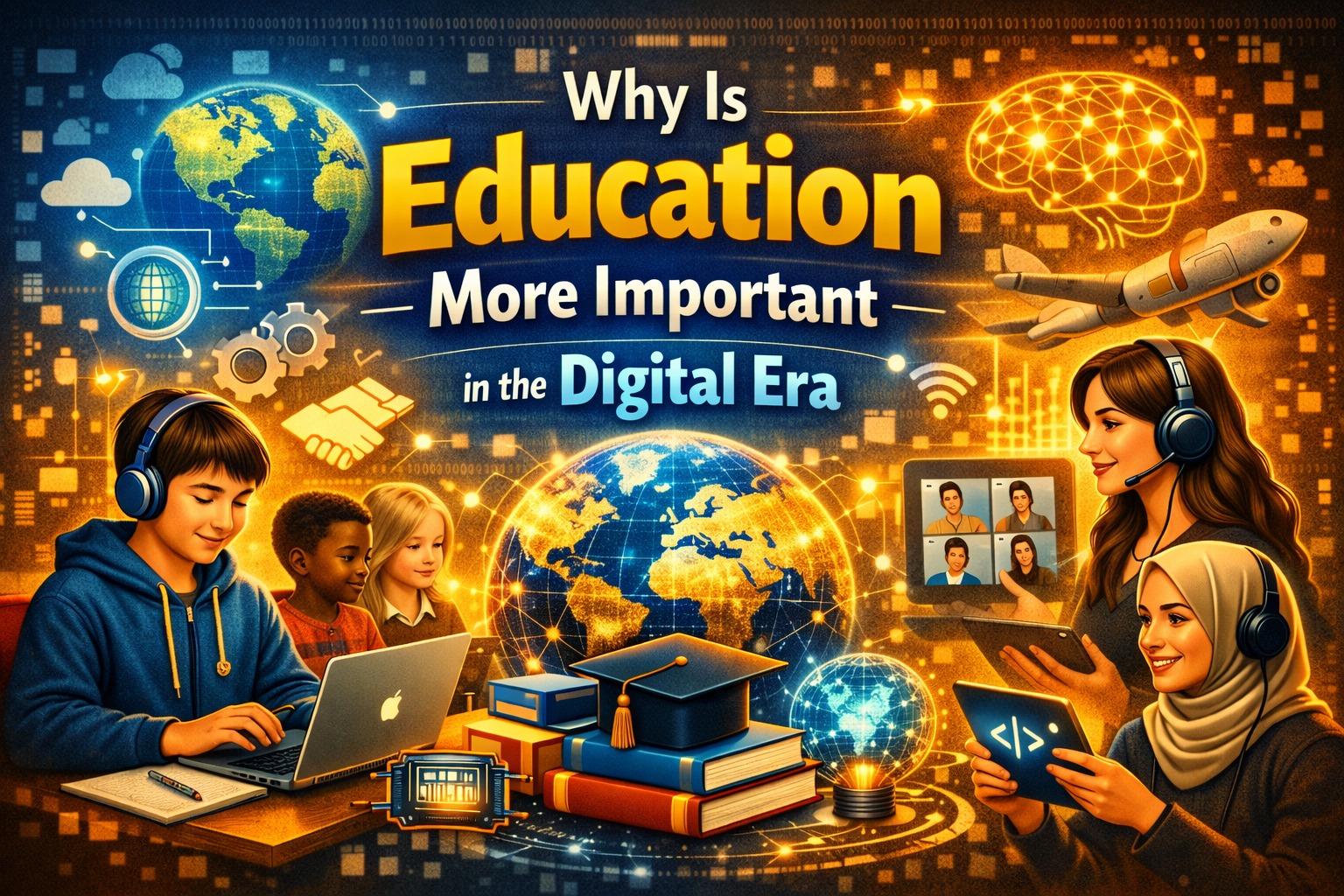
In the fast‑paced digital era, education has become more vital than ever. As technology continues to reshape industries, communication, and daily life, education provides the foundation for individuals to adapt, innovate, and succeed. It is not just about learning facts—it’s about developing the skills and mindset needed to thrive in a world driven by information and connectivity.
THE IMPACT OF TECHNOLOGY ON LEARNING
Technology has transformed how people access and share knowledge. Online learning platforms, digital libraries, and virtual classrooms have made education more flexible and inclusive. Students can now learn anytime, anywhere, and collaborate globally. This digital transformation encourages creativity, critical thinking, and problem‑solving—skills essential for success in the modern world.
EDUCATION AS A TOOL FOR DIGITAL LITERACY
In the digital era, being educated means understanding how to use technology responsibly. Education teaches digital literacy—the ability to evaluate online information, protect privacy, and use digital tools effectively. Without proper education, individuals risk misinformation and lack of competitiveness in a technology‑driven job market.
PREPARING FOR FUTURE JOBS AND INNOVATION
Automation and artificial intelligence are changing the nature of work. Education equips people with the adaptability and innovation needed to meet these changes. By learning coding, data analysis, and creative problem‑solving, students prepare for careers that require both technical and human skills. Lifelong learning becomes the key to staying relevant in the digital economy.
BUILDING ETHICAL AND SOCIAL VALUES THROUGH EDUCATION
While technology connects the world, education ensures that human values remain central. It teaches empathy, ethics, and social responsibility—qualities that technology alone cannot provide. Educated individuals are better equipped to use digital tools for positive change, promoting equality and sustainability.
Conclusion
Education is the cornerstone of progress in the digital era. It empowers individuals to harness technology, think critically, and act ethically. As the world becomes more interconnected, education remains the most powerful tool to shape a future that values both innovation and humanity.
Digital Era, Education, Technology, Innovation, Digital Literacy
Tentang Penulis
Gusti Ayu Tita
Penulis — Universitas STEKOM
Penulis aktif yang berfokus pada isu-isu akademik, teknologi pendidikan, dan pengembangan sumber daya manusia di lingkungan kampus.