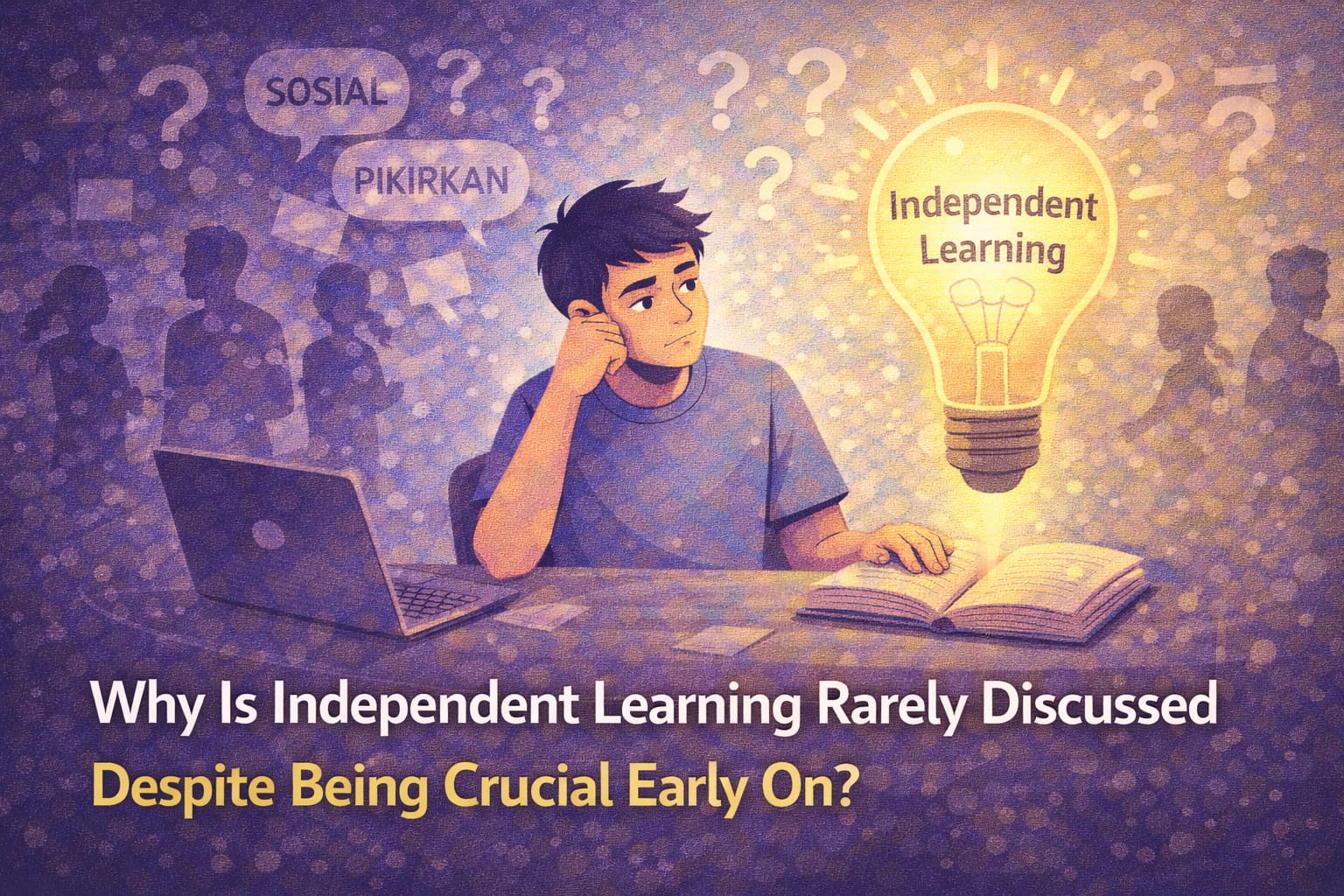
Why Independent Learning Is Often Overlooked at the Beginning of University
Independent learning is one of the core skills students must develop from the start of university life. However, this topic is rarely discussed in depth during orientation programs or early academic materials. As a result, many first-year students feel confused and struggle to manage their own learning process. This article explores why independent learning is often overlooked, even though it is highly essential.
A STRONG FOCUS ON ACADEMIC CONTENT
At the beginning of university, freshman orientation programs usually emphasize campus introduction, regulations, and academic content. Topics related to independent learning are often assumed to be something students can figure out on their own. Without early guidance, however, many students struggle to adapt to effective learning patterns.
Early orientation often overlooks guidance on how to learn independently.
LIMITED UNDERSTANDING OF INDEPENDENT LEARNING
Many students do not fully understand the concept of independent learning. They often assume that independent learning simply means studying alone without guidance. In reality, it involves time management, learning strategies, and regular self-evaluation. This lack of understanding prevents students from maximizing their academic potential from the start.
Independent learning requires structured self-management, not isolation.
THE ROLE OF LECTURERS AND THE ACADEMIC ENVIRONMENT
Lecturers and the campus environment play an important role in guiding students toward independent learning. However, early academic stages tend to focus solely on content delivery. Guidance on developing independent learning strategies is often neglected, even though it significantly helps students adapt more quickly.
Academic support is crucial for building independent learning skills.
THE IMPACT ON FIRST-YEAR STUDENTS
Because independent learning is rarely discussed, first-year students often feel overwhelmed by assignments, academic reading, and time management demands. Many resort to procrastination or dependence on peers, slowing their adaptation process and increasing stress levels.
Lack of guidance increases academic stress and delays adaptation.
STRATEGIES TO SUPPORT INDEPENDENT LEARNING FROM THE START
Several steps first-year students can take include:
1. Creating realistic study schedules from the beginning of the semester.
2. Identifying personal learning styles to choose the most effective methods.
3. Actively engaging in discussions with peers or lecturers to clarify materials.
4. Breaking study materials into smaller, manageable sections.
5. Conducting regular evaluations to adjust learning strategies.
With these strategies, students can overcome limited guidance and develop strong independent learning skills.
Early strategy development strengthens learning independence.
CONCLUSION
Independent learning is often overlooked at the beginning of university because orientation programs focus more on academic content and campus introduction. However, this skill is essential for helping first-year students adapt quickly and remain productive. With a clear understanding of the concept, effective learning strategies, and support from the academic environment, students can develop independent learning skills from the very start of their university journey.
Tentang Penulis
Gusti Ayu Tita
Penulis — Universitas STEKOM
Penulis aktif yang berfokus pada isu-isu akademik, teknologi pendidikan, dan pengembangan sumber daya manusia di lingkungan kampus.