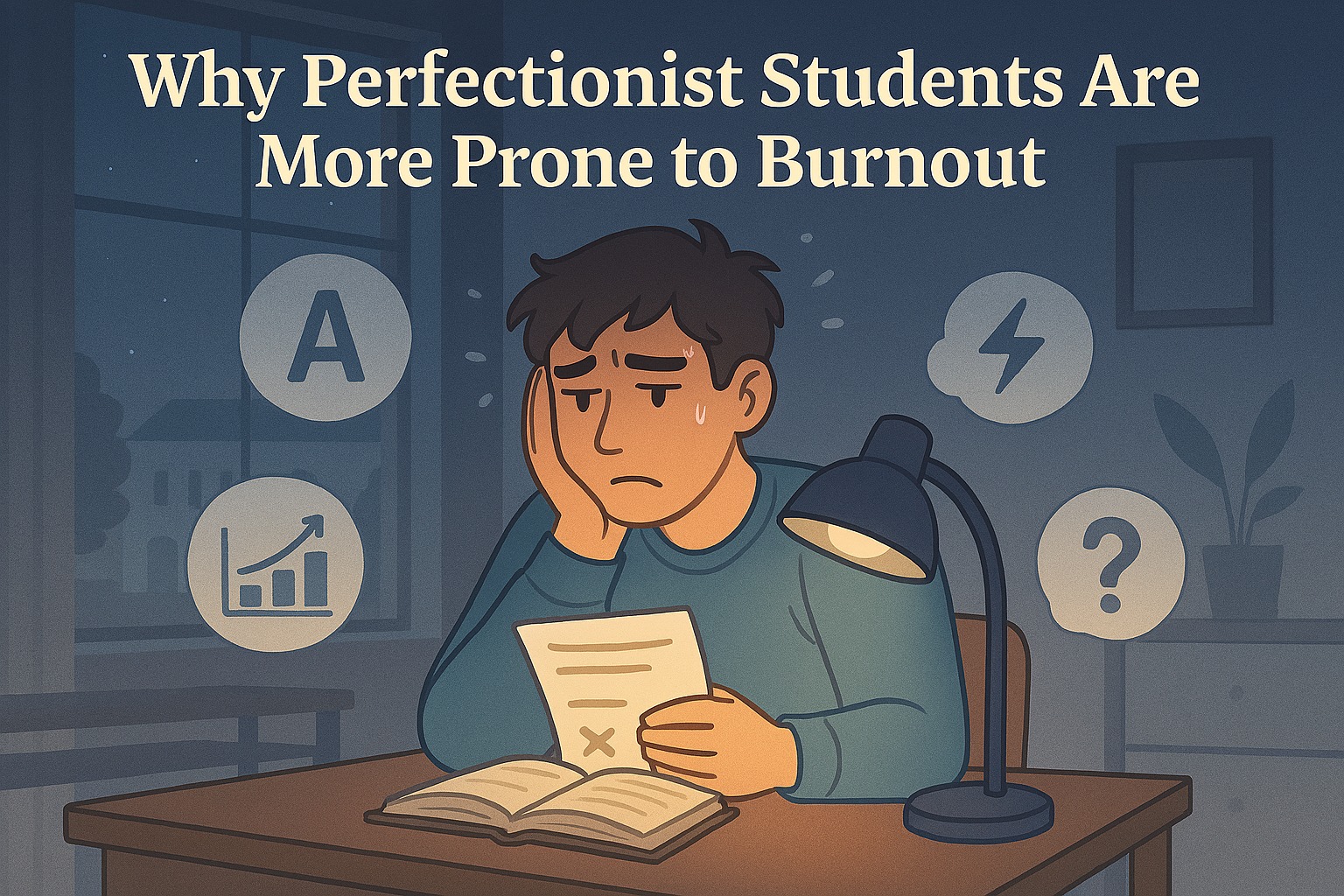
Perfectionism is often praised in academic environments. Students who push themselves to achieve flawless results are seen as disciplined and motivated. However, beneath this drive for excellence lies a hidden risk: burnout. Many perfectionist students experience chronic stress, emotional exhaustion, and declining motivation because their standards become impossible to sustain. Burnout does not happen overnight. It develops when continuous pressure outweighs recovery and self-care. Understanding why perfectionist students are especially vulnerable can help them maintain ambition without sacrificing mental well-being.
UNDERSTANDING PERFECTIONISM IN STUDENT LIFE
Perfectionism goes beyond wanting to do well. It involves rigid expectations and harsh self-evaluation.
In academic settings, this mindset often appears as:
- Fear of making mistakes
- Overworking assignments
- Difficulty feeling satisfied with results
- Constant comparison with peers
While high standards can motivate effort, excessive perfectionism turns achievement into a constant demand.
HOW PERFECTIONISM LEADS TO BURNOUT
Burnout occurs when sustained pressure drains emotional and physical energy. Perfectionist tendencies accelerate this process in several ways:
CONTINUOUS SELF-PRESSURE
Students rarely allow themselves to rest or feel accomplished.
FEAR OF IMPERFECTION
Mistakes trigger anxiety and extra effort.
OVERCOMMITMENT
Students take on more work to meet unrealistic expectations.
EMOTIONAL STRAIN
Persistent stress reduces resilience and motivation.
Together, these patterns create a cycle of exhaustion that is difficult to escape.
BUILDING A SUSTAINABLE ACHIEVEMENT MINDSET
Long-term academic success depends on balance. Students who allow room for mistakes, recovery, and growth build resilience. When perfectionism becomes flexible rather than rigid, ambition remains strong without leading to exhaustion.
Excellence thrives when paired with well-being.
CONCLUSION
Perfectionist students are more prone to burnout because constant pressure, fear of mistakes, and unrealistic expectations drain emotional energy. By recognizing the warning signs and adopting healthier strategies, students can maintain high standards without sacrificing mental health. Sustainable success comes from balance, not relentless perfection.
Tentang Penulis
Gusti Ayu Tita P
Penulis — Universitas STEKOM
Penulis aktif yang berfokus pada isu-isu akademik, teknologi pendidikan, dan pengembangan sumber daya manusia di lingkungan kampus.