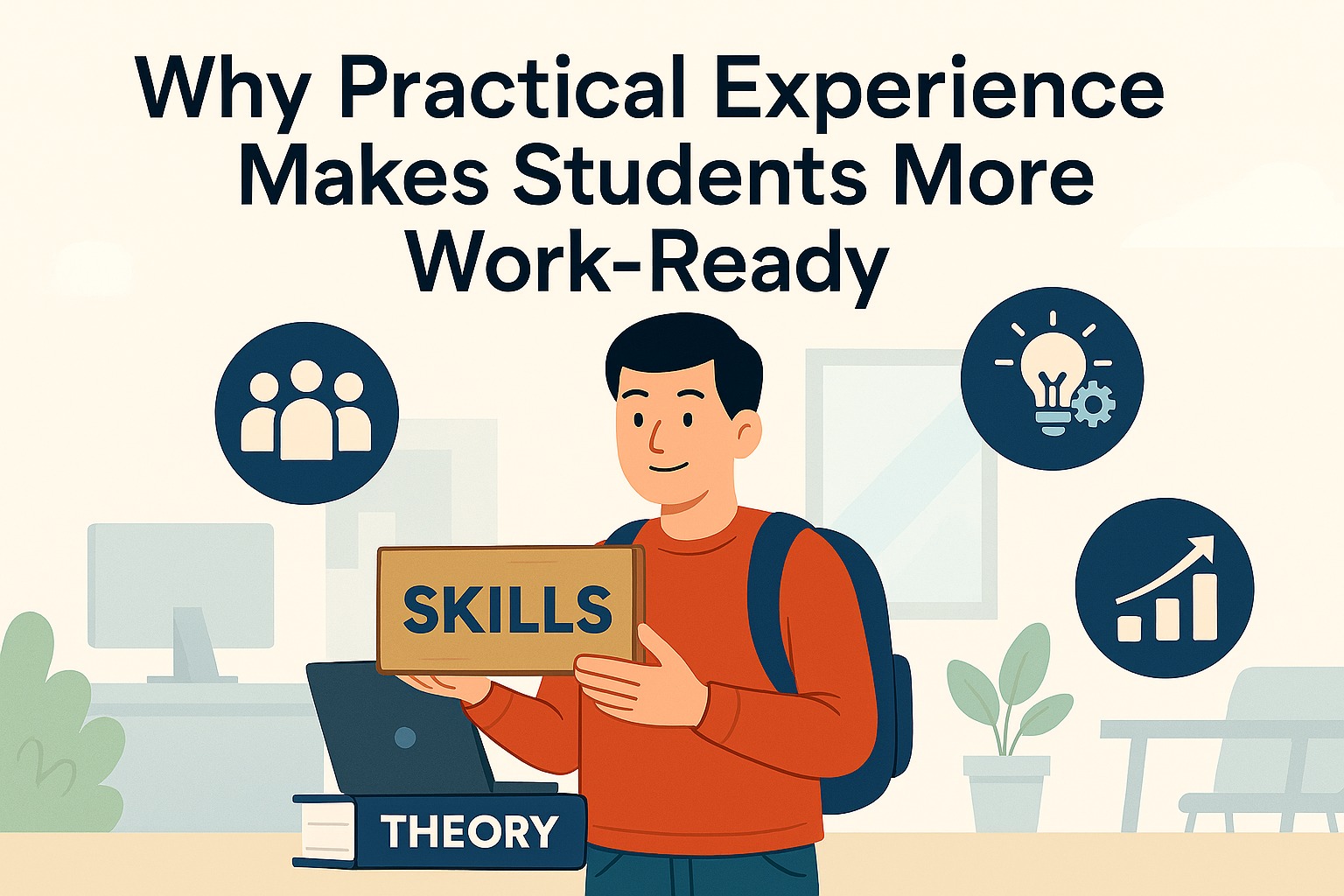
In today’s competitive job market, academic knowledge alone is no longer enough to prepare students for professional life. Employers increasingly seek graduates who can apply what they have learned, adapt quickly, and contribute from day one. This is why practical experience plays a crucial role in making students more work-ready. Practical experience allows students to bridge the gap between classroom learning and real-world expectations. Through hands-on activities, students gain valuable insights into workplace dynamics, responsibilities, and challenges that cannot be fully taught through theory alone.
PRACTICAL EXPERIENCE BUILDS REAL-WORLD SKILLS
One of the biggest advantages of practical experience is the development of real-world skills. Internships, projects, and part-time work expose students to tasks and situations that reflect actual job requirements.
Through practical experience, students develop:
- Problem-solving and critical thinking skills
- Communication and teamwork abilities
- Time management and professional discipline
These skills are essential for success in any workplace and are highly valued by employers.
BRIDGING THE GAP BETWEEN THEORY AND PRACTICE
While theory provides foundational knowledge, practical experience shows students how that knowledge is applied in real situations. This connection helps students better understand their field and see the relevance of what they study.
By applying theory in practice, students can:
- Strengthen their understanding of key concepts
- Identify gaps in their knowledge
- Learn how to adapt theory to complex situations
This process makes learning more meaningful and effective.
INCREASING CONFIDENCE AND PROFESSIONAL AWARENESS
Practical experience significantly boosts students’ confidence. By facing real tasks and responsibilities, students become more comfortable making decisions and taking initiative.
In addition, students gain professional awareness, such as:
- Understanding workplace expectations
- Learning professional communication standards
- Adapting to organizational culture
This awareness helps students transition more smoothly into full-time employment.
ENHANCING EMPLOYABILITY AND CAREER OPPORTUNITIES
Students with practical experience often stand out in the job market. Employers view experience as evidence that a candidate is prepared to handle workplace challenges.
Practical experience enhances employability by:
- Strengthening resumes and portfolios
- Increasing success in job interviews
- Opening access to wider career opportunities
Many students also receive job offers from companies where they completed internships or projects.
DEVELOPING ADAPTABILITY AND PROBLEM-SOLVING SKILLS
Work environments are constantly changing, and adaptability is a critical skill. Practical experience teaches students how to respond to unexpected challenges and adjust to new situations.
By working on real problems, students learn to:
- Think independently and creatively
- Handle pressure and deadlines
- Find effective solutions in uncertain conditions
These abilities make students more resilient and valuable employees.
COMPLEMENTING ACADEMIC LEARNING
Practical experience does not replace academic learning; it complements it. When combined, theory and practice create a well-rounded educational experience that prepares students for both professional and lifelong learning.
Students who balance academic study with practical experience are more likely to:
- Perform better in their careers
- Continue developing new skills
- Stay relevant in evolving industries
CONCLUSION
Practical experience is a key factor in making students more work-ready. It equips them with essential skills, confidence, and adaptability that go beyond academic knowledge. By engaging in internships, projects, and hands-on learning opportunities, students can better prepare themselves for the demands of the modern workplace and build a strong foundation for long-term career success.
Tentang Penulis
Gusti Ayu Tita
Penulis — Universitas STEKOM
Penulis aktif yang berfokus pada isu-isu akademik, teknologi pendidikan, dan pengembangan sumber daya manusia di lingkungan kampus.