
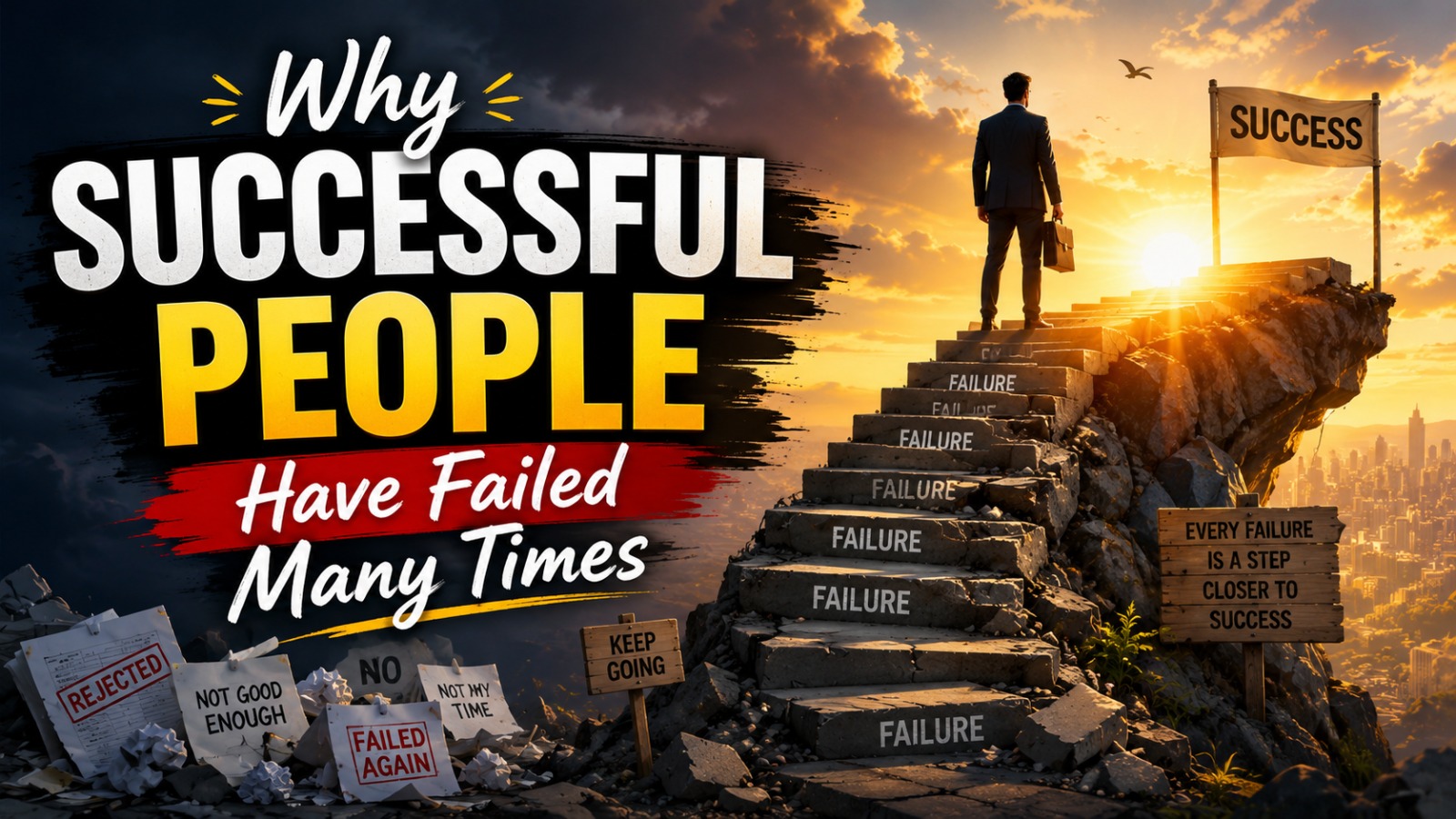
Failure is often misunderstood as the opposite of success. In reality, failure is one of the strongest stepping stones toward achievement. Many of the world’s most accomplished individuals share a common trait: they failed repeatedly before reaching their goals. Understanding why failure is part of the journey can transform the way we approach challenges and personal growth.
FAILURE BUILDS RESILIENCE
Resilience is the ability to recover quickly from setbacks, and it is one of the most valuable traits successful people possess. Every failure teaches emotional strength and persistence.
When people experience setbacks, they learn how to adapt, manage stress, and keep moving forward despite obstacles. Instead of giving up, successful individuals treat failure as training. Over time, repeated attempts strengthen mental endurance and make future challenges easier to face.
Failure also removes the fear of trying. Once someone realizes that failure is survivable, they become more willing to take calculated risks.
FAILURE PROVIDES REAL-WORLD LESSONS
Success rarely teaches as much as failure does. When things go wrong, people are forced to analyze what happened and why. This process creates valuable real-world knowledge that cannot be learned from theory alone.
Mistakes highlight weaknesses, reveal gaps in planning, and expose flawed assumptions. These lessons help individuals improve their strategies and make smarter decisions in the future.
In many cases, failure is simply feedback in disguise. Each setback provides information that moves a person closer to the right solution.
FAILURE ENCOURAGES INNOVATION
Innovation often grows from unsuccessful attempts. When the first plan fails, people are pushed to think differently and explore new approaches.
Some of the best ideas in business, science, and technology were born after multiple failed experiments. Without failure, there would be no reason to experiment or improve.
Trying again after failure encourages creativity. It forces individuals to leave their comfort zones and discover solutions they might never have considered otherwise.
FAILURE BUILDS CHARACTER AND HUMILITY
Success without struggle can create overconfidence, but failure teaches humility and empathy. People who have faced setbacks understand the effort required to achieve goals.
This perspective helps successful individuals become better leaders, collaborators, and mentors. They are more patient, understanding, and supportive of others who are still learning.
Failure also keeps people grounded. It reminds them that growth is a continuous process, not a final destination.
FAILURE CREATES LONG-TERM SUCCESS
Short-term setbacks often lead to long-term achievements. Many successful people fail repeatedly before reaching their breakthrough moment.
The key difference is persistence. Instead of quitting after a setback, they continue learning, adapting, and improving. Each failure becomes a stepping stone toward a stronger and more refined version of success.
Over time, these experiences compound into expertise, confidence, and lasting achievement.
HOW TO EMBRACE FAILURE AS A TOOL FOR GROWTH
To benefit from failure, mindset matters. Instead of seeing it as defeat, view it as part of the learning process.
Here are simple ways to embrace failure:
* Focus on lessons instead of losses
* Analyze what went wrong objectively
* Try new strategies and approaches
* Stay consistent and persistent
* Celebrate progress, even small wins
By shifting perspective, failure becomes a powerful tool for personal and professional development.
CONCLUSION
Successful people fail many times because failure is not the opposite of success—it is part of it. Each setback provides lessons, builds resilience, and encourages innovation. Those who keep moving forward despite obstacles eventually turn failure into opportunity.
The next time you fail, remember that it may be the step that leads you closer to your greatest achievement.
Tentang Penulis
Gusti Ayu Tita
Penulis — Universitas STEKOM
Penulis aktif yang berfokus pada isu-isu akademik, teknologi pendidikan, dan pengembangan sumber daya manusia di lingkungan kampus.



