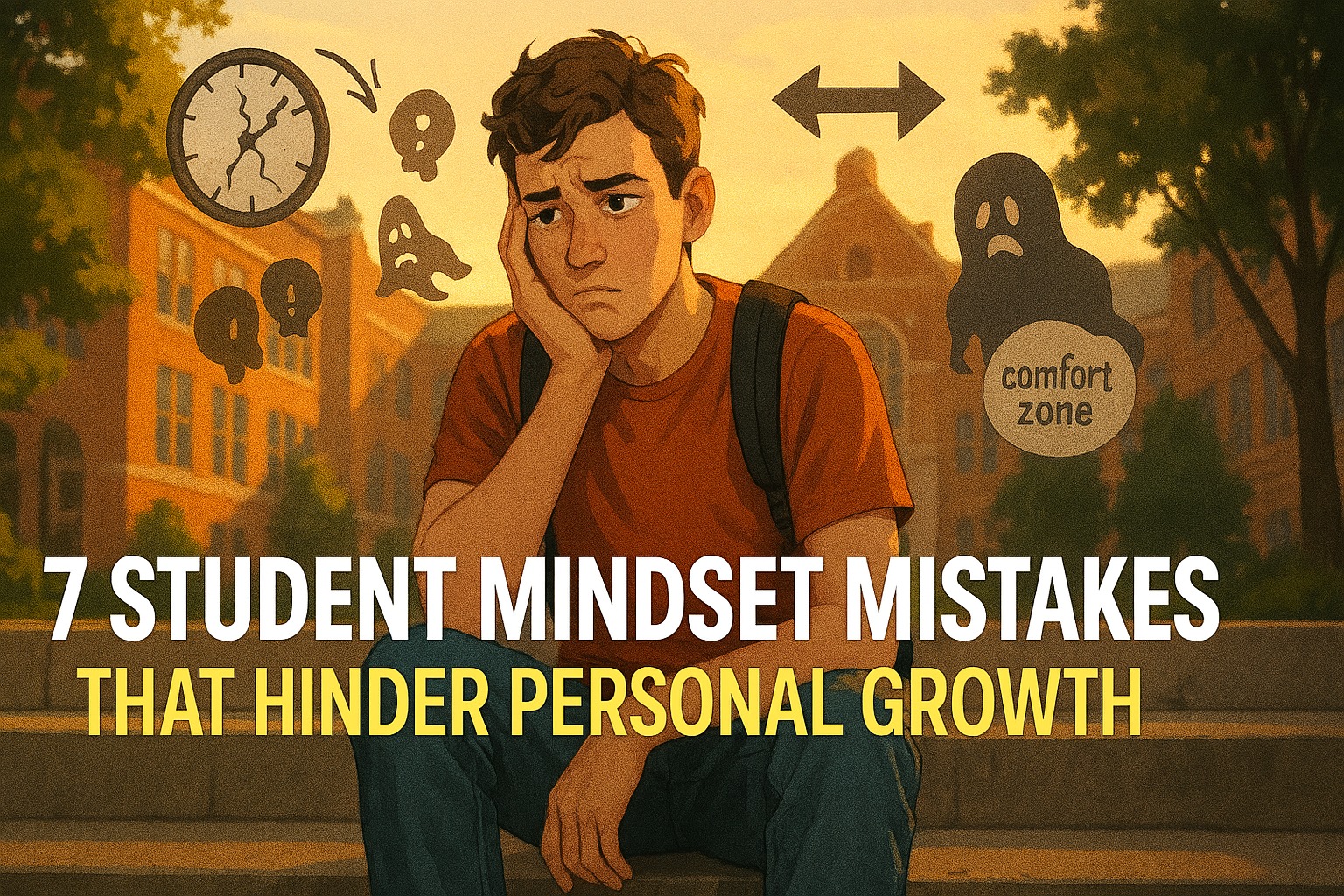
Personal growth is one of the most valuable outcomes of the student journey. Beyond grades and academic achievements, college and school years shape character, confidence, and long-term direction. However, many students unknowingly adopt certain mindsets that limit their progress. These patterns of thinking may feel normal, but over time they can slow down development and reduce opportunities. Understanding these mindset mistakes is the first step toward building a stronger foundation for success. Below are seven common student mindset mistakes that hinder personal growth and prevent students from reaching their full potential.
FEAR OF FAILURE
One of the most common mindset mistakes among students is the fear of failure. Many students avoid trying new things because they are afraid of making mistakes or being judged. They prefer to stay in familiar situations where they feel safe.
While this approach may protect them from short-term embarrassment, it also limits long-term growth. Failure is not the opposite of success; it is part of the learning process. Students who fear failure often miss opportunities to develop resilience, creativity, and problem-solving skills. Growth requires experimentation, and experimentation always carries the risk of mistakes.
FIXED MINDSET ABOUT INTELLIGENCE
Some students believe intelligence and talent are fixed traits. They assume that if they struggle with a subject, it means they are simply “not good at it.” This fixed mindset creates self-imposed limits.
In reality, abilities can be developed through effort, strategy, and persistence. When students label themselves as incapable, they reduce their motivation to improve. Over time, this belief shapes their academic performance and self-confidence. A growth-oriented mindset encourages continuous learning and views challenges as opportunities rather than threats.
COMPARING THEMSELVES TO OTHERS
Constant comparison with peers is another mindset mistake that can hinder personal development. Students often measure their worth based on grades, achievements, or social status. Social media can intensify this habit by showcasing curated versions of others’ success.
Comparison shifts focus away from individual progress. Instead of improving personal skills, students become distracted by external validation. This habit can lead to insecurity, jealousy, and unnecessary pressure. True growth happens when students compete with their past selves, not with others.
PROCRASTINATION DISGUISED AS “WAITING FOR THE RIGHT TIME”
Many students delay taking action because they believe the timing is not perfect. They postpone joining organizations, starting projects, or developing skills until they feel “ready.” This mindset often appears harmless but gradually becomes a pattern of procrastination.
There is rarely a perfect moment to begin something new. Waiting too long can lead to missed opportunities. Personal growth requires initiative. Students who take small steps consistently tend to progress faster than those who keep waiting for ideal conditions.
AVOIDING DISCOMFORT
Growth naturally involves discomfort. Whether it is public speaking, leading a team, or tackling difficult assignments, discomfort signals development. However, some students actively avoid situations that make them feel uneasy.
By staying within their comfort zone, they limit exposure to experiences that build confidence and competence. Avoiding discomfort may reduce anxiety temporarily, but it also reduces learning opportunities. Students who embrace challenges often develop stronger adaptability and emotional resilience.
DEPENDING TOO MUCH ON EXTERNAL MOTIVATION
Another common mindset mistake is relying solely on external rewards, such as grades, praise, or recognition. When motivation depends entirely on outside validation, students may lose direction once the rewards disappear.
Internal motivation—driven by curiosity, passion, and personal goals—is more sustainable. Students who cultivate intrinsic motivation are more likely to persist during setbacks. They learn not just for grades but for self-improvement, which supports long-term personal growth.
UNDERVALUING SELF-REFLECTION
In busy academic environments, students often focus only on completing tasks. They move from one assignment to another without pausing to reflect on lessons learned. This lack of reflection slows personal development.
Self-reflection helps students understand strengths, weaknesses, and patterns of behavior. Without it, mistakes are repeated and progress becomes accidental rather than intentional. Taking time to evaluate experiences allows students to make informed adjustments and grow more effectively.
About the Author
Gusti Ayu Tita P
Author — STEKOM University
An active author focused on academic issues, educational technology, and human resource development in the campus environment.