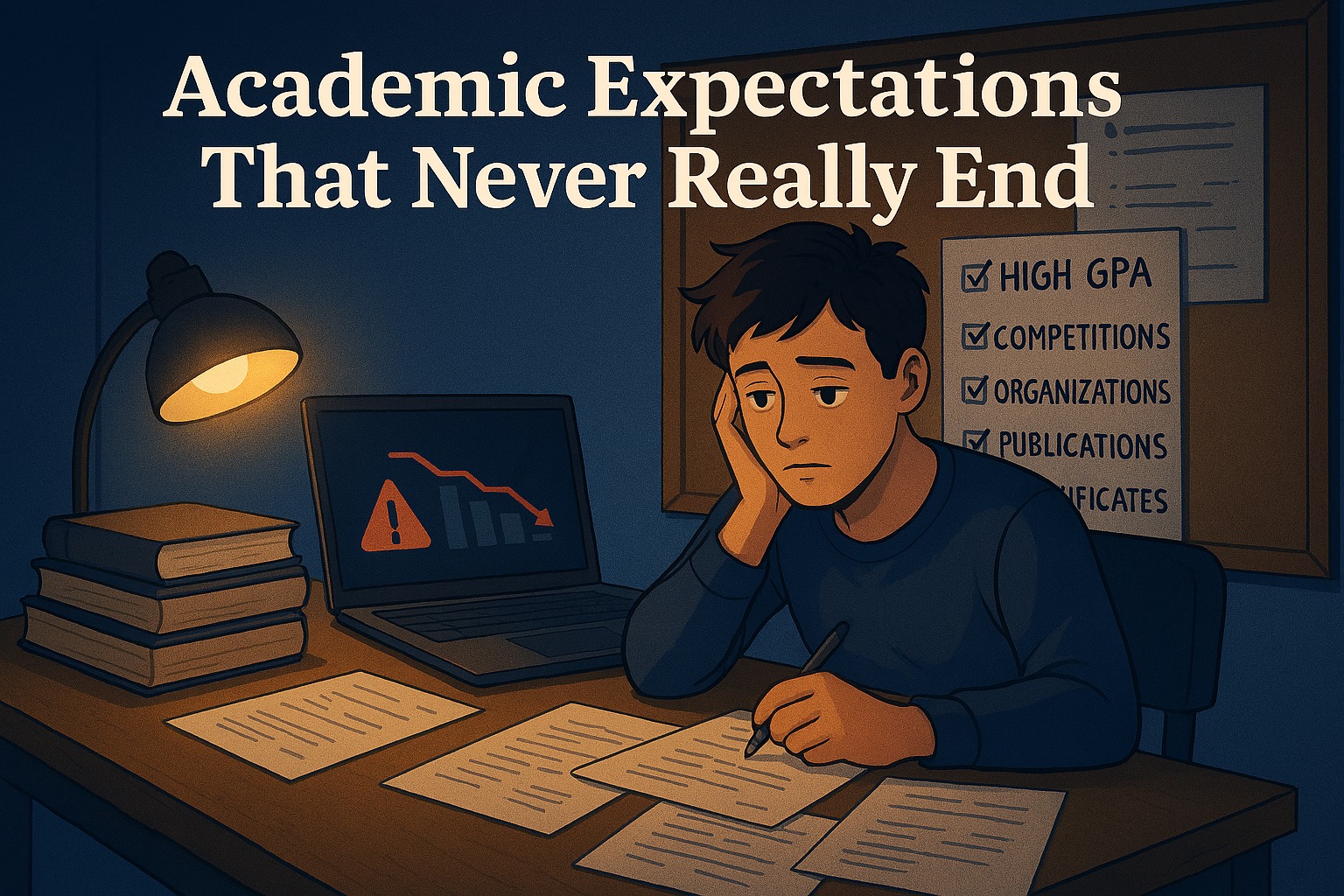
For many students, academic life is filled with goals, targets, and achievements. From the first day of school to the final year of college, expectations seem to follow them everywhere. High grades, extracurricular achievements, internships, and leadership roles often become part of a long list of things students are expected to accomplish. While these expectations can motivate growth, they can also create pressure that feels never-ending.
WHERE ACADEMIC EXPECTATIONS COME FROM
Academic expectations come from many sources. Schools set performance standards, scholarship programs require certain GPAs, and families often hope for the best results from their children. In addition, students themselves may set high personal goals because they want to succeed or compete with others.
Social environments also play a role. Seeing peers win competitions, earn awards, or share achievements online can create a sense that everyone else is constantly moving forward. This comparison can make students feel like they must keep achieving more to stay relevant.
THE NEVER-ENDING LIST OF TARGETS
In modern academic culture, success is rarely defined by just one achievement. A high GPA may not feel enough without internships, certifications, research projects, or organizational experience. Once one goal is achieved, another quickly takes its place.
For example, a student might aim for good grades in the first semester. After reaching that goal, they may start focusing on scholarships. After getting a scholarship, they might aim for leadership roles, competitions, or graduate school preparation. The cycle continues, often without a clear moment of rest.
This constant cycle can make students feel like their work is never truly finished.
THE EFFECT ON MENTAL AND EMOTIONAL HEALTH
When expectations never seem to end, students may start to feel exhausted. The pressure to always perform can lead to stress, anxiety, and burnout. Instead of feeling proud of their achievements, they may feel that nothing is ever enough.
Some common signs include:
- Feeling guilty when not studying
- Difficulty relaxing or taking breaks
- Fear of making mistakes
- Constant comparison with others
Over time, this mindset can reduce motivation and make learning feel more like a burden than an opportunity.
WHY REST AND BALANCE ARE ESSENTIAL
Academic success should not come at the cost of mental health. Rest and balance are not signs of weakness; they are necessary for long-term success. Students who take care of themselves often perform better because they are more focused, creative, and emotionally stable.
Creating balance can include:
- Setting realistic goals instead of perfect ones
- Scheduling regular breaks
- Maintaining hobbies or social activities
- Accepting that progress is more important than perfection
When students allow themselves time to rest, they return to their studies with renewed energy.
REDEFINING SUCCESS IN ACADEMIC LIFE
Many students define success only through achievements. However, true success includes personal growth, resilience, and well-being. Learning how to manage stress, overcome challenges, and maintain balance is just as important as earning high grades.
Success is not a race with a final finish line. It is a journey that includes both achievements and rest. By redefining success, students can break the cycle of endless expectations and build a healthier relationship with their academic goals.
MOVING FORWARD WITH A HEALTHIER MINDSET
Academic expectations may never fully disappear, but students can change how they respond to them. Instead of chasing every possible achievement, they can focus on what truly matters to their goals and well-being.
Choosing priorities, celebrating small wins, and accepting imperfections can make academic life more meaningful and less stressful. In the long run, a balanced and healthy student is more likely to succeed than one who is constantly overwhelmed.
About the Author
Gusti Ayu Tita
Author — STEKOM University
An active author focused on academic issues, educational technology, and human resource development in the campus environment.