
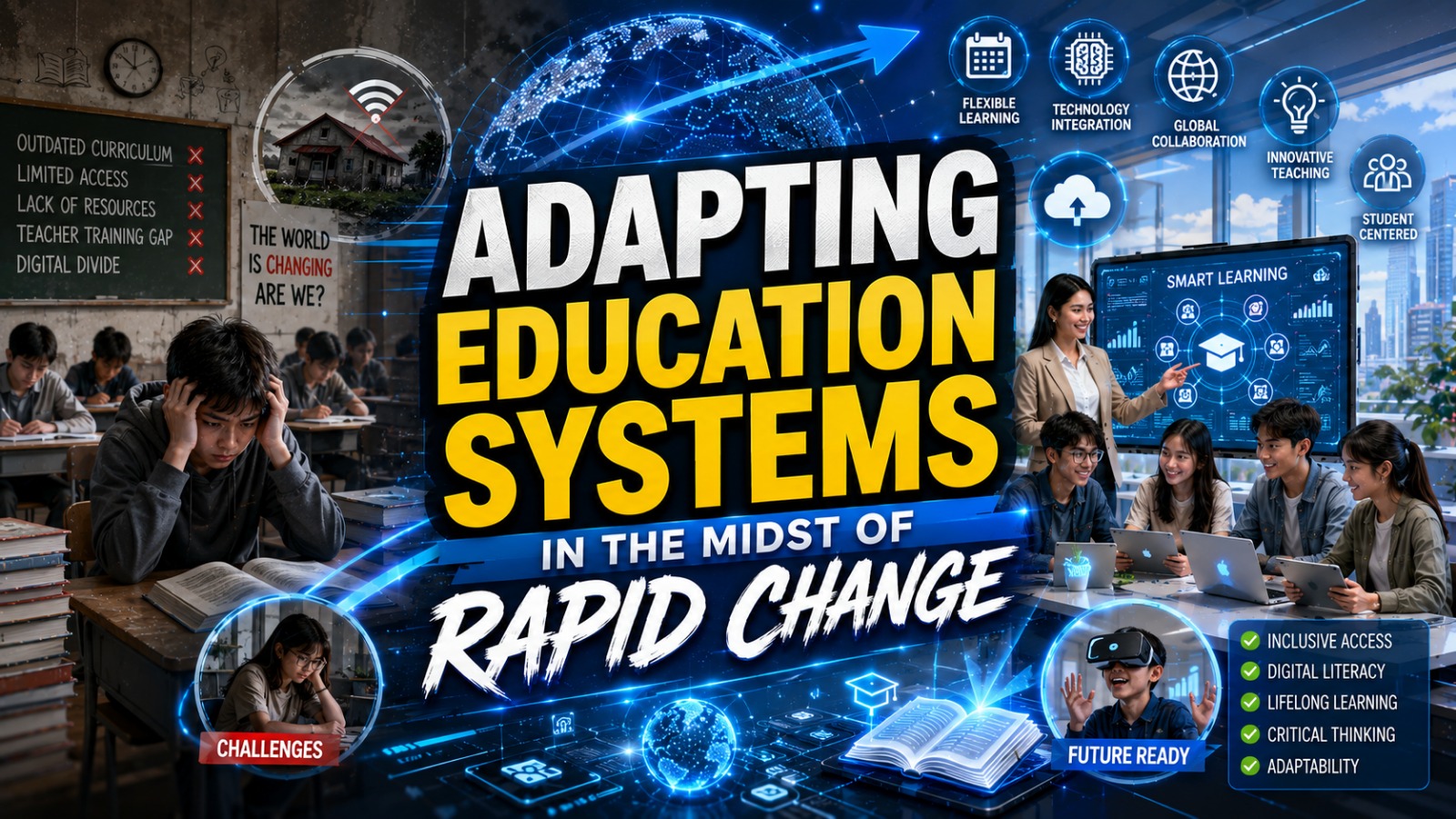
The world is experiencing rapid changes driven by technological advancements, globalization, and shifting social dynamics. These transformations have significantly impacted the education sector, requiring schools, teachers, and governments to continuously adapt their educational systems. In today’s modern era, education is no longer limited to traditional teaching methods, as digital learning and innovative technologies are becoming essential components of the learning process.
Adapting education systems to rapid change is crucial for preparing students to face future challenges. Educational institutions must create flexible, inclusive, and innovative learning environments that support both academic achievement and personal development.
THE EVOLUTION OF MODERN EDUCATION
Education has evolved dramatically over the past few decades. Traditional classrooms that relied heavily on textbooks and face-to-face instruction are now integrating digital tools, online platforms, and interactive learning methods.
Students can access information instantly through the internet, while teachers can use multimedia presentations, virtual classrooms, and educational applications to improve learning experiences.
This evolution has created more opportunities for students to develop critical thinking, creativity, and technological skills needed in the modern world.
THE IMPACT OF TECHNOLOGICAL ADVANCEMENT
Technology has become one of the biggest driving forces behind educational transformation. Digital learning platforms, artificial intelligence, cloud-based systems, and online collaboration tools are changing how students learn and communicate.
These innovations make education more flexible and accessible. Students can study from anywhere and participate in virtual learning environments that support independent and collaborative learning.
However, rapid technological advancement also creates challenges such as digital inequality, technological dependency, and the need for continuous adaptation.
CHALLENGES IN ADAPTING EDUCATION SYSTEMS
One major challenge in adapting education systems is unequal access to technology and internet connectivity. Many schools and students, especially in rural areas, still lack proper digital infrastructure.
Another challenge is the readiness of teachers and educational institutions to adopt modern teaching methods. Some educators require additional training to effectively integrate technology into the classroom.
In addition, rapid changes in educational trends and job market demands require schools to frequently update their curriculum and teaching strategies.
THE ROLE OF TEACHERS IN MODERN EDUCATION
Teachers remain a vital part of the educational system despite technological advancements. Their role has expanded from simply delivering information to guiding students in developing problem-solving, communication, and critical thinking skills.
Modern teachers must become more adaptable, creative, and technologically skilled. They should also encourage active participation and collaborative learning among students.
Continuous professional development programs are important to help educators stay updated with modern teaching practices and educational technology.
THE IMPORTANCE OF DIGITAL LITERACY
Digital literacy is essential in modern education systems. Students need the ability to use technology responsibly, identify reliable information, and communicate effectively in digital environments.
Without proper digital literacy, students may struggle with misinformation, cyber risks, and unhealthy online behavior. Schools should integrate digital literacy programs into their curriculum to prepare students for the digital age.
Strong digital literacy skills can improve learning outcomes and help students become more responsible technology users.
CHARACTER EDUCATION IN A CHANGING WORLD
While technology is important, character education remains a fundamental aspect of modern learning. Students need moral values such as discipline, honesty, empathy, and responsibility to navigate rapid social and technological changes.
Character education helps students balance academic success with ethical behavior and emotional intelligence. Schools and families must work together to strengthen students’ character development.
By combining technological skills with strong character values, education systems can produce well-rounded individuals prepared for future challenges.
STRATEGIES FOR IMPROVING EDUCATION SYSTEMS
Several strategies can help education systems adapt successfully to rapid change. Governments should invest in digital infrastructure and provide equal access to educational technology for all students.
Schools should implement innovative teaching methods such as blended learning, project-based learning, and interactive digital education. Teacher training programs must also be strengthened to improve digital teaching competence.
In addition, collaboration between educational institutions, communities, and families is essential for supporting educational transformation.
THE FUTURE OF EDUCATION
The future of education will continue to evolve alongside technological and social changes. Artificial intelligence, personalized learning systems, virtual reality, and global online collaboration are expected to become increasingly common in schools and universities.
However, education should continue to focus on human development, creativity, communication, and social responsibility. Technology should support learning rather than replace meaningful human interaction.
An adaptive and balanced education system will help future generations succeed in a rapidly changing world.
CONCLUSION
Adapting education systems in the midst of rapid change is essential for creating a future-ready generation. Technological advancements and globalization offer many opportunities to improve learning, but they also present significant challenges.
By strengthening digital literacy, improving teacher competence, integrating character education, and ensuring equal access to technology, education systems can better respond to modern demands. With innovation, collaboration, and continuous adaptation, education can remain relevant and effective in an ever-changing world.
About the Author
Gusti Ayu Tita
Author — STEKOM University
An active author focused on academic issues, educational technology, and human resource development in the campus environment.



