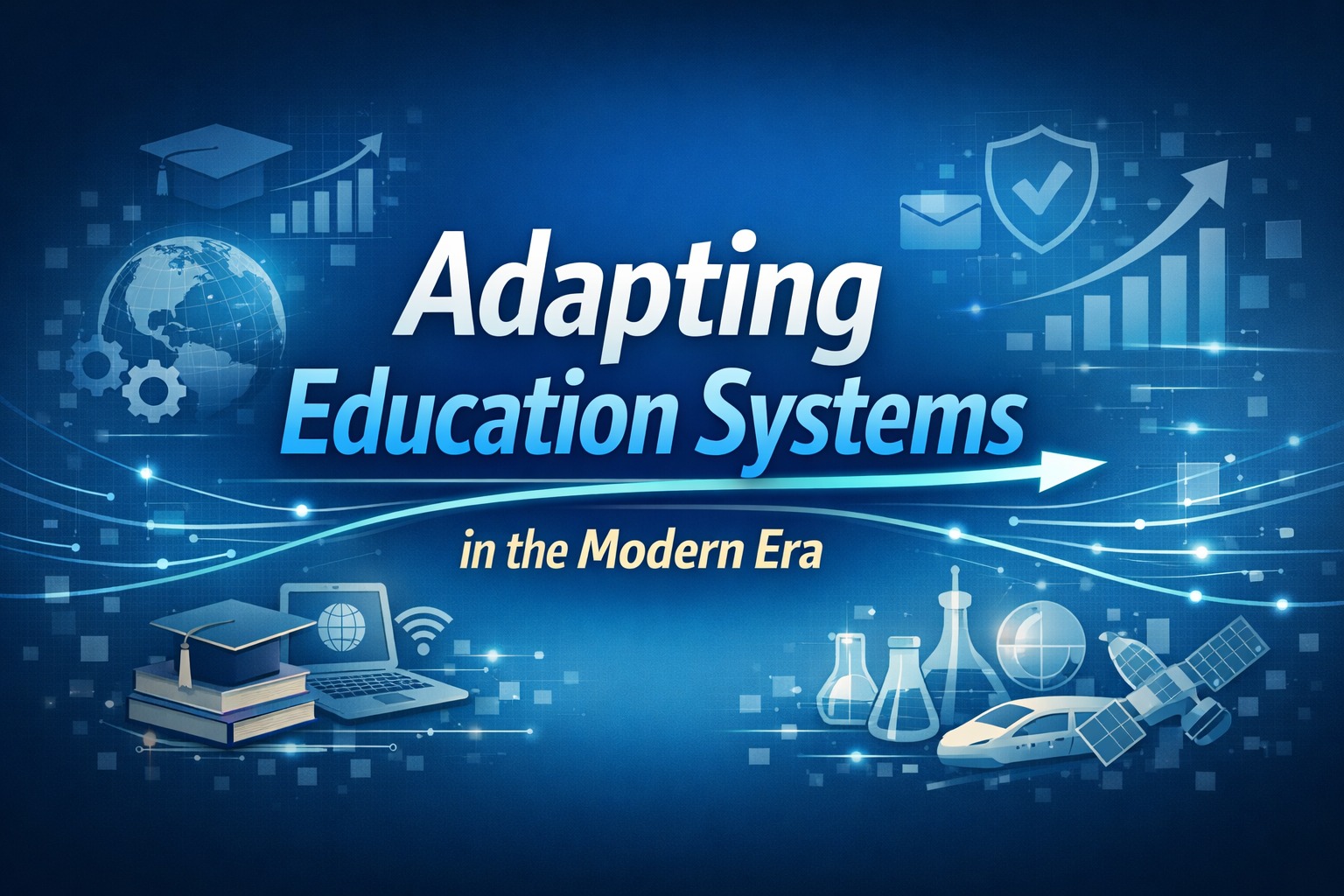
In an era marked by rapid technological, social, and economic transformation, education systems must evolve to remain relevant. The ability to adapt determines whether a nation can prepare its citizens for future challenges and opportunities. Education is no longer static—it is a dynamic process that must respond to global shifts, innovation, and the changing needs of learners.
THE NEED FOR ADAPTABILITY IN EDUCATION
Change is inevitable, and education must keep pace. From digital learning platforms to new teaching methodologies, adaptability ensures that students acquire skills that match the demands of modern industries. Schools and universities must embrace flexibility, creativity, and continuous improvement to stay aligned with global progress.
TECHNOLOGY AS A DRIVER OF EDUCATIONAL CHANGE
Technology has become the backbone of modern education. Online learning, artificial intelligence, and virtual classrooms have transformed how knowledge is delivered and consumed. These innovations make education more accessible, personalized, and efficient. However, educators must also ensure that technology enhances—not replaces—the human connection in learning.
THE ROLE OF EDUCATORS AND POLICYMAKERS
Teachers and policymakers play a crucial role in guiding educational transformation. Educators must adopt new teaching strategies that encourage critical thinking, collaboration, and problem‑solving. Meanwhile, governments should invest in infrastructure, training, and curriculum development to support innovation and inclusivity in education.
CHALLENGES IN ADAPTING EDUCATION SYSTEMS
Adapting to change is not without obstacles. Limited resources, resistance to innovation, and unequal access to technology can hinder progress. To overcome these challenges, collaboration between public institutions, private sectors, and communities is essential. Together, they can create resilient education systems that thrive amid uncertainty.
BUILDING FUTURE‑READY EDUCATION
A future‑ready education system focuses on lifelong learning, digital literacy, and emotional intelligence. It prepares students not only for jobs that exist today but also for those that will emerge tomorrow. By fostering adaptability and innovation, education becomes the key to sustainable development and global competitiveness.
Conclusion
Adapting education systems in times of change is vital for progress. By embracing technology, innovation, and inclusivity, nations can build learning environments that empower individuals to succeed in a constantly evolving world. The future belongs to those who learn, adapt, and lead with vision.
About the Author
Gusti Ayu Tita
Author — STEKOM University
An active author focused on academic issues, educational technology, and human resource development in the campus environment.