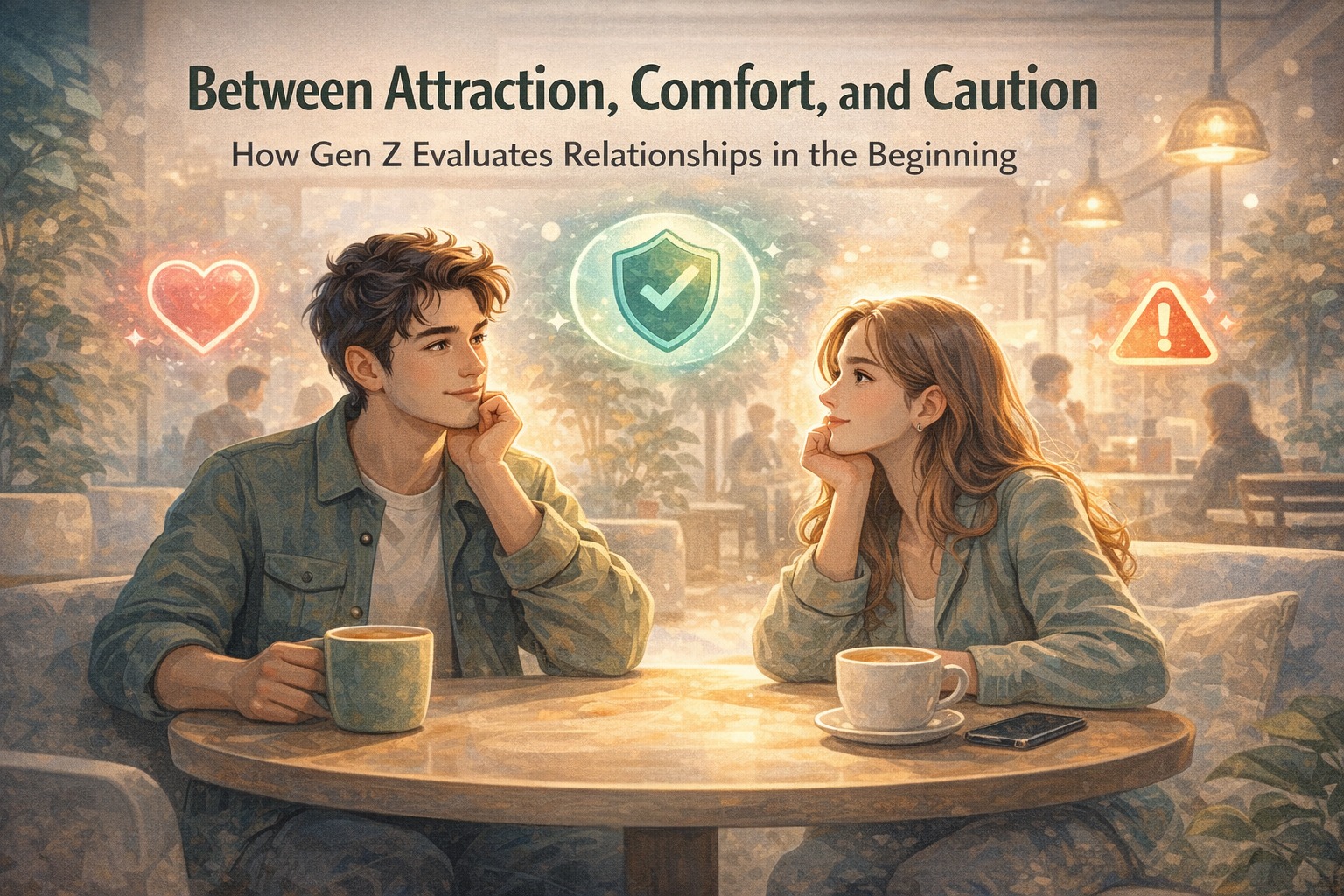
In today’s fast-paced digital era, Gen Z has a unique way of viewing and evaluating relationships from the very beginning. Relationships are no longer just about attraction; they are assessed through emotional comfort, communication, and early warning signs often referred to as red flags. Gen Z tends to be more reflective, critical, and mentally aware when building connections.
So how does Gen Z actually distinguish between attraction, comfort, and caution in relationships? This article explores the process in depth.
THE SHIFT IN GEN Z’S PERSPECTIVE ON RELATIONSHIPS
Gen Z has grown up with constant exposure to social media, mental health discussions, and open access to information. This has influenced how they view relationships—not merely as status symbols, but as emotional partnerships.
For Gen Z, an ideal relationship is emotionally healthy, respectful, and supportive of personal growth. They tend to avoid relationships that feel draining or stressful from the start.
ATTRACTION: A NATURAL FIRST STEP
Attraction is often the entry point to most relationships. It may arise from personality, sense of humor, communication style, or shared interests.
However, Gen Z is generally cautious about treating attraction as the main foundation of a relationship. They recognize that initial attraction can be temporary and influenced by momentary emotions or excitement.
Therefore, attraction is considered important—but not sufficient on its own.
COMFORT: A KEY FACTOR IN HEALTHY RELATIONSHIPS
After attraction, Gen Z places strong emphasis on comfort. Comfort goes beyond feeling happy; it includes feeling safe enough to be oneself.
Some indicators of comfort according to Gen Z include:
- Being able to communicate without fear of judgment
- Feeling heard and respected
- Not feeling pressured to change for a partner
- Having personal boundaries respected
Comfort often determines whether a relationship is worth continuing. For Gen Z, a healthy relationship should bring peace, not anxiety.
CAUTION FROM THE START: AWARENESS OF RED FLAGS
Unlike previous generations, Gen Z tends to be more sensitive to red flags in relationships. This awareness comes from increased mental health education and conversations about emotional boundaries.
Some early warning signs Gen Z watches for include:
- Manipulative communication
- Disrespect for personal boundaries
- Excessive possessiveness
- Inconsistency between words and actions
This cautious approach does not mean Gen Z fears commitment, but rather that they are more selective to avoid emotionally harmful relationships.
THE ROLE OF SOCIAL MEDIA IN RELATIONSHIP EVALUATION
Social media also influences how Gen Z evaluates relationships. From educational content to shared personal experiences, Gen Z has many references for understanding relationship dynamics.
However, they are also aware that not everything seen online reflects reality. Social media is often used as a reflection tool rather than a strict standard.
BALANCING EMOTION AND LOGIC
One defining trait of Gen Z in relationships is the effort to balance emotion and logic. They do not rely solely on feelings, but also consider the long-term impact of a relationship.
This approach helps Gen Z make more conscious decisions—whether to continue, improve, or end a relationship early if it feels unhealthy.
CONCLUSION
For Gen Z, evaluating a relationship in its early stages is not just about attraction. It involves reflection, comfort, and awareness of potential red flags. With a more conscious and open approach, Gen Z strives to build relationships that are healthy, equal, and supportive of personal growth.
This mindset shows that caution is not fear, but a form of maturity in navigating relationships in the modern era.
**Keywords:**
About the Author
Gusti Ayu Tita P
Author — STEKOM University
An active author focused on academic issues, educational technology, and human resource development in the campus environment.