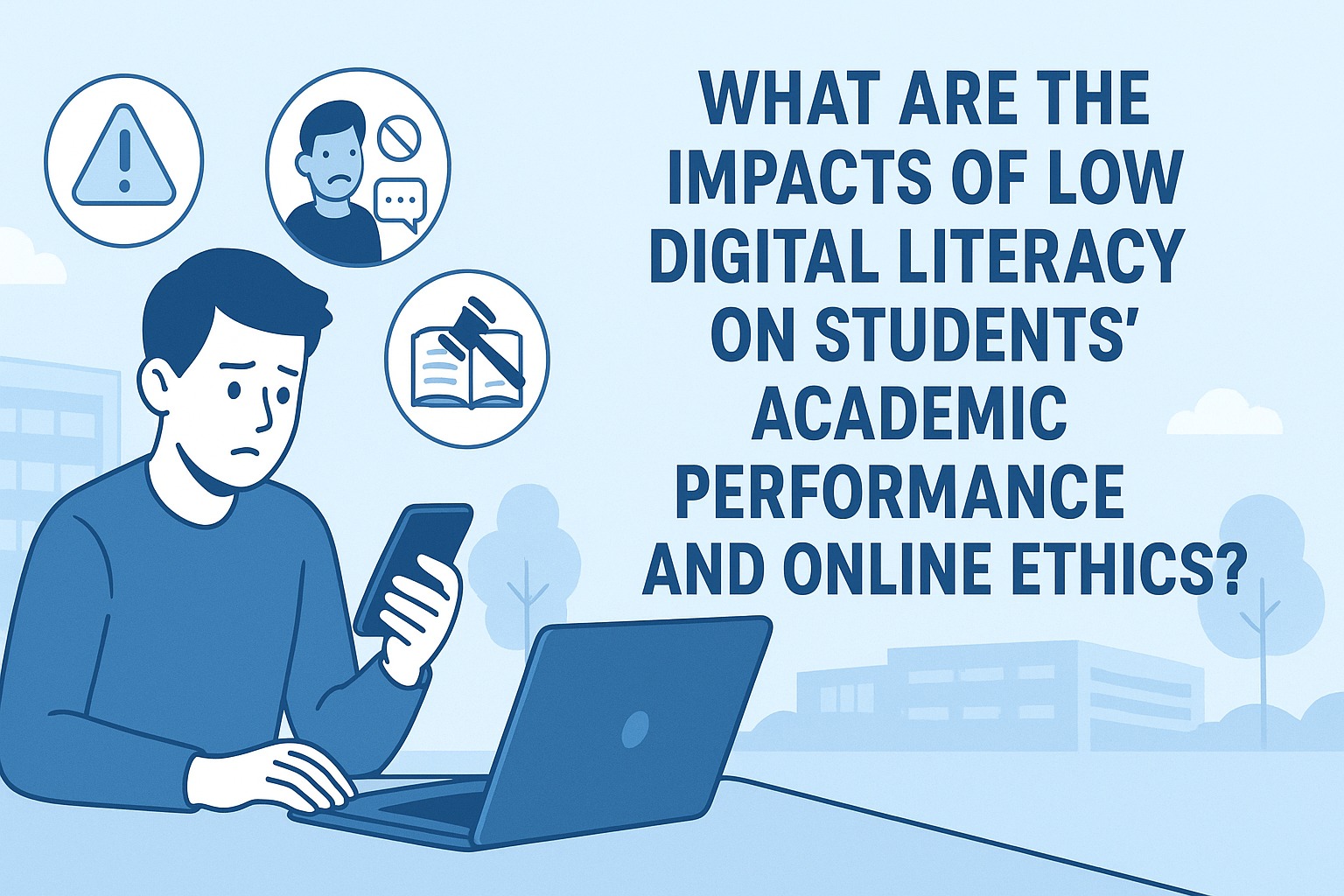
In today’s fully digital era, students are expected not only to be academically smart but also technologically and informationally literate. Almost all academic activities — from accessing journals, submitting assignments, to interacting with lecturers — are conducted online.
However, not all students understand how to use digital technology and information wisely. Low digital literacy can have a significant impact on both academic performance and ethical behavior in the digital world.
WHAT IS DIGITAL LITERACY?
Digital literacy is not merely the ability to use gadgets or social media. More than that, digital literacy is the ability to understand, analyze, and utilize digital information critically and ethically.
Students with high digital literacy skills are able to:
* Evaluate the authenticity of information,
* Avoid hoaxes or misinformation,
* Cite sources correctly,
* And maintain proper ethics when communicating online.
IMPACTS OF LOW DIGITAL LITERACY ON STUDENTS’ ACADEMIC PERFORMANCE
Difficulty Finding Accurate Information
Students who lack the ability to search for reliable sources often end up quoting data from invalid websites. As a result, the quality of their assignments and research becomes poor.
Unintentional Plagiarism
Many students do not know how to correctly write citations or reference lists. This leads them into unintentional plagiarism practices that can lower their academic grades and damage their reputation.
Decline in Critical Thinking
Digital literacy teaches students to think critically about information. Without this ability, students are easily deceived by false information, which hampers their analytical skills and academic reasoning.
IMPACTS ON STUDENTS’ ONLINE ETHICS
-Digital Ethics Violations
Students with low digital literacy often unintentionally violate ethical norms, such as sharing content without permission, spreading hoaxes, or posting inappropriate comments on social media.
-Poor Digital Reputation
Digital footprints are permanent. Even small mistakes, such as inappropriate posts, can affect a student's reputation in their future professional environment.
-Harassment or Conflict Online
Without understanding digital communication ethics, students can become involved in cyberbullying or unhealthy online arguments.
WHY IS DIGITAL LITERACY IMPORTANT FOR STUDENTS?
Because future workplaces will assess not only academic ability but also a person’s digital integrity.
Students with strong digital literacy skills will find it easier to:
* Adapt to new technologies,
* Build a positive personal brand,
* And maintain their professional reputation in the digital world.
HOW TO IMPROVE DIGITAL LITERACY
* Attend digital literacy training or webinars often provided by campuses or government institutions.
* Use trusted academic sources such as Google Scholar, Sinta, or university portals.
* Learn about digital ethics, including proper and safe communication on social media.
* Practice critical thinking before sharing any information online.
CONCLUSION
Low digital literacy is not just a technical issue; it also affects students’ academic performance and digital morality.
Students who lack digital literacy will struggle to compete, risk losing academic integrity, and may even damage their online reputation.
Therefore, it is time for students to consider digital literacy as a fundamental skill that must be developed to face the challenges of the digital era intelligently and ethically.
About the Author
Gusti Ayu Tita
Author — STEKOM University
An active author focused on academic issues, educational technology, and human resource development in the campus environment.