
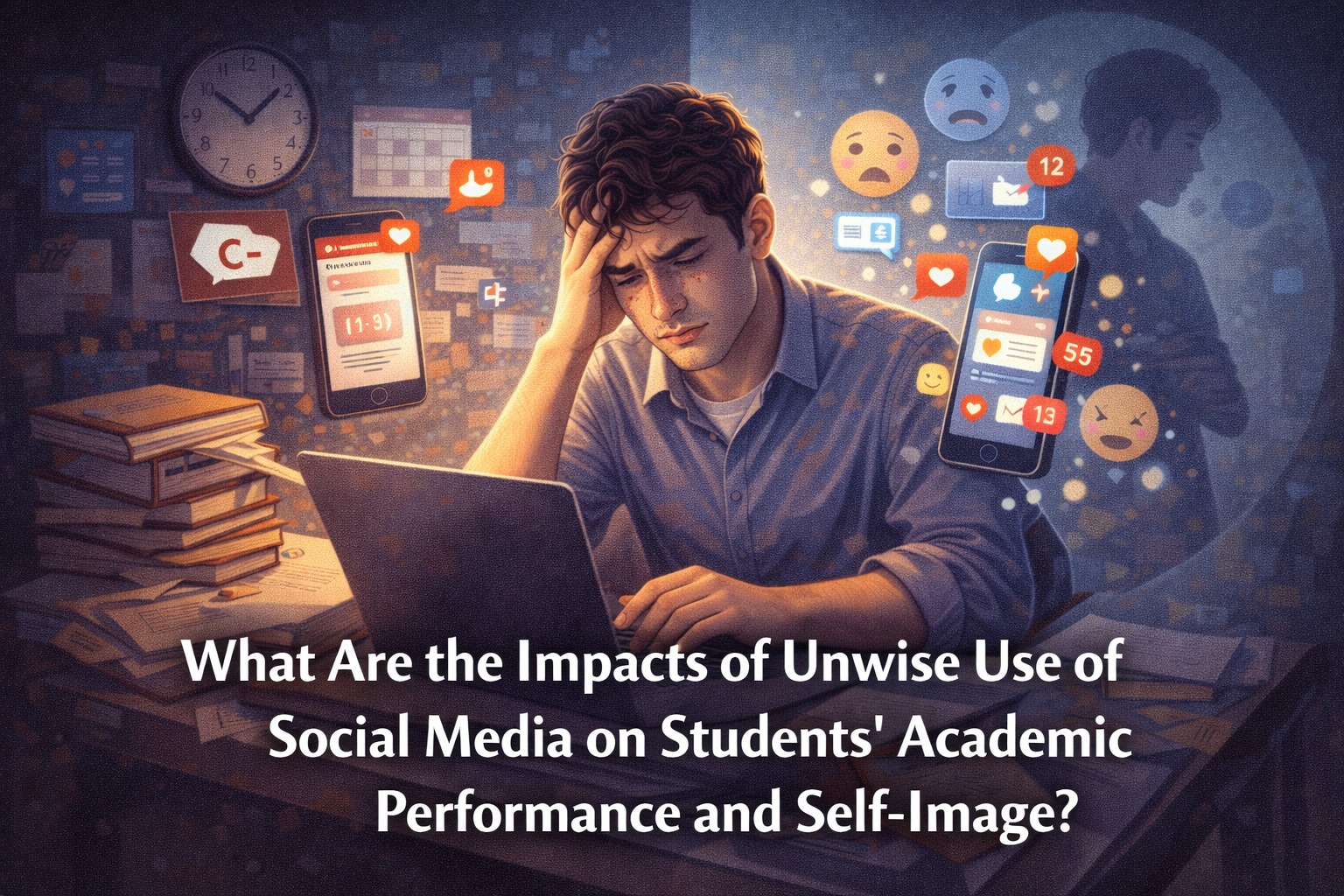
Social media has become a part of students' daily lives. From sharing lecture activities, seeking task references, to interacting with friends and lecturers. However, behind its benefits, unwise use of social media can actually cause negative impacts on a student's academic performance and self-image.
This article will discuss how social media can influence these two important aspects and what wise steps can be taken to remain productive in the digital world.
IMPACTS ON ACADEMIC PERFORMANCE
a. Decreased Concentration and Learning Focus
Excessive use of social media often disrupts learning focus. Constant notifications make it difficult for students to concentrate on completing assignments or understanding lecture material. As a result, learning productivity decreases, and academic grades can be affected.
b. Habit of Procrastinating Work
Scrolling through social media can feel like "just a moment," but time passes quickly. Unconsciously, students delay tasks, cram studying near deadlines, and even sacrifice rest time. This certainly has a direct impact on the quality of learning outcomes.
c. Influenced by Negative Trends
Some trends on social media can divert students' attention from their academic goals. For example, being too focused on entertainment content until forgetting time, or imitating irrelevant viral behaviors to the world of education.
IMPACTS ON STUDENTS' SELF-IMAGE
a. Poor Digital Footprint
Everything uploaded on social media leaves a digital footprint. Provocative, impolite, or offensive posts can lower a student's image in the eyes of lecturers, peers, and even potential employers.
b. Lack of Professionalism
Students who frequently flaunt excessive personal matters or make negative comments on social media can be seen as socially unwise. Meanwhile, the academic world demands professional and ethical attitudes, both in the real world and digitally.
c. Trapped in Social Comparison
Seeing others' achievements on social media can create feelings of inferiority or envy. If not handled well, this can lower self-confidence and learning motivation.
WISE WAYS TO USE SOCIAL MEDIA IN ACADEMIA
• Use social media to support learning, such as following educational accounts or academic communities.
• Limit usage time with screen time features to avoid addiction.
• Avoid uploading sensitive or emotional things when angry.
• Build positive personal branding, for example by sharing works, writings, or academic achievements.
CONCLUSION
Social media is not an enemy to students, but a tool that needs to be used wisely. Uncontrolled use can lower performance and damage self-image. On the other hand, if used correctly, social media can be a means to develop, build relationships, and strengthen positive academic reputation.
Keywords:
About the Author
Gusti Ayu Tita
Author — STEKOM University
An active author focused on academic issues, educational technology, and human resource development in the campus environment.



