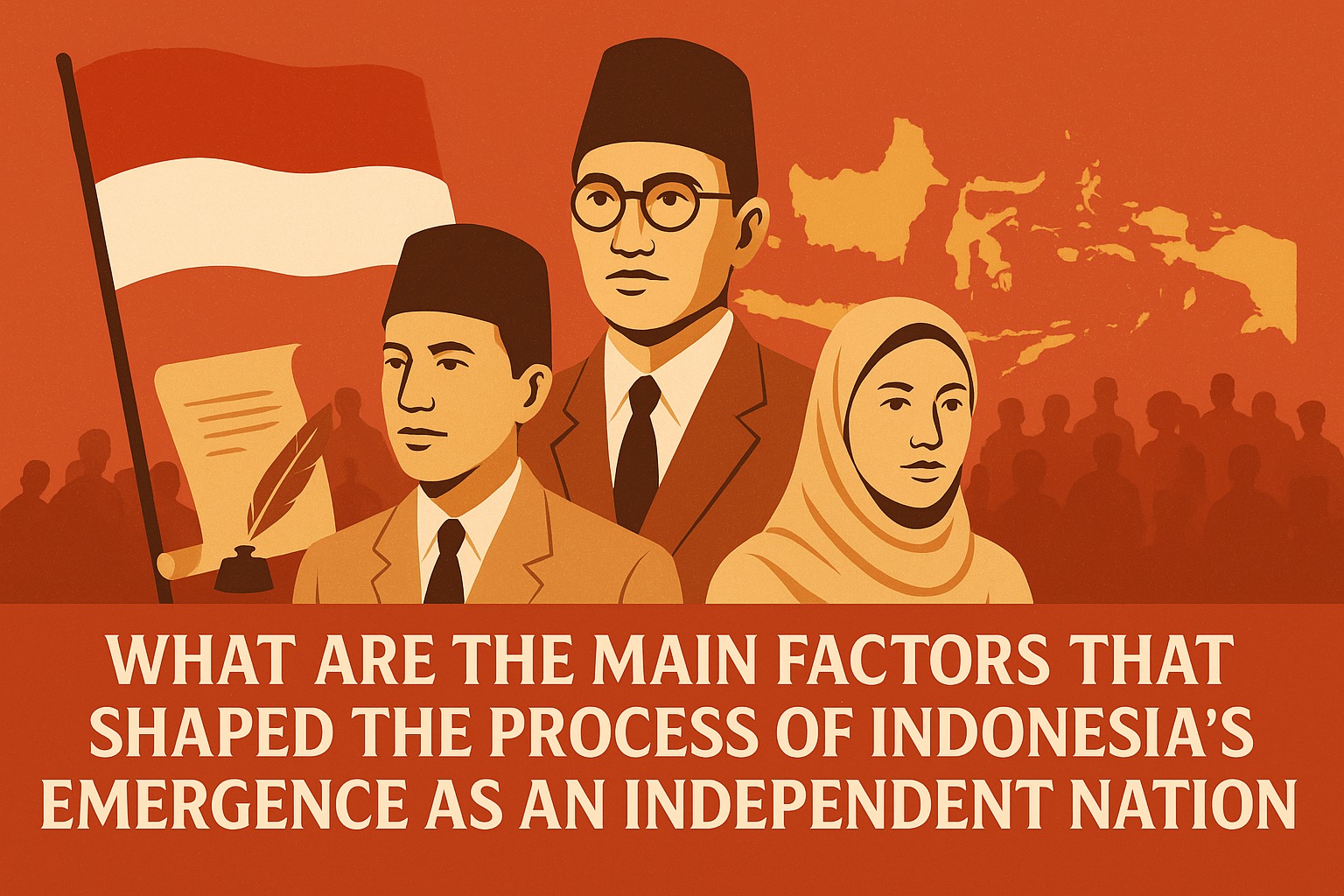
Indonesia’s long journey toward independence did not happen instantly. The birth of Indonesia as an independent nation was shaped by various important factors, ranging from colonial conditions, the rise of nationalist leaders, to the growing sense of national awareness across different layers of society. This raises a key question: what were the main factors that shaped the process of Indonesia’s emergence as an independent nation? This article will discuss the key elements that became the foundation of a great nation called Indonesia.
History of Occupation and Colonial Rule
Impact of Dutch Colonial Policies
For hundreds of years, Indonesia was under Dutch colonial rule. Policies such as forced cultivation, trade monopolies, and the exploitation of natural resources brought immense suffering to the population. Although painful, this period of oppression triggered the awareness that the people needed to resist and determine their own destiny as a nation.
The Presence of Japan and Shifts in Political Orientation
The Japanese occupation brought drastic changes to Indonesia. Japan opened opportunities for Indonesian leaders to learn about military organization and administrative systems. In addition, military schools such as PETA and youth organizations became fertile ground for the emergence of future national leaders who dared to proclaim independence.
The Rise of the National Movement
Movement Organizations as the Beginning of Shared Awareness
The early 20th century marked the awakening of the national movement. Organizations such as Budi Utomo, Sarekat Islam, Muhammadiyah, and the Indische Partij became platforms for intellectual struggle against colonialism. Movements that initially focused on social and cultural issues later evolved into political struggles for independence.
The 1928 Youth Pledge as the Foundation of Unity
One of the most important moments in the nation’s history was the Youth Pledge of 1928, which declared: one motherland, one nation, and one language—Indonesia. This pledge formed a strong foundation for national identity, transforming the struggle from local efforts into a unified national movement.
The Role of the Proclamation Leaders
Leadership of Soekarno and Hatta
Two pivotal figures, Soekarno and Mohammad Hatta, played a central role in driving the spirit of independence. Through strategic thinking, inspiring speeches, and diplomacy, they were able to unite various forces of the nation under the same goal: independence.
Networks and Diplomatic Efforts
Beyond physical struggle, diplomacy also played a crucial role in shaping the path toward independence. National leaders used international diplomacy to gain global support and weaken colonial dominance.
Global Conditions Supporting Independence
World War II as a Turning Point
World War II weakened European powers, including the Netherlands. This situation created a window of opportunity for the Indonesian people to proclaim independence. The global atmosphere that emphasized the right to self-determination also provided legitimacy to the independence movement.
A Changing Global Political Landscape
After the war, the world entered a new era. The concept of decolonization grew stronger, encouraging colonized nations to pursue independence. Indonesia became part of this major wave of global transformation.
The Peak of the Struggle: The Proclamation of August 17, 1945
All these factors culminated in the historic moment of August 17, 1945, when Soekarno and Hatta proclaimed Indonesia’s independence on behalf of the nation. The proclamation was not merely a formal declaration; it was the result of a long struggle involving all elements of the Indonesian people.
So, what were the main factors that shaped Indonesia’s process of becoming an independent nation? The answer lies in the combination of suffering under colonial rule, the rise of the national movement, the role of intellectuals and freedom fighters, international support, and the strong spirit of national unity. All these elements were interconnected and formed a long pathway toward independence.
Indonesia was not born through a gift, but through the sacrifices, determination, and unity of its people.
About the Author
Gusti Ayu Tita
Author — STEKOM University
An active author focused on academic issues, educational technology, and human resource development in the campus environment.