
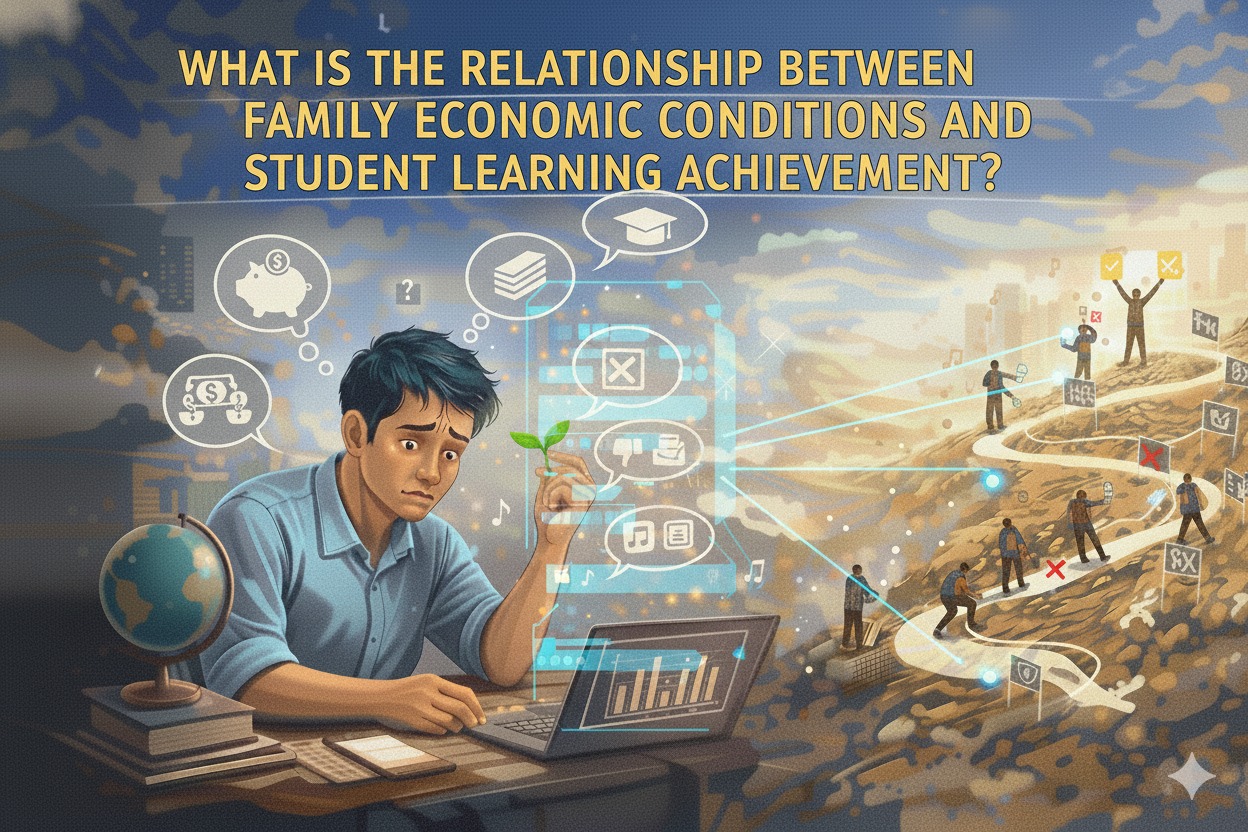
The Influence of Family Economic Conditions on Students’ Academic Achievement
Family economic conditions are often overlooked when discussing educational success. In reality, however, economic factors have a significant impact on students’ learning outcomes. While many people believe that academic achievement depends solely on individual ability and effort, family economic background plays an important role in determining how far a student can develop within the education system. This article explores in depth the relationship between family economic conditions and students’ academic achievement, as well as its impact on their overall academic development.
1. What Is Students’ Academic Achievement?
Before discussing the relationship between family economic conditions and academic achievement, it is important to understand what is meant by “students’ academic achievement.” Academic achievement refers to the level of knowledge, skills, and competencies students acquire after participating in the learning process. It can be measured through various indicators, such as exam scores, the ability to complete school assignments, and achievements in areas such as arts, sports, and social skills.
However, academic achievement is not limited to grades recorded on report cards. It also includes non-academic aspects that reflect students’ character development, creativity, and social abilities. Nevertheless, within formal education systems, academic achievement is often primarily assessed through exams and academic evaluations.
2. How Do Family Economic Conditions Affect Students’ Academic Achievement?
Family economic conditions influence students’ academic achievement both directly and indirectly in several ways:
Access to Quality Education
One of the most direct effects of family economic conditions is access to quality education. Financially stable families can afford schools with better facilities, higher-quality teaching, and additional tutoring or enrichment programs. In contrast, economically disadvantaged families may only have access to schools with limited resources, which affects the quality of education students receive. Schools in low-income areas often lack adequate facilities and infrastructure, hindering students’ learning potential.
Limited Time for Studying
Children from economically challenged families often need to work to support household income. This reduces the time available for studying and completing school assignments. Students who must help with household chores or part-time work often struggle to keep up academically, which negatively affects their learning outcomes.
Emotional Support and Motivation
Family economic conditions are closely linked to the level of emotional support students receive. Families facing financial hardship tend to focus on meeting daily needs, leaving less time and energy to support their children emotionally. Emotional support from parents is crucial for academic development, as it boosts motivation and self-confidence. Without it, students may feel pressured or discouraged, leading to lower academic performance.
Limited Access to Additional Learning Resources
Students from wealthier families often have access to extra learning resources such as private tutoring, online courses, and educational technology. Meanwhile, students from low-income families may lack access to these resources, limiting their ability to study independently outside school hours and widening the achievement gap.
3. Case Studies: The Impact of Economic Conditions on Academic Performance
Numerous studies show a strong relationship between family economic conditions and students’ academic achievement. Research in Indonesia, for example, indicates that students from low-income families tend to score lower on exams than those from higher-income families. This is largely due to limited access to educational facilities, learning materials, and adequate study time.
Similar patterns have been found in other developing countries such as India and Brazil, where students from economically disadvantaged backgrounds face systemic barriers that hinder their academic potential, despite having abilities comparable to their peers.
4. Why Educational Equity and Social Support Are Essential
Educational equity is key to reducing the impact of economic inequality on academic achievement. Without equal access to education, existing gaps will continue to widen and reinforce social inequality.
Efforts to address this issue include:
* Expanding scholarship and financial aid programs for students from low-income families
* Improving the quality of education in underprivileged areas
* Providing psychosocial support, counseling, and mentoring programs for students facing economic stress
These measures help ensure that all students have a fair opportunity to succeed academically.
Conclusion: The Importance of Equal Opportunities in Education
Overall, family economic conditions play a crucial role in shaping students’ academic achievement. While individual potential varies, economic factors often limit students’ opportunities to fully develop that potential. Creating an inclusive education system—where all students, regardless of economic background, have access to quality education and adequate support—is essential.
Through collaboration among governments, schools, and communities, the impact of economic inequality on education can be reduced. This approach will help nurture a generation that excels not only academically, but also socially and emotionally, contributing positively to society as a whole.
About the Author
Gusti Ayu Tita
Author — STEKOM University
An active author focused on academic issues, educational technology, and human resource development in the campus environment.



