
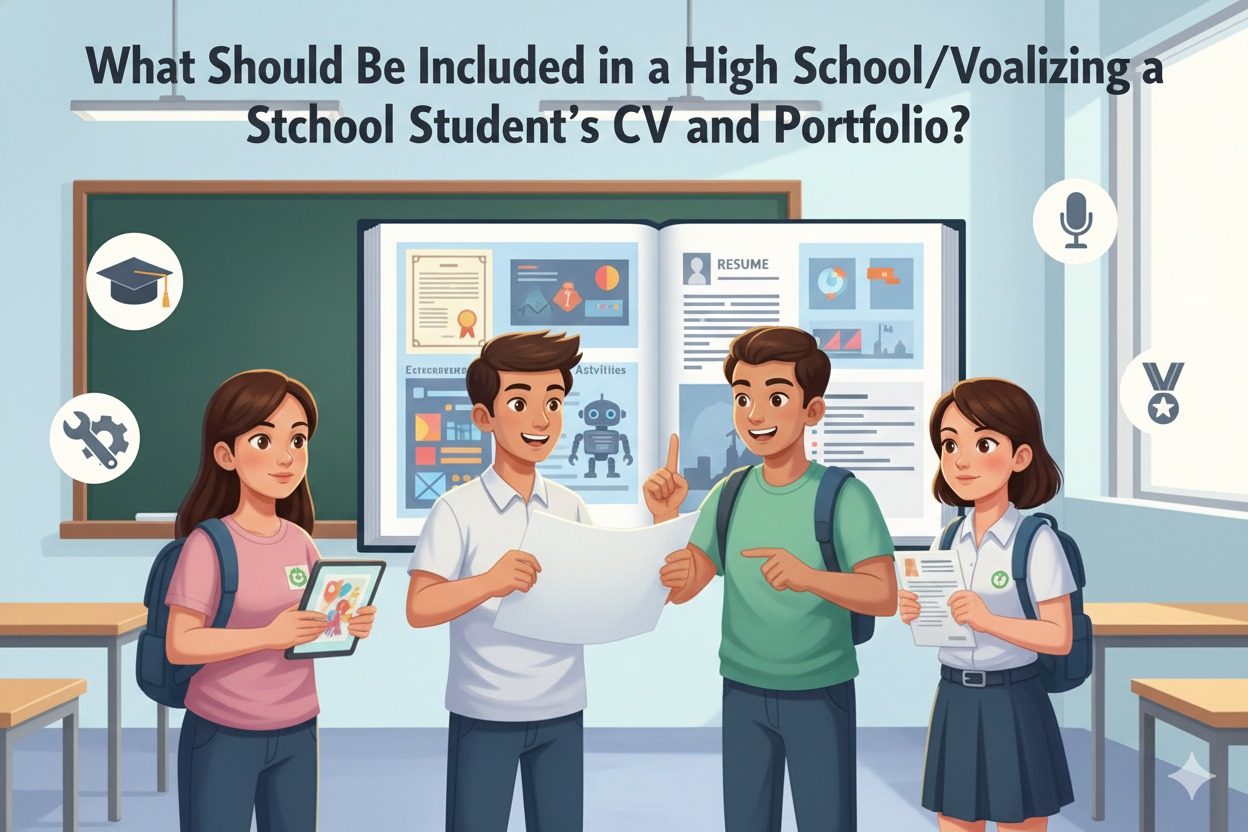
Creating an effective CV (Curriculum Vitae) and portfolio is one of the key steps for high school (SMA) and vocational school (SMK) students in preparing for the future. However, many students are still unsure about what content should be included to attract the attention of schools, scholarship committees, or potential employers. This article provides a clear and comprehensive guide on what should be included in a CV and portfolio for high school and vocational students.
THE IMPORTANCE OF KNOWING THE RIGHT CONTENT FOR CV AND PORTFOLIO
A CV and portfolio are your “face” in the academic and professional world. If the content is complete, relevant, and well-structured, your chances of being accepted for internships, scholarships, or part-time jobs will increase significantly. Therefore, understanding what to include is essential.
IMPORTANT SECTIONS IN A HIGH SCHOOL/SMK CV
1. Personal Information
* Full name
* Residential address
* Active phone number
* Professional email address (avoid informal names)
2. Education
* School name and major
* Year of entry and expected graduation
* Report card grades or academic achievements (if available)
3. Organizational and Extracurricular Experience
* Name of organization or club
* Position held
* Active period
* Brief description of responsibilities and achievements
4. Skills
* Computer skills (e.g., Microsoft Office, video editing, graphic design)
* Foreign languages
* Other technical skills relevant to your major or interests
5. Work or Internship Experience (If Any)
* Name of company or organization
* Position or role
* Duration of internship or work
* Tasks and achievements during the internship
6. Achievements and Awards
* Academic, sports, arts, or other competitions
* Certificates from training or courses
* Special awards from school or other institutions
7. Career Objectives or Short Profile Summary
* A short paragraph explaining motivation, learning goals, and future aspirations
IMPORTANT SECTIONS IN A HIGH SCHOOL/SMK PORTFOLIO
1. Collection of Work
* Photos or scans of artworks (drawings, paintings, graphic designs)
* Outstanding school project assignments
* Documentation of organizational activities or events participated in
2. Achievement Documentation
* Photos of certificates and awards
* Evidence of competition or training participation
* Testimonials from teachers or mentors (if available)
3. Special Projects
* Short explanation of projects completed (e.g., robotics, simple applications, written works)
4. Resume or Brief Summary
* A short CV to complement the portfolio, helping evaluators understand the context of your work and experience
TIPS FOR ORGANIZING CV AND PORTFOLIO
* Arrange neatly and ensure readability
* Use clear and concise language
* Keep information up to date and relevant
* Select the best works to display in the portfolio
* Use digital formats for easy sharing via email or online platforms
CONCLUSION
Including the right information in a high school or vocational school CV and portfolio is crucial for opening educational and career opportunities. From personal information, education, and organizational experience to projects and achievements, everything should be well-organized to attract and convince evaluators.
About the Author
Gusti Ayu Tita
Author — STEKOM University
An active author focused on academic issues, educational technology, and human resource development in the campus environment.



