
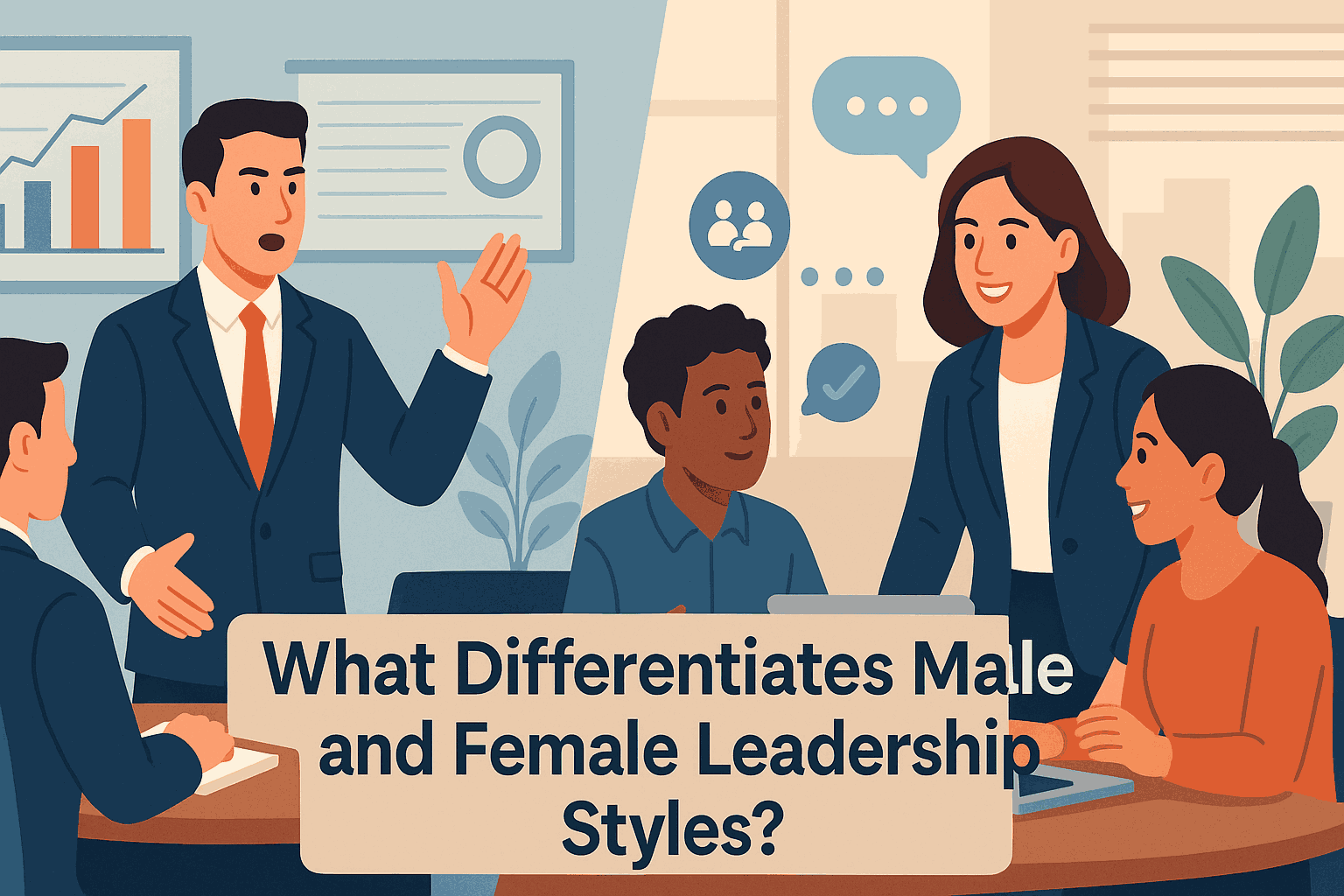
In today’s modern workplace, both men and women have equal opportunities to take on leadership roles. However, in practice, leadership styles often differ based on gender—not in terms of capability, but rather in approach, communication, and how challenges are addressed. So, what sets male and female leadership apart? Let’s take a closer look.
COMMUNICATION STYLE
Men: Typically, male leaders are more direct and result-oriented. Their communication is usually concise, goal-focused, and assertive.
Women: Female leaders tend to communicate with empathy and collaboration in mind. They often build strong interpersonal relationships and actively listen to their team members.
Conclusion: Female leaders are more likely to foster inclusive and supportive work environments, while male leaders prioritize communication efficiency and clarity.
APPROACH TO DECISION-MAKING
Men: Male leaders tend to make decisions quickly, especially under pressure. They often rely on personal judgment and are less inclined to seek consensus.
Women: Female leaders take a more participatory approach. They involve their team in decision-making and consider diverse perspectives before choosing a direction.
Conclusion: Male leadership is generally more authoritative, whereas female leadership leans toward a democratic style.
MANAGEMENT AND DELEGATION STYLE
Men: Men are more focused on structure and hierarchy. They tend to delegate tasks clearly and expect measurable outcomes.
Women: Women lead with flexibility and trust. They empower team members and support their growth and development.
Conclusion: Female leaders emphasize process and team development, while male leaders prioritize structure and output.
CONFLICT RESPONSE
Men: Male leaders typically address conflict head-on, sometimes with a competitive approach. They aim for quick resolutions to maintain productivity.
Women: Female leaders prefer resolving conflicts with emotional intelligence and diplomacy. They seek the root cause and long-term solutions.
Conclusion: Women approach conflict with empathy and understanding, whereas men often take a more solution-driven and confrontational stance.
MOTIVATION AND RECOGNITION STYLE
Men: Men often use achievement-based rewards. Their motivational strategies are built around competition and results.
Women: Women value teamwork and effort. They offer recognition through personal appreciation and collaboration.
Conclusion: Female leaders are more attuned to emotional motivation, while male leaders focus more on goal achievement.
FLEXIBILITY AND ADAPTABILITY
Men: Male leaders prefer fixed structures and consistent procedures. They adapt only when absolutely necessary.
Women: Female leaders are generally more adaptable to change and excel at multitasking, especially in dynamic environments.
Conclusion: Women tend to adjust more quickly to changing workplace conditions.
CONCLUSION
While male and female leadership styles may differ in many aspects, it’s important to understand that neither is inherently better. In fact, the diversity of leadership styles can be a powerful asset for teams and organizations. In the modern work era, blending male and female leadership approaches is the key to sustainable success.
About the Author
Gusti Ayu Tita
Author — STEKOM University
An active author focused on academic issues, educational technology, and human resource development in the campus environment.



