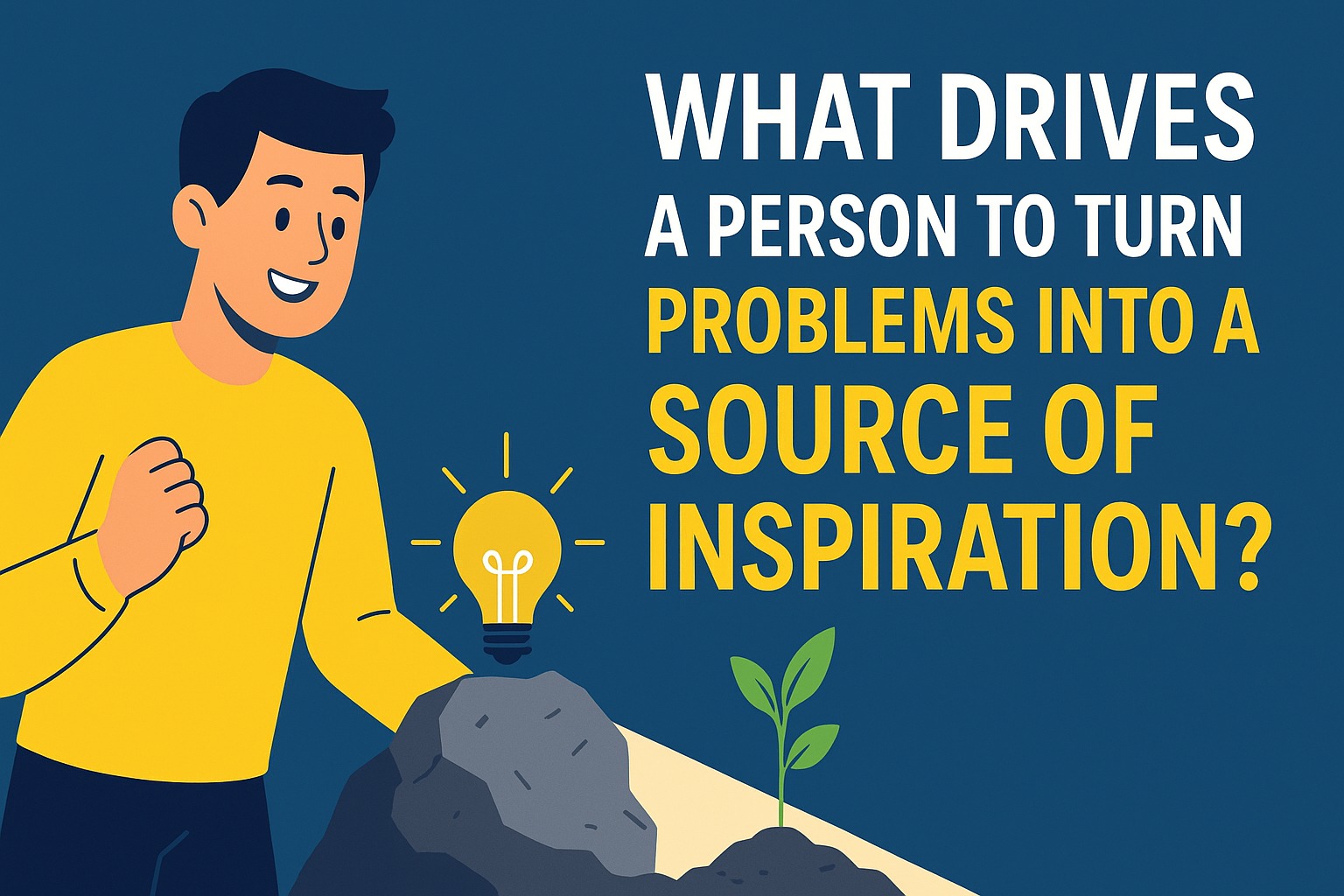
Many people see problems as obstacles that stop their progress. However, others are able to turn problems into the starting point for new ideas and fresh inspiration. What creates this difference? Why are some people able to use difficulties as a trigger for creativity and growth?
This article explores the key factors that enable someone to transform problems into sources of inspiration and how these principles can be applied in daily life.
AN OPEN MINDSET TOWARD CHANGE
The ability to view problems as inspiration starts with an open mindset. People with a *growth mindset* believe that every challenge is an opportunity to learn. They do not focus solely on the obstacles but instead look at what can be improved and developed.
With an open mindset, problems are not the end of the journey—rather, they become a new chapter that offers deeper understanding and new experiences.
MENTAL RESILIENCE IN FACING PRESSURE
Not everyone can remain steady under pressure. Those who succeed in turning problems into inspiration often have higher levels of mental resilience. This resilience allows them to stay calm, clear-headed, and emotionally balanced when facing difficulties.
When emotions are managed well, it becomes easier for someone to find new perspectives that spark creative ideas and solutions.
THE ABILITY TO SEE THE POSITIVE SIDE OF A PROBLEM
Although it may seem simple, the ability to see the positive side of a problem is crucial. Identifying benefits, lessons, or hidden opportunities helps a person view difficulties in a more constructive way.
This approach turns problems into more than just burdens—they become sources of inspiration that can trigger meaningful change.
EXPERIENCE AND LEARNING THAT SHAPE PERSONAL GROWTH
Someone with significant experience in dealing with challenges is generally more capable of seeing problems as inspiration. Past experiences teach them that behind every difficulty lies a chance to grow.
Consistent learning from failures or obstacles also strengthens the ability to respond to problems creatively and positively.
A SUPPORTIVE ENVIRONMENT
A supportive environment—whether family, friends, or a community—provides strong encouragement for looking at problems differently. Emotional support helps someone feel less alone in their struggles, making it easier to turn difficulties into inspiration.
When a person has space to share stories, discuss ideas, and gain new perspectives, creative solutions tend to emerge more quickly.
CONCLUSION
The ability to turn problems into sources of inspiration is not a matter of luck. It is the result of an open mindset, mental resilience, formative experiences, and a supportive environment. By understanding these factors, anyone can transform challenges into triggers for ideas and personal growth.
About the Author
Gusti Ayu Tita
Author — STEKOM University
An active author focused on academic issues, educational technology, and human resource development in the campus environment.