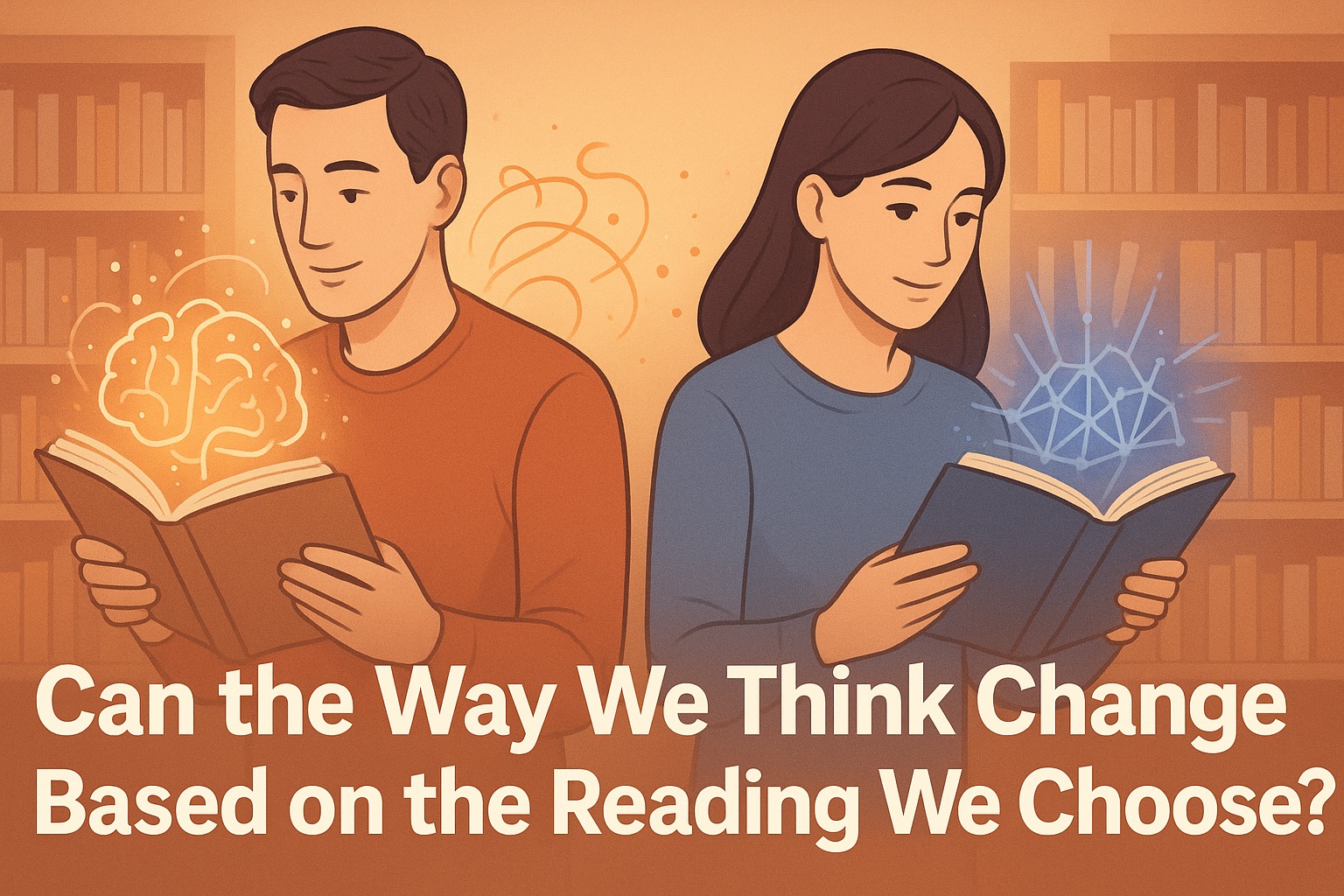
Reading is not just a source of information—it is a window that shapes how we understand the world. What we read influences the way we process knowledge, evaluate situations, and make decisions. The question is, to what extent can reading change the way we think?
EACH TYPE OF READING SHAPES A DIFFERENT MINDSET
Every type of reading material has unique characteristics that affect specific parts of our thinking process. Heavy readings such as essays and scientific literature push us to think more analytically, while fiction allows us to imagine and experience the emotional journeys of characters.
Repeated reading habits form cognitive patterns. If we often read deep and complex texts, our brains become trained to think systematically. Conversely, if we choose lighter reading materials, our minds become accustomed to processing information quickly and simply.
THE INFLUENCE OF READING ON ANALYTICAL THINKING
Nonfiction, scientific reports, self-development books, or research articles usually offer strong logical structures. These types of readings help readers understand cause-and-effect relationships, think in a data-driven manner, and evaluate arguments more carefully.
When we frequently consume analytical reading materials, our brains become trained to:
- filter information,
- detect inconsistencies,
- and consider various pieces of evidence before making decisions.
This habit builds a more rational and measured way of thinking.
THE ROLE OF FICTION IN CHANGING HOW WE SEE THE WORLD
Fiction offers experiences we cannot gain in real life. When reading fiction, we dive into a character’s perspective, understand their internal conflicts, and see the world through someone else’s eyes.
This contributes to developing a mindset that is:
- more empathetic,
- flexible,
- and rich in perspective.
Fiction trains imagination and emotional intelligence—two essential components for understanding social situations and human interactions.
HOW READING HABITS SHAPE OUR AUTOMATIC THINKING
Consistent reading choices create automatic thinking patterns. For example, someone who often reads critical opinions tends to evaluate information more deeply. Meanwhile, readers of reflective stories are usually more sensitive to emotions and interpersonal relationships.
The more we regularly engage with a certain type of reading, the stronger the thinking pattern becomes. It works like mental exercise that guides how the brain processes information in the future.
CONCLUSION: OUR READING REFLECTS OUR MINDSET
The way we think can indeed change based on what we read. Fiction shapes a more empathetic and creative worldview, while nonfiction strengthens logic and analytical skills. A combination of both can create a balanced and mature mindset.
In the end, reading is not just entertainment or a source of knowledge—it is an investment in building the quality of our thinking.
About the Author
Gusti Ayu Tita
Author — STEKOM University
An active author focused on academic issues, educational technology, and human resource development in the campus environment.