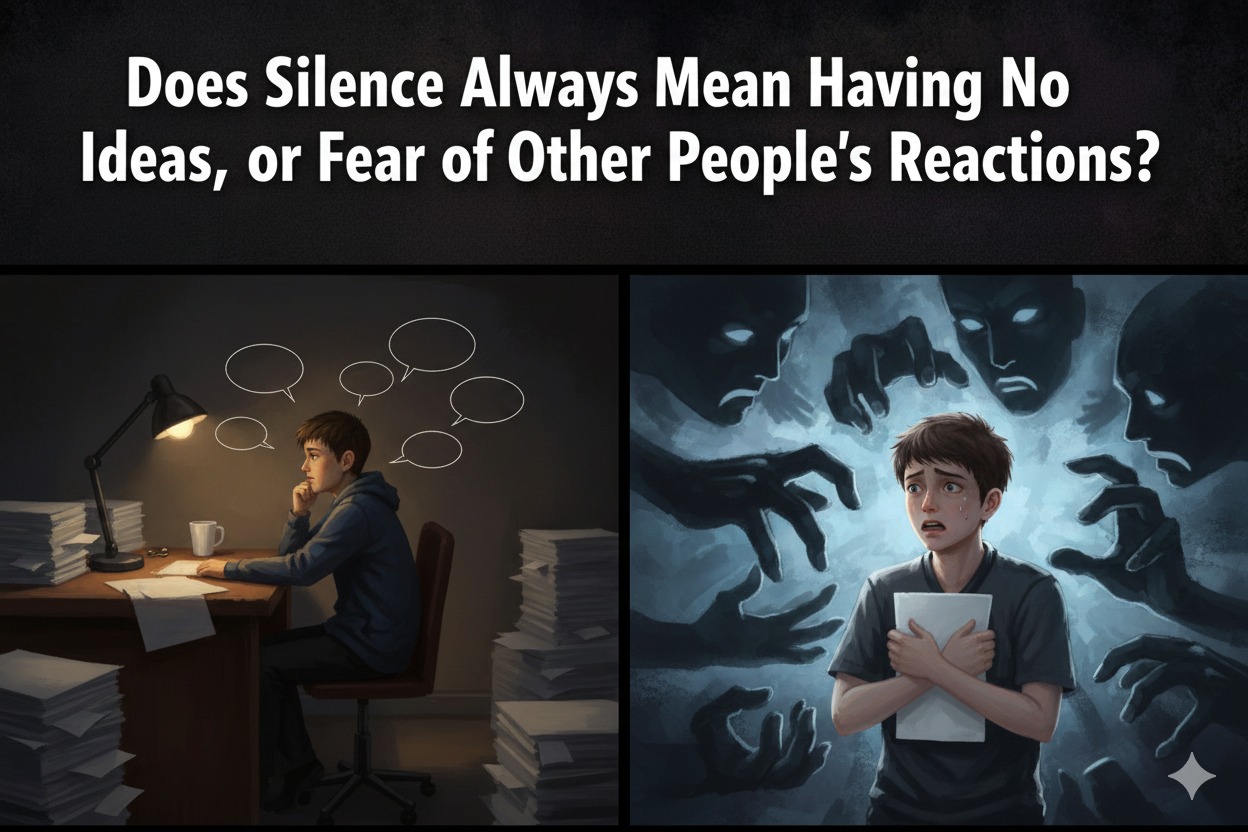
In many discussions, meetings, or public forums, we often see someone choose to remain silent. This attitude is frequently misinterpreted as a sign of having no ideas. In reality, silence does not always mean emptiness. Behind the quiet, there may be well-developed ideas held back by fear of how others might react.
SILENCE DOES NOT MEAN A LACK OF IDEAS
Not everyone feels comfortable expressing their thoughts immediately. Some individuals actually think more deeply while listening. They process information, consider multiple perspectives, and carefully structure their ideas. Unfortunately, cultures that glorify speaking up often label quiet individuals as passive or less contributive.
In truth, the quality of an idea is not determined by how quickly or how often it is spoken.
FEAR OF JUDGMENT AND THE POWER OF SOCIAL PRESSURE
One of the main reasons people choose silence is fear of judgment. Worries about being wrong, irrelevant, or underestimated can cause someone to hold back. This social pressure becomes even stronger in critical or unsupportive environments.
Instead of focusing on the substance of their ideas, the mind becomes occupied with imagining negative reactions.
THE INFLUENCE OF PAST EXPERIENCES
Negative past experiences—such as having ideas rejected or mocked—can shape the habit of staying silent. These small emotional scars make individuals more cautious and likely to choose safety over speaking up. Over time, this habit can bury self-confidence, even though the ability to think critically remains intact.
Silence becomes a form of self-protection, not a sign of incapacity.
DIFFERENT COMMUNICATION STYLES
Everyone has a different communication style. Some people are spontaneous and vocal, while others are reflective and selective with their words. Reflective individuals often need more time before expressing ideas. When discussion spaces fail to allow that time, they may be left behind and eventually choose silence.
Understanding these differences is essential for creating inclusive discussions.
HOW TO CREATE A SAFE SPACE FOR SPEAKING UP
Psychological safety plays a major role in encouraging people to share ideas. Respecting opinions, avoiding immediate judgment, and giving equal speaking opportunities can motivate quieter individuals to speak. Even simple gestures, such as listening attentively, can provide a strong sense of safety.
When people feel safe, ideas flow more freely.
CONCLUSION: SILENCE CAN HIDE GREAT POTENTIAL
Silence does not always mean a lack of ideas. In many cases, it reflects caution and fear of others’ reactions. With a more supportive environment and an understanding that everyone communicates differently, hidden ideas can surface. Giving space to those who are quiet is just as important as listening to those who speak loudly.
About the Author
Gusti Ayu Tita
Author — STEKOM University
An active author focused on academic issues, educational technology, and human resource development in the campus environment.