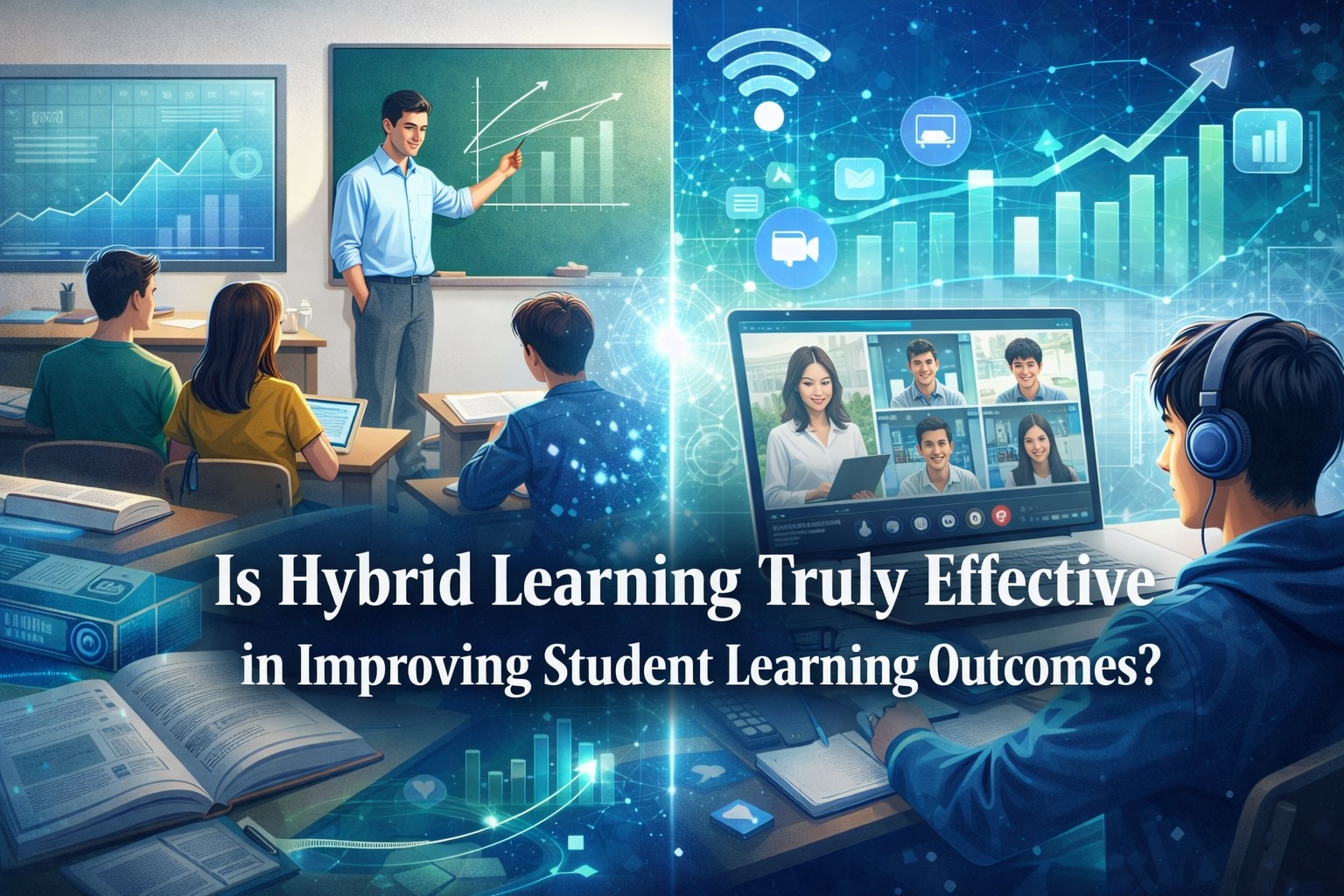
Since the COVID-19 pandemic, the world of education has undergone major changes. One of the most widely discussed innovations is hybrid learning—a combination of face-to-face and online learning. This model is believed to offer both flexibility and effectiveness for students.
However, an important question remains: Is hybrid learning truly effective in improving student learning outcomes? Let us explore this further.
What Is Hybrid Learning?
Simply put, hybrid learning is a learning method that combines two approaches:
- Online learning: students learn through digital platforms such as Zoom, Google Classroom, or school Learning Management Systems (LMS).
- Face-to-face learning: students attend classes physically to interact directly with teachers and peers.
The main goal of hybrid learning is to create a more flexible, personalized, and efficient learning experience without sacrificing the quality of teacher–student interaction.
Advantages of Hybrid Learning
Hybrid learning offers several benefits that make it popular in modern education:
1. Flexibility of Time and Place
Students can learn anytime and anywhere. Learning materials are accessible online, removing limitations of space and time.
2. More Interactive Learning
The use of videos, digital quizzes, and discussion forums encourages active participation and motivation.
3. Personalized Learning
Teachers can adapt teaching methods to students’ learning pace and needs, helping slower learners without leaving them behind.
4. Efficiency and Accessibility
Schools can reduce operational costs, while students in remote areas still gain access to quality education through the internet.
Challenges in Implementing Hybrid Learning
Despite its advantages, hybrid learning also faces several challenges:
1. Digital Inequality
Not all students have adequate devices or stable internet access.
2. Teacher and Student Readiness
Some educators are not fully prepared to use digital technology effectively and require proper training.
3. Limited Social Interaction
Reduced face-to-face interaction may weaken emotional connections between teachers and students.
4. Discipline and Learning Motivation
Online learning requires strong self-discipline; without direct supervision, students may lose focus.
Effectiveness of Hybrid Learning Based on Research
Various studies show promising results. Research by the **Education Development Center (EDC)** indicates that students in hybrid learning environments tend to achieve better academic results than those in fully online learning.
Meanwhile, a UNESCO report (2023) states that combining online and face-to-face learning increases knowledge retention by up to 25% compared to conventional methods.
However, effectiveness depends greatly on implementation quality, infrastructure readiness, and teachers’ ability to balance both approaches.
Conclusion
So, is hybrid learning truly effective in improving learning outcomes?
Yes—when implemented properly.
Hybrid learning can offer flexibility, interactivity, and improved learning effectiveness if supported by:
- Adequate digital infrastructure,
- Well-trained and adaptive teachers, and
- Highly motivated students.
Hybrid learning is not merely a temporary trend, but a step toward a more inclusive and adaptive future of education.
**Keywords:**
About the Author
Gusti Ayu Tita
Author — STEKOM University
An active author focused on academic issues, educational technology, and human resource development in the campus environment.