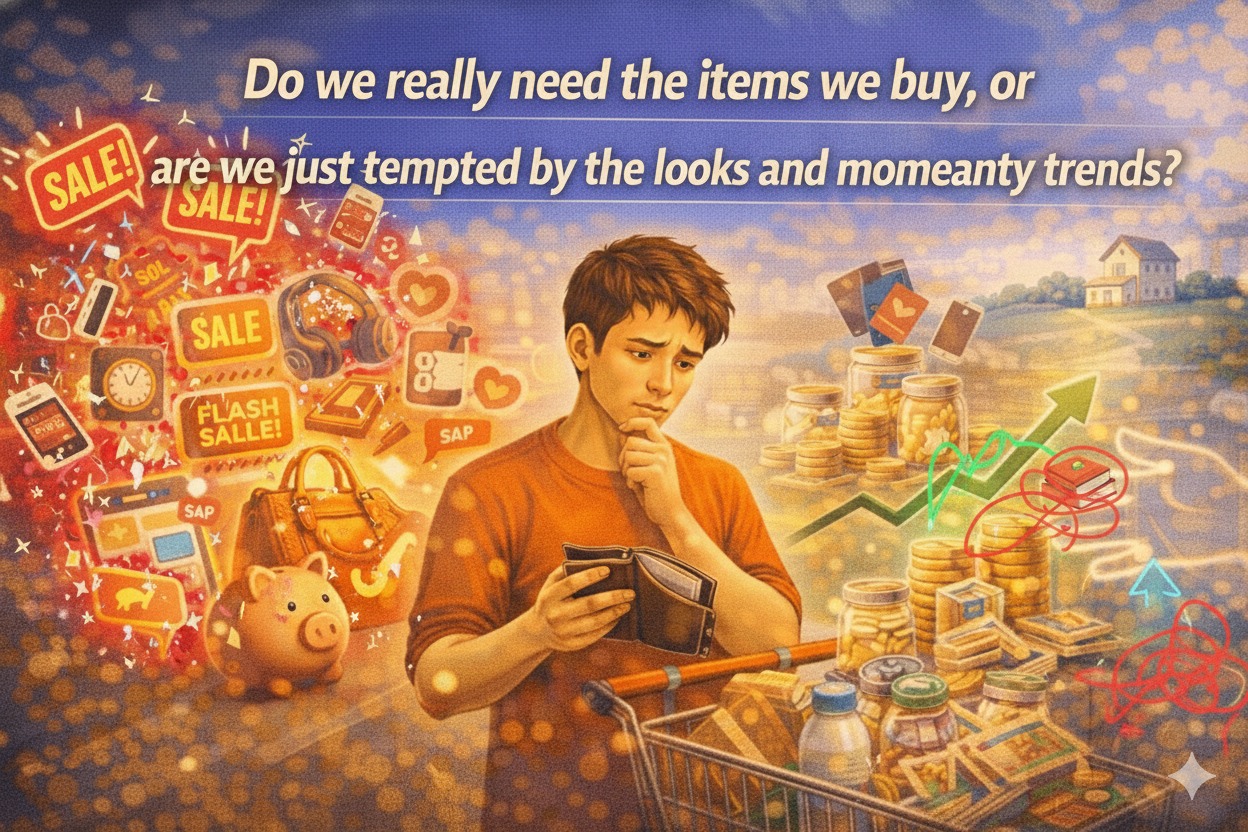
Do We Really Need It, or Are We Just Tempted by Trends?
In today’s digital era, shopping has become incredibly easy. With just a few taps on a screen, various attractive products can instantly end up in our shopping carts. However, this convenience often raises an important question: do we truly need the items we buy, or are they simply the result of visual temptation and short-lived trends?
The “Eye Hunger” Phenomenon in Shopping Behavior
“Eye hunger” refers to a condition in which people purchase items not because of real needs, but because they are attracted to visuals, promotions, or trending products. Aesthetic packaging, persuasive advertising, and the influence of social media often make us feel that we “must have” something, even when it is not actually necessary.
This phenomenon becomes stronger as trends change rapidly. What looks appealing today may lose its relevance just a few weeks later. Without realizing it, we repeatedly fall into the same pattern of impulsive shopping.
The Difference Between Needs and Wants
Needs are things that are truly essential for daily life, such as food, appropriate clothing, or work tools. Wants, on the other hand, usually arise from emotional impulses, curiosity, or the desire to follow trends.
The problem is that wants often disguise themselves as needs. Phrases like “I might need it someday” or “It’s on sale, it would be a waste to miss it” are common justifications used when shopping.
The Influence of Trends and Social Media
Social media plays a major role in shaping shopping habits. Review content, unboxing videos, and influencer recommendations make products appear more attractive and almost mandatory to own. In reality, what works for others may not suit our own needs.
Constantly changing trends also create social pressure. The fear of missing out (FOMO) pushes people to buy items simply to feel relevant and keep up with the crowd.
The Long-Term Impact of Impulsive Shopping
The habit of purchasing items due to temporary trends can negatively affect financial well-being. Uncontrolled spending makes it harder to save money, leads to post-purchase regret, and can cause financial stress.
Moreover, rarely used items tend to pile up and become wasteful. This also reflects a less mindful lifestyle and poor decision-making habits.
How to Shop More Wisely
Before buying something, take a moment to pause and ask yourself: do I really need this item right now? Will its benefits last in the long term? Giving yourself a waiting period before checking out often helps reduce impulsive urges.
Creating a list of needs, setting a budget, and limiting exposure to shopping-related content can also be simple yet effective ways to avoid “eye hunger.” This allows shopping decisions to become more rational and aligned with life priorities.
Conclusion
The question of whether we truly need what we buy or are merely tempted by visuals and short-term trends is an important reflection in today’s consumer-driven culture. By understanding the difference between needs and wants and recognizing the influence of trends, we can develop healthier, more mindful, and more responsible shopping habits.
About the Author
Gusti Ayu Tita
Author — STEKOM University
An active author focused on academic issues, educational technology, and human resource development in the campus environment.