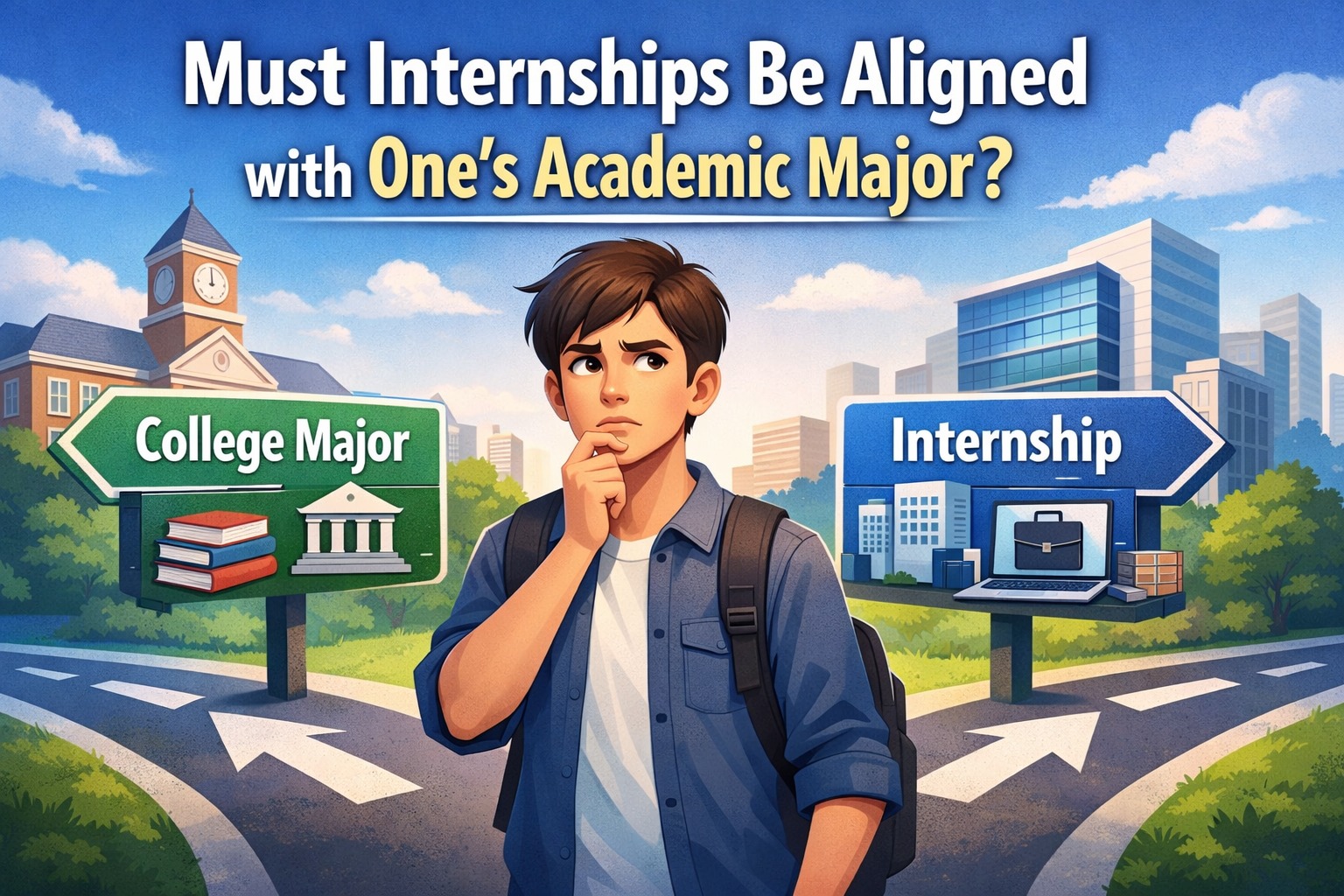
Internship programs are increasingly recognized as important in higher education because they serve as a bridge between classroom theory and workplace reality. However, one common question often causes students uncertainty: must internships align with one’s academic major? Amid demands for work experience and career competition, this question deserves deeper discussion.
The Role of Internships in Student Development
Internships provide students with opportunities to experience the professional world firsthand. Through this experience, students learn about workplace culture, professional responsibilities, and the application of academic knowledge.
Beyond technical skills, internships also develop non-academic skills such as communication, teamwork, time management, and problem-solving—qualities often valued by employers regardless of academic background.
Advantages of Internships Aligned with One’s Major
Internships that align with an academic major offer several advantages. Students can directly apply theoretical knowledge, strengthening academic understanding in real-world contexts.
Such alignment also helps students build a linear career path. Relevant internship experience often becomes a strong asset when applying for jobs in the same field after graduation.
When Non-Aligned Internships Become an Option
On the other hand, internships that do not fully align with one’s major are not necessarily a mistake. Many students discover new interests or hidden potential when exploring different fields.
Cross-disciplinary internships broaden perspectives, develop new skills, and enhance adaptability. In a dynamic job market, flexibility and the ability to learn quickly are often more valued than strict alignment of academic background.
Aligning Internships with Personal Goals
Choosing an internship should align with personal goals and career plans. If the aim is to pursue a career related to one’s major, a relevant internship can be strategic. However, for those still exploring, internships in different fields can help clarify interests and future directions.
The most important factor is understanding what one hopes to learn from the internship, rather than merely fulfilling formal requirements.
How Employers View Internship Alignment
Many employers today assess not only academic alignment but also skills, work attitude, and adaptability. Internship experience—whether aligned with one’s major or not—remains valuable if it demonstrates competence and a clear learning process.
The professional world tends to appreciate individuals with diverse experiences who can connect them to workplace needs.
Conclusion: Flexibility Matters More Than Mere Alignment
Internships do not always have to align with one’s academic major. What matters most is the learning value, skills acquired, and relevance to long-term goals. Alignment can be an advantage, but flexibility and self-awareness in choosing internship experiences are key to career development.
By considering interests, potential, and future direction, students can turn internships into meaningful learning experiences—regardless of the field chosen.
Keywords:**
About the Author
Gusti Ayu Tita
Author — STEKOM University
An active author focused on academic issues, educational technology, and human resource development in the campus environment.