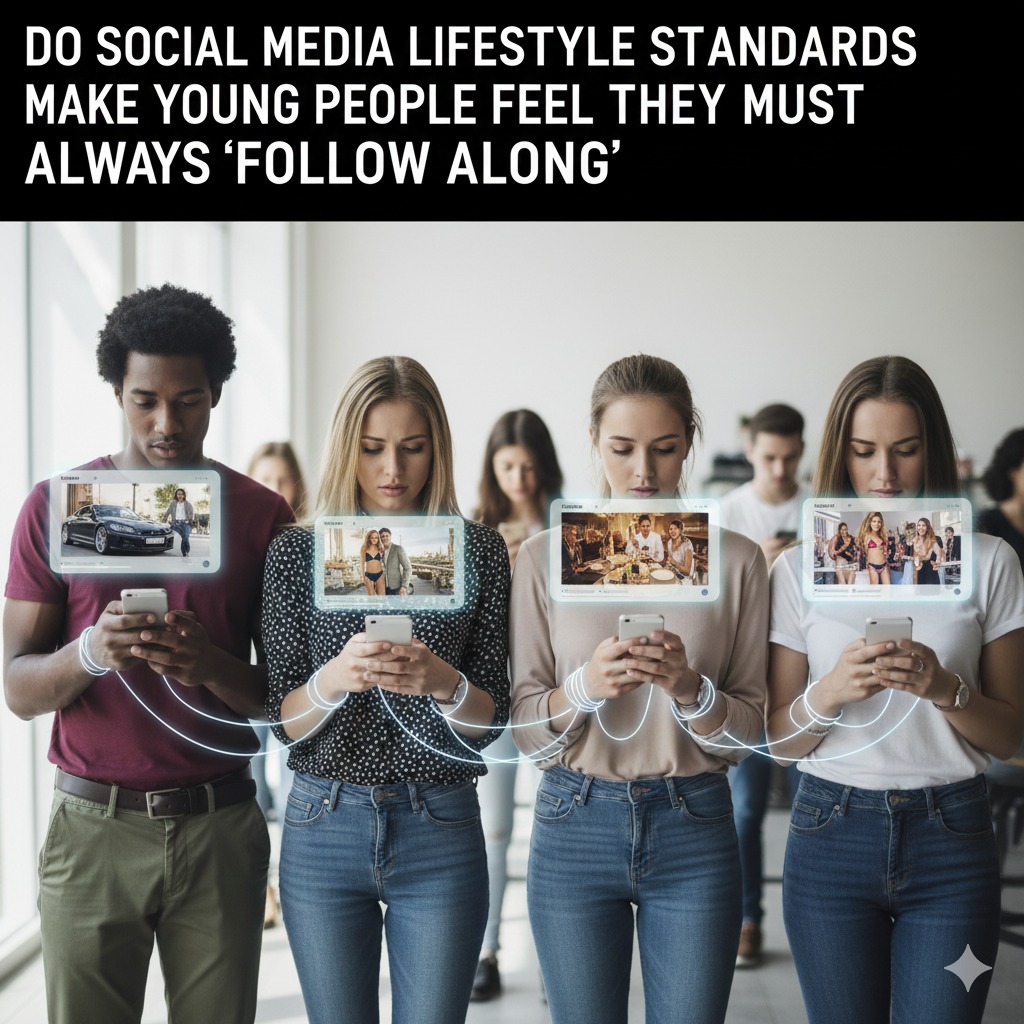
Social media has become a showcase of idealized lives—luxury vacations, perfect relationships, impressive achievements. These portrayals influence many young people who feel pressured to keep up. This article explains how this phenomenon forms and affects them.
WHAT ARE DIGITAL LIFESTYLE STANDARDS?
These are ideal life images formed from social media posts:
- Luxury trips
- Latest fashion
- Relationship goals
- Successful careers
- High income at a young age
WHY ARE YOUNG PEOPLE EASILY INFLUENCED?
1. Intense Content Exposure
Frequent viewing of “perfect” lives increases the desire to imitate them
2. Identity Formation Phase
Young people use influencers or peers as benchmarks.
3. Unconscious Social Comparison
Comparing themselves to others makes them feel inadequate.
DOES IT REALLY MAKE THEM FEEL LIKE THEY MUST “FOLLOW”?
1. Pressure to Look Perfect
Young people feel obligated to appear productive or stylish.
2. Fear of Missing Out (FOMO)
Viral trends create pressure to join in to avoid feeling left out.
3. Feeling “My Life Isn’t Fun Enough”
Perfect posts make their own life seem boring.
IMPACT ON MENTAL WELL-BEING
- Anxiety from feeling not good enough
- Financial stress from trying to follow trends
- Low self-esteem
- Mental exhaustion from chasing unrealistic standards
HOW TO AVOID FALLING INTO SOCIAL MEDIA LIFESTYLE PRESSURE
1. Realize that social media isn’t the full picture
2. Unfollow accounts that trigger pressure
3. Focus on your personal goals
4. Limit screen time
5. Appreciate your own progress
CONCLUSION
Digital lifestyle standards can create pressure for young people, but with self-awareness and healthy boundaries, they can enjoy social media without losing their identity. Real life matters more than digital appearance.
About the Author
Gusti Ayu Tita
Author — STEKOM University
An active author focused on academic issues, educational technology, and human resource development in the campus environment.