Is Technology Making Us Smarter or Lazier?
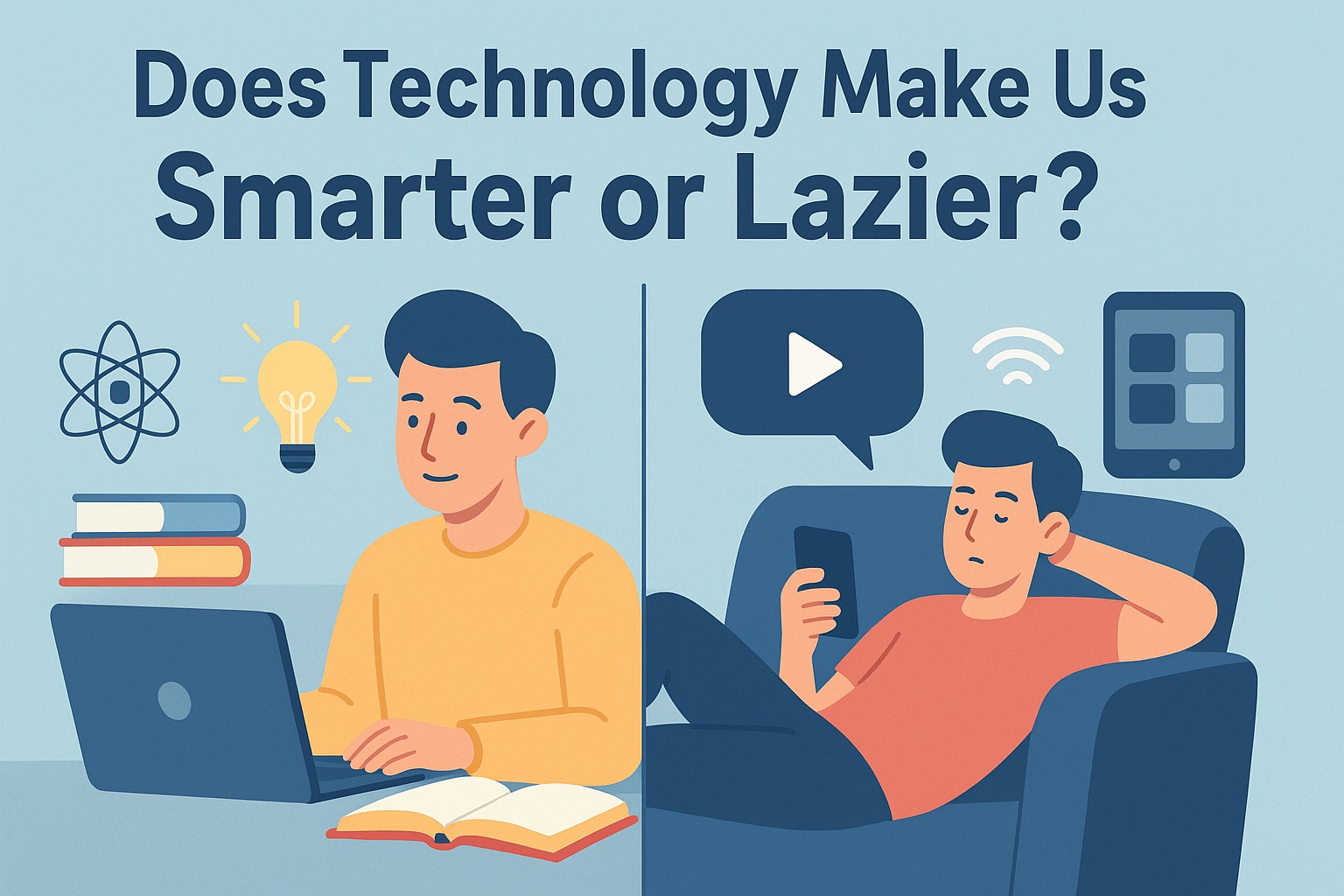
Modern technology has made almost everything easier. We can learn, work, and even complete complex tasks with just a single click. But this raises an important question: is this convenience making us smarter, or is it slowly making us lazier?
Technology Rapidly Expands Our Knowledge
With the internet, we can find answers to almost anything in seconds. This instant access makes the learning process far more efficient. We can understand a wide range of topics without reading thick books or attending long classes. Information that once required hours of research is now available instantly.
Excessive Convenience Reduces Learning Effort
While technology helps us learn faster, it can also reduce our willingness to put in effort. Many people prefer ready-made answers rather than thinking through problems themselves. As a result, the depth of understanding often becomes shallow. We may know the answer, but we don’t truly understand *why* it is correct.
Instant Intelligence Weakens Creativity
Because the internet provides solutions to almost everything, our brains have fewer opportunities to think creatively. We become less accustomed to generating original ideas or solving problems in unique ways. Without meaningful challenges, creativity slowly declines.
Dependence on Devices Makes Us Passive
Many people now feel unable to function without their gadgets. From remembering schedules, doing simple calculations, to finding directions—almost everything depends on technology. Over time, this dependence weakens our basic human abilities and makes us more passive in our daily lives.
Conclusion
Technology *can* make us smarter—if we use it to support active learning. But if it becomes a shortcut for everything, it may quietly make us lazier. The key lies in balance: using technology as a tool to enhance our thinking, not replace it.
About the Author
Gusti Ayu Tita
Author — STEKOM University
An active author focused on academic issues, educational technology, and human resource development in the campus environment.