
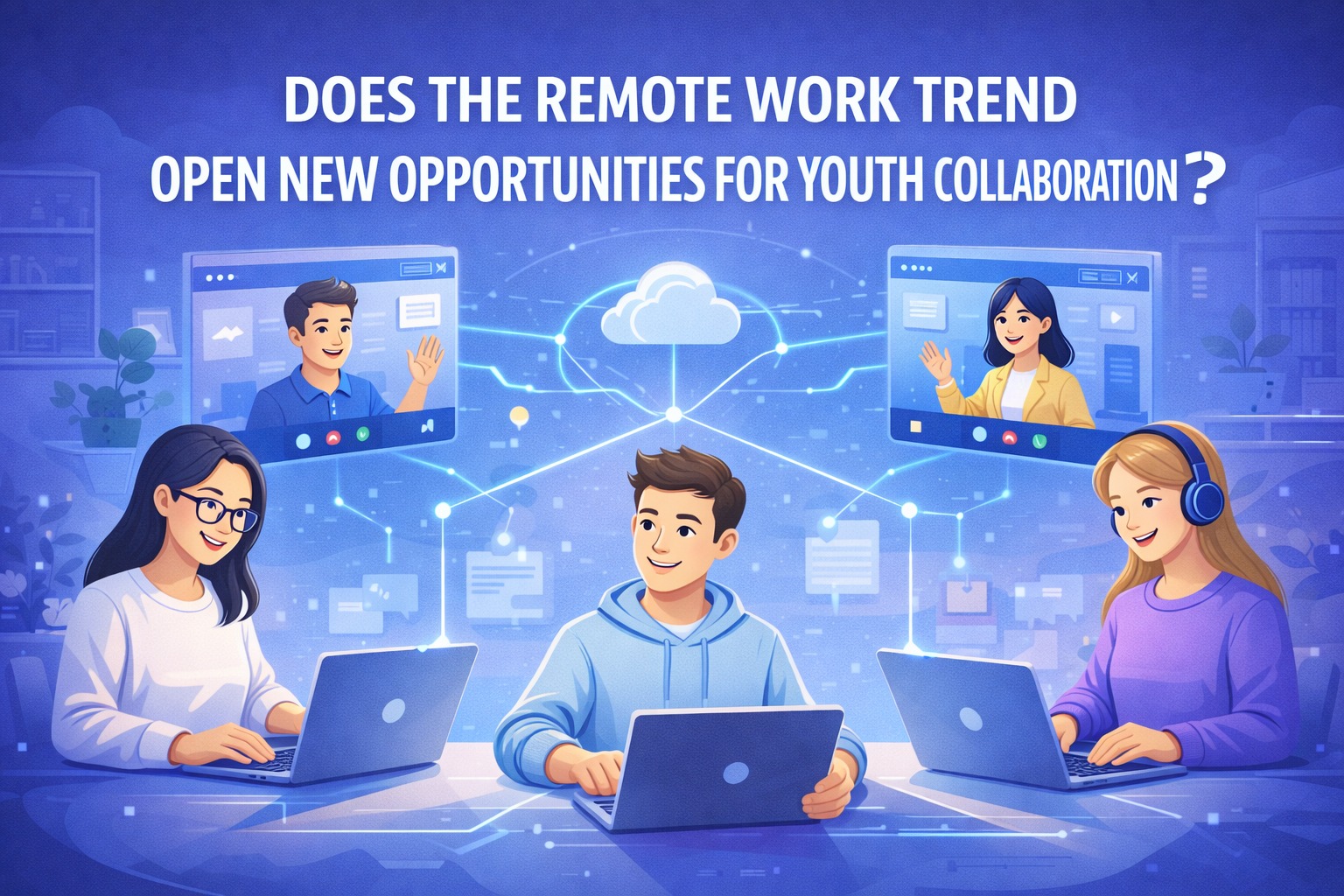
In recent years, the **remote work** trend has experienced significant growth, particularly among younger generations. The global pandemic that forced many companies to adapt to new working models has fundamentally changed the way people work and collaborate. One of the most notable shifts is how young people increasingly work remotely and rely on technology to communicate, collaborate, and innovate.
However, how does the remote work trend truly transform the way young generations collaborate? Does it create new opportunities in terms of interaction, teamwork, and problem-solving? This article explores the impact of remote work on youth collaboration, along with the opportunities and challenges that arise.
UNDERSTANDING REMOTE WORK AND ITS DEVELOPMENT TREND
Remote work refers to a working arrangement in which employees are not required to work from a physical office but can perform their tasks from anywhere using digital tools. Advances in information technology, widespread internet access, and cloud-based collaboration platforms have made this working model increasingly popular.
Although the trend had begun long before the pandemic, it reached its peak during the COVID-19 crisis. After lockdown periods ended, many organizations discovered that remote work could remain productive and efficient. As a result, numerous companies have adopted remote work as a long-term policy.
COLLABORATION OPPORTUNITIES THROUGH TECHNOLOGY
One of the most significant impacts of remote work is the ease of collaboration enabled by technology. Younger generations, who are generally more technologically literate, adapt more easily to digital tools and platforms. Applications such as Slack, Trello, Zoom, and Google Workspace have transformed the way teams communicate and work together.
Through these platforms, collaboration is no longer limited by physical space. Young people can now work on projects involving teams from different parts of the world. Moreover, technology enables faster and more effective communication, even in complex situations.
MORE FLEXIBLE AND INNOVATIVE COLLABORATION
One major advantage of remote work is flexibility. Young professionals can work with more flexible schedules, allowing them to align working hours with their personal productivity rhythms. This flexibility often leads to greater motivation and a stronger sense of empowerment.
Such flexible collaboration opens opportunities for increased creativity and innovation. For example, individuals can focus better in comfortable environments or choose working hours during which they feel most productive. These conditions contribute positively to achieving optimal collaborative outcomes.
CHALLENGES OF REMOTE COLLABORATION
Despite its benefits, remote work also presents challenges in collaboration. One of the main issues is the lack of face-to-face interaction. While technology enables virtual communication, the absence of physical interaction can lead to weaker interpersonal relationships within teams. Trust-building and team dynamics may be affected by distance.
Additionally, time management and differences in time zones can complicate coordination, particularly for projects that require intensive collaboration within specific timeframes.
WHAT DOES THE REMOTE WORK TREND OFFER YOUNG GENERATIONS?
For young people, remote work provides opportunities for greater independence and deeper engagement in global communities. They can access job opportunities without geographical limitations while developing essential digital and time-management skills needed in the future workforce.
However, success in remote work depends heavily on adaptability to technology, clear communication, and effective time management. Young individuals who can overcome these challenges will gain a significant competitive advantage in the global labor market.
CONCLUSION: REMOTE WORK AS AN OPPORTUNITY FOR YOUTH COLLABORATION
Overall, the remote work trend offers substantial opportunities for young generations to collaborate in more flexible, innovative, and globally connected ways. By leveraging available technology, they can form global teams, access diverse career opportunities, and enhance skills relevant to the future of work.
Nevertheless, challenges such as remote communication barriers and time-zone differences must be managed effectively. Young people who successfully navigate these obstacles will be well-positioned to thrive in an increasingly digital and interconnected work ecosystem.
About the Author
Gusti Ayu Tita
Author — STEKOM University
An active author focused on academic issues, educational technology, and human resource development in the campus environment.



