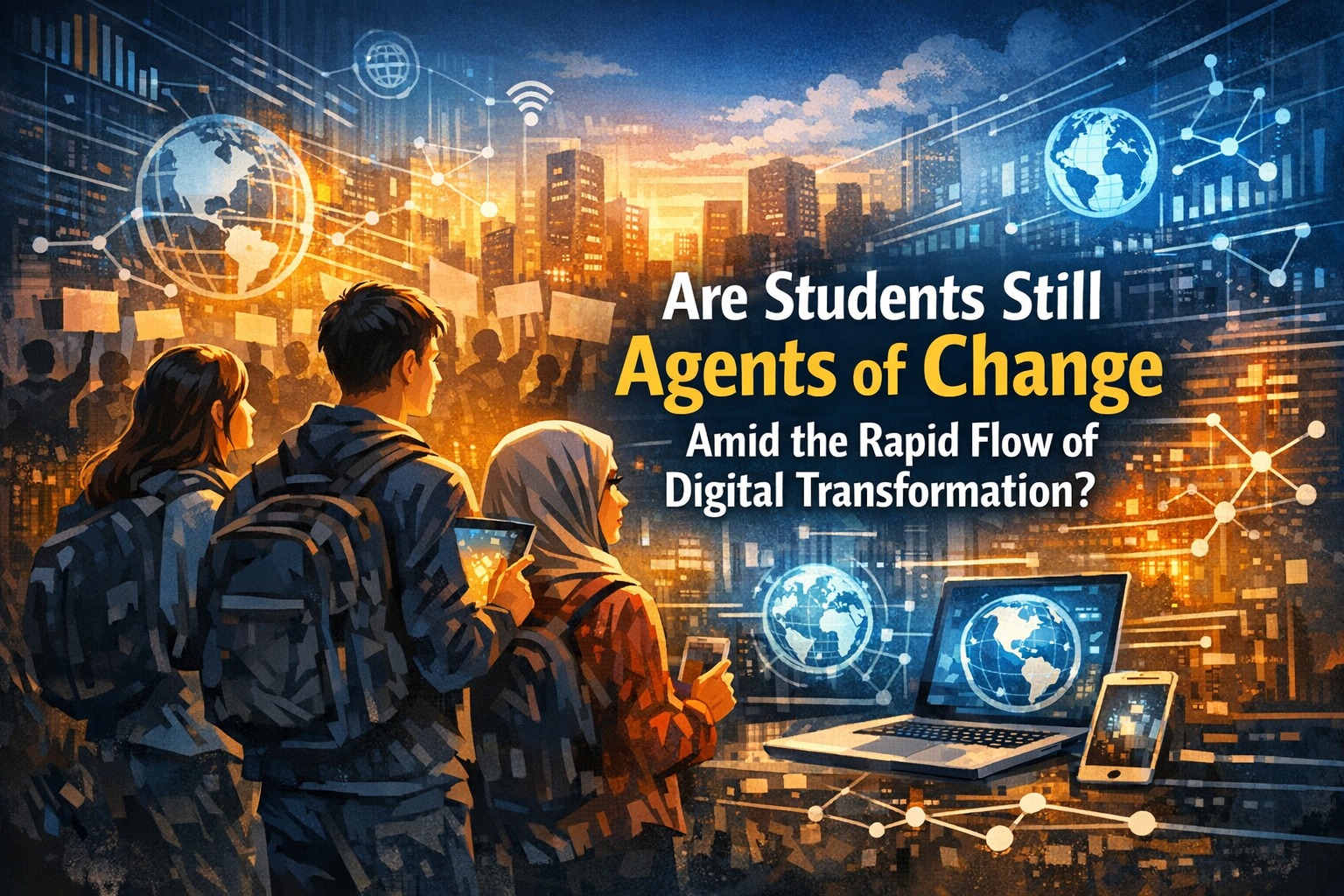
The world is experiencing an unprecedented wave of digital transformation. Technology evolves rapidly, reshaping how people communicate, learn, work, and even think. From artificial intelligence to social media platforms, digital tools now influence nearly every aspect of daily life. In this fast-moving environment, an important question arises: are students still agents of change, or have they become merely users of technology?
For decades, students have been seen as a powerful force for social transformation. Their critical thinking, creativity, and idealism often drive movements that challenge outdated systems and promote progress. However, the digital era presents new opportunities as well as new challenges for the role of students in shaping society.
THE TRADITIONAL ROLE OF STUDENTS AS AGENTS OF CHANGE
Historically, students have played a crucial role in driving social and political change. Universities have long been spaces where new ideas emerge, debates flourish, and awareness about social issues grows. Students often question established norms and advocate for justice, equality, and progress.
Movements led by students have influenced policy reforms, educational improvements, and even national development in many parts of the world. Their position as educated young individuals allows them to combine knowledge with energy and courage. This combination has made students an important catalyst for change across generations.
DIGITAL TRANSFORMATION AND ITS IMPACT ON STUDENTS
The rapid growth of digital technology has transformed the way students access information and interact with the world. Today, knowledge is no longer limited to classrooms or libraries. Online platforms, digital resources, and global communication networks allow students to learn beyond traditional boundaries.
Digital transformation has created a more connected society where ideas can spread instantly. Students can now participate in discussions, share opinions, and mobilize communities through digital platforms. Social media campaigns, online petitions, and digital collaborations have become modern tools for activism and awareness.
However, the same technology that empowers students can also distract them. Endless streams of entertainment, misinformation, and algorithm-driven content sometimes shift focus away from critical thinking and meaningful engagement. As a result, the role of students as agents of change can become weakened if technology is used passively rather than strategically.
CHALLENGES STUDENTS FACE IN THE DIGITAL ERA
Despite the opportunities provided by digital transformation, students face several challenges in maintaining their role as drivers of change. One major challenge is information overload. The internet offers an enormous amount of data, but not all of it is accurate or reliable. Without strong literacy and analytical skills, students may struggle to distinguish facts from misinformation.
Another challenge is digital dependency. Technology can create convenience, but excessive reliance on it may reduce creativity, deep thinking, and real-world engagement. Students who spend most of their time consuming digital content might lose the motivation to initiate real change in society.
Additionally, the speed of digital transformation sometimes creates a gap between technological advancement and ethical awareness. Students must learn not only how to use technology but also how to use it responsibly for the benefit of society.
STUDENTS AS DIGITAL CHANGE MAKERS
Even with these challenges, students still hold enormous potential to remain agents of change in the digital age. In fact, digital transformation can strengthen their role if it is used wisely.
Students today have access to powerful tools for communication, research, and collaboration. They can raise awareness about social issues, organize community initiatives, and promote educational campaigns through digital media. With the right mindset, technology can amplify the voices of students and extend their influence far beyond campus boundaries.
To maintain their role as change makers, students must develop digital literacy, critical thinking, and social responsibility. Instead of being passive consumers of technology, they should become creators of knowledge, innovators of ideas, and advocates for positive transformation.
THE FUTURE ROLE OF STUDENTS IN A DIGITAL SOCIETY
The future of society will be shaped by how effectively young people adapt to technological change. Students who combine academic knowledge with digital competence can become leaders who guide society toward sustainable and ethical progress.
Educational institutions also play an important role in this process. Universities and schools must encourage students to think critically, collaborate creatively, and engage actively with social issues. By doing so, students will not only master technology but also use it as a tool to inspire change.
Ultimately, the identity of students as agents of change does not disappear in the era of digital transformation. Instead, it evolves. The challenge is not whether students can still create change, but how they choose to use the digital tools available to them.
CONCLUSION
Students remain one of the most important forces in shaping the future. While digital transformation has changed the landscape of activism and social engagement, it has also opened new pathways for innovation and influence.
If students develop strong digital literacy, maintain critical awareness, and commit to social responsibility, they can continue to serve as powerful agents of change. In the rapidly evolving digital world, their role may look different from the past, but their impact can be even greater.
About the Author
Gusti Ayu Tita
Author — STEKOM University
An active author focused on academic issues, educational technology, and human resource development in the campus environment.