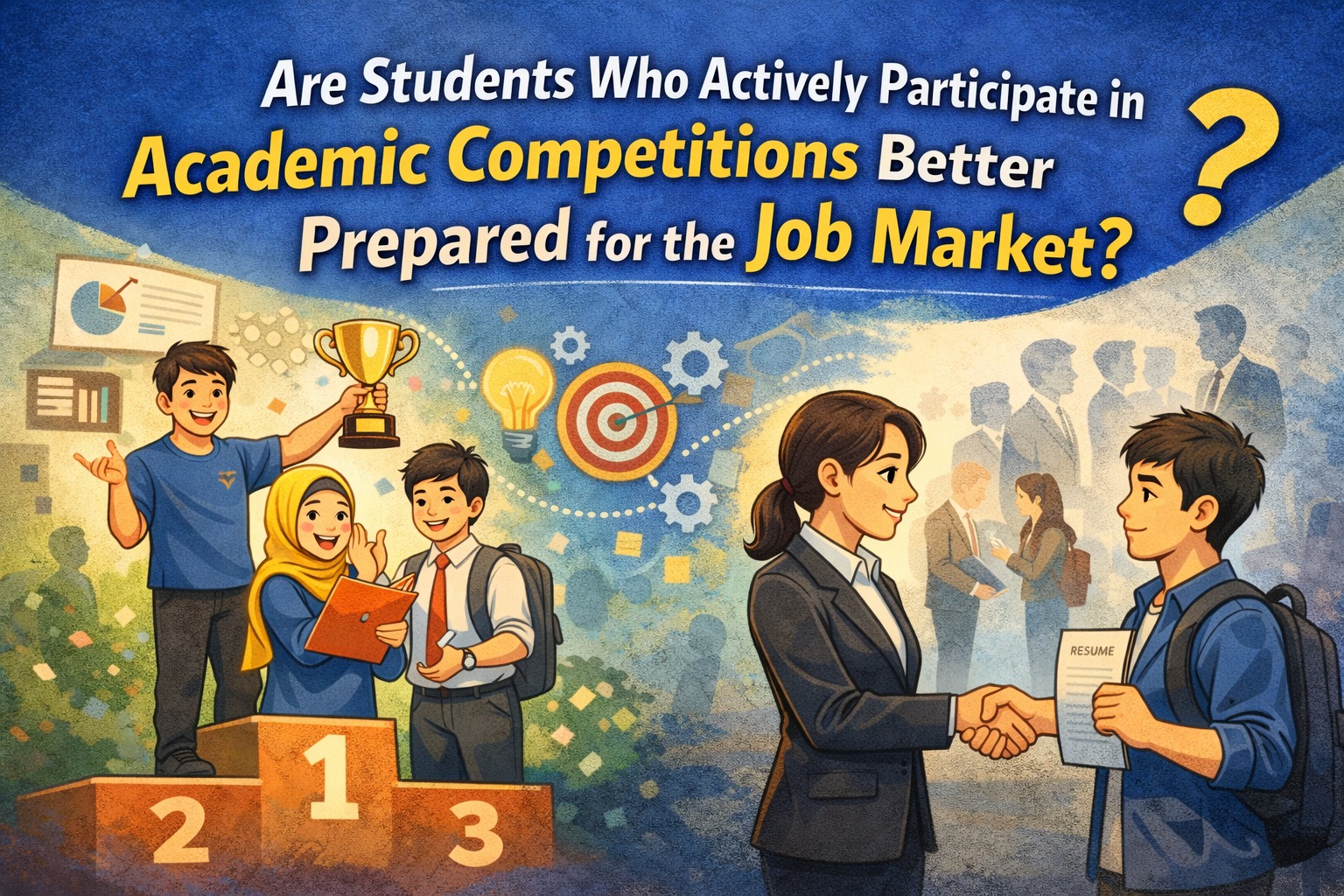
In today’s competitive job market, students must excel not only academically but also in adaptability, communication, and problem-solving. Academic competitions are often associated with improved career readiness. But do they truly prepare students for professional life?
Academic Competitions as Competency Development Platforms
Competitions such as scientific writing, debates, business innovation, and technology research are widely facilitated in Indonesia through programs like the Student Creativity Program (PKM).
These platforms are designed to test and develop intellectual and character capacities.
Indicators of Work Readiness
- Professional communication
- Problem-solving and decision-making
- Teamwork and collaboration
- Time management
- Resilience under pressure
- Adaptability
Impact on Career Readiness
1. Case-Based Problem Solving
Students learn to analyze real-world issues and propose practical solutions.
2. Professional Communication Skills
Presentations and pitching sessions closely resemble workplace communication scenarios.
3. Mental Resilience and Adaptability
Tight deadlines and high standards build perseverance and adaptability.
4. Stronger Portfolio and Personal Branding
Competition achievements differentiate candidates with similar academic backgrounds.
Is Participation Automatically Equal to Readiness?
Not necessarily. The impact depends on:
- Reflection after competition experiences
- Ability to transfer lessons into professional contexts
- Balanced academic management
- Institutional support
Role of Universities
Universities play a strategic role in maximizing competition benefits through mentorship, soft skill training, and curriculum integration.
Conclusion
Students active in academic competitions generally have stronger opportunities to be workforce-ready. However, readiness requires reflection, self-management, and institutional support to convert experience into professional competence.
About the Author
Gusti Ayu Tita
Author — STEKOM University
An active author focused on academic issues, educational technology, and human resource development in the campus environment.